Diagnosis of Wunderlich syndrome in a patient with flank pain

© Hong Kong Academy of Medicine. CC BY-NC-ND 4.0
 
PICTORIAL MEDICINE
Diagnosis of Wunderlich syndrome in a patient with flank pain
YY Lin, MD; CW Hsu, PhD; HM Li, MD; HY Su, MD
Department of Emergency Medicine, E-Da Hospital, I-Shou University, Kaohsiung, Taiwan
 
Corresponding author: Dr HY Su (hys927@hotmail.com)
 
 Full paper in PDF
 
In September 2018, a 62-year-old man without underlying disease presented to the emergency department of E-Da Hospital, Kaohsiung, Taiwan, with right flank pain for 1 day. The patient reported sharp and persistent pain radiating to the right upper abdomen. On arrival at the emergency department, the patient had heart rate 120 beats per minute and blood pressure 85/54 mm Hg. Physical examination revealed right flank knocking tenderness. Laboratory test results, including blood test and urinary analysis, were unremarkable. Abdominal plain film radiograph revealed a large right renal mass displacing surrounding structures (Fig 1). Point-of-care ultrasound demonstrated a right renal mass with hyperechogenicity, which was surrounded by hypoechoic haematoma in the perinephric space (Fig 2). Subsequent abdominal computed tomography (CT) revealed rupture of right renal angiomyolipoma with pericapsular haematoma (Fig 3). Wunderlich syndrome complicated by hypovolaemic shock was diagnosed, and proper fluid resuscitation and blood transfusion were performed in the emergency department. The patient received partial nephrectomy of right kidney on the next day, and was discharged uneventfully from the hospital 2 weeks after admission.
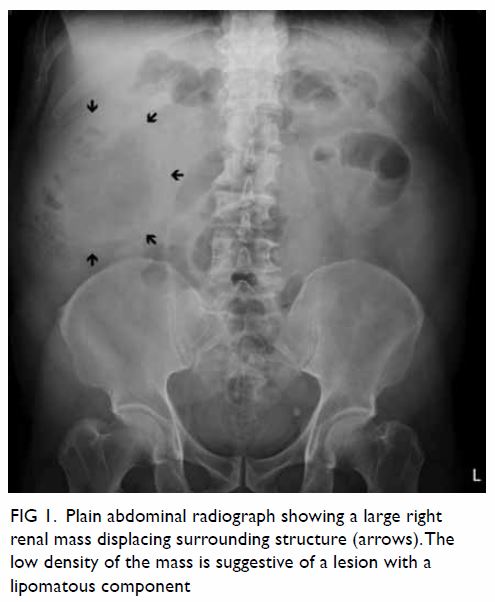
 

Figure 1. Plain abdominal radiograph showing a large right renal mass displacing surrounding structure (arrows). The low density of the mass is suggestive of a lesion with a lipomatous component
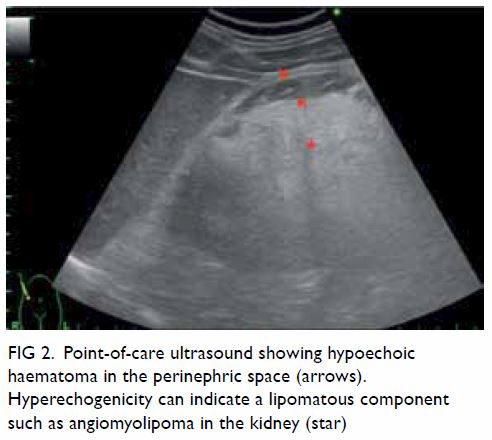
 

Figure 2. Point-of-care ultrasound showing hypoechoic haematoma in the perinephric space (arrows). Hyperechogenicity can indicate a lipomatous component such as angiomyolipoma in the kidney (star)
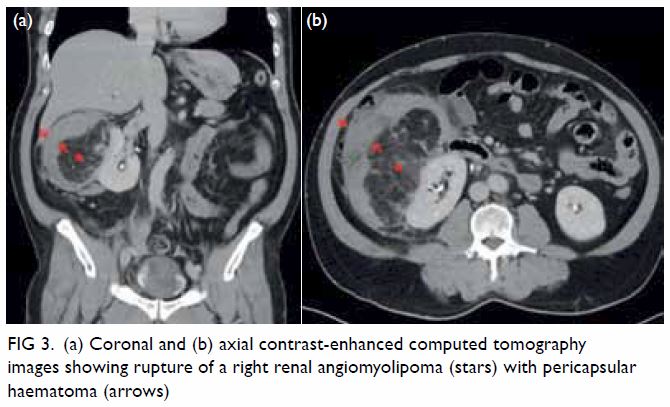
 

Figure 3. (a) Coronal and (b) axial contrast-enhanced computed tomography images showing rupture of a right renal angiomyolipoma (stars) with pericapsular haematoma (arrows)
 
Wunderlich syndrome, a rare but life-threatening entity, is defined as spontaneous nontraumatic renal haemorrhage confined to the subcapsular and perirenal space.1 Lenk’s triad, which consists of acute flank pain, palpable flank mass, and hypovolemic shock, is the classical clinical feature of Wunderlich syndrome.2 The aetiologies of Wunderlich syndrome are classified into neoplastic and non-neoplastic origins. Up to 60% of patients with Wunderlich syndrome are caused by neoplasm, including benign tumours such as angiomyolipoma and malignancies such as renal cell carcinoma.3 A variety of diseases account for non-neoplastic origins of Wunderlich syndrome, including vasculitis, renal artery aneurysm, arteriovenous malformation, renal vein thrombosis, nephritis, cystic renal disease, and coagulopathy.3 Angiomyolipoma, a benign neoplasm composed of smooth muscle, adipose tissue, and thick-walled blood vessels, is the most common cause of Wunderlich syndrome.3 The risk of tumour rupture leading to fatal internal haemorrhage increases when angiomyolipoma grows >40 mm in diameter.4 Aneurism formation due to poor elastic vascular structure might be the reason for angiomyolipoma rupture, especially during tumour growth.
 
For diagnosis of Wunderlich syndrome, contrast-enhanced CT scan is a standard medical imaging modality with 100% sensitivity in identifying perirenal haemorrhage.4 Computed tomography scan can present renal vascular structure, origins of tumours and pathological change in adjacent tissues. Furthermore, CT scan can also provide detailed vascular anatomy to provide a roadmap for superselective renal embolisation in management of perirenal haemorrhage. In contrast with CT scan, point-of-care ultrasound might be considered as a prompt tool to diagnose patients with Wunderlich syndrome. Point-of-care ultrasound can be used to screen the renal structure, quickly identify internal bleeding, and evaluate the hemodynamic condition by measuring the diameter of the inferior vena cava and assessing the cardiac preload and contractility. Ultrasound can also facilitate the initial differential diagnosis of patients with flank pain, such as renal colic, renal abscess or acute pyelonephritis. Initial treatments for Wunderlich syndrome include selective arterial embolisation and surgical intervention. However, clinical guidelines for management of Wunderlich syndrome are not yet well established.5 Selective arterial embolisation has the advantage of minimal invasiveness, renal preservation, and efficiency in treating acute renal haemorrhage. However, surgical intervention can provide a delicate strategy for tumour resection, especially if suspicious for malignancy, and prevent recurrent tumour bleeding.5 Since Wunderlich syndrome is a life-threatening condition, clinicians should be aware while approaching patients presenting with flank pain and in shock to facilitate timely emergency surgery or embolisation if needed.
 
Author contributions
All authors had full access to the data, contributed to the study, approved the final version for publication, and take responsibility for its accuracy and integrity.
 
Concept and design of the study: HY Su.
Acquisition of data: YY Lin.
Analysis or interpretation of data: YY Lin.
Drafting of the article: HY Su.
Critical revision for important intellectual content: HM Li, CW Hsu.
 
Conflicts of interest
All authors have disclosed no conflicts of interest.
 
Funding/support
This study received no specific grant from any funding agency in the public, commercial, or not-for-profit sectors.
 
Ethics approval
This study was conducted in accordance with the principles outlined in the Declaration of Helsinki.
 
References
1. Medda M, Picozzi SC, Bozzini G, Carmignani L. Wunderlich’s syndrome and hemorrhagic shock. J Emerg Trauma Shock 2009;2:203-5. Crossref
2. Simkins A, Maiti A, Cherian SV. Wunderlich syndrome. Am J Med 2017;130:e217-8. Crossref
3. Katabathina VS, Katre R, Prasad SR, Surabhi VR, Shanbhogue AK, Sunnapwar A. Wunderlich syndrome: cross-sectional imaging review. J Comput Assist Tomogr 2011;35:425-33. Crossref
4. Albi G, del Campo L, Tagarro D. Wünderlich’s syndrome: causes, diagnosis and radiological management. Clin Radiol 2002;57:840-5. Crossref
5. Flum AS, Hamoui N, Said MA, et al. Update on the diagnosis and management of renal angiomyolipoma. J Urol 2016;195(4 Pt 1):834-46. Crossref
Cardiac magnetic resonance imaging in the diagnosis of biventricular non-compaction in a young but failing heart

© Hong Kong Academy of Medicine. CC BY-NC-ND 4.0
 
PICTORIAL MEDICINE
Cardiac magnetic resonance imaging in the diagnosis of biventricular non-compaction in a young but failing heart
Victor SH Chan, MB, BS, FRCR1; Carmen WS Chan, MB, BS, FRCP (Lond)2; Stephen CW Cheung, MRCP, FHKAM (Radiology)1
1 Department of Radiology, Queen Mary Hospital, Pokfulam, Hong Kong
2 Department of Medicine, Queen Mary Hospital, Pokfulam, Hong Kong
 
Corresponding author: Dr Victor SH Chan (victorchansh@gmail.com)
 
 Full paper in PDF
 
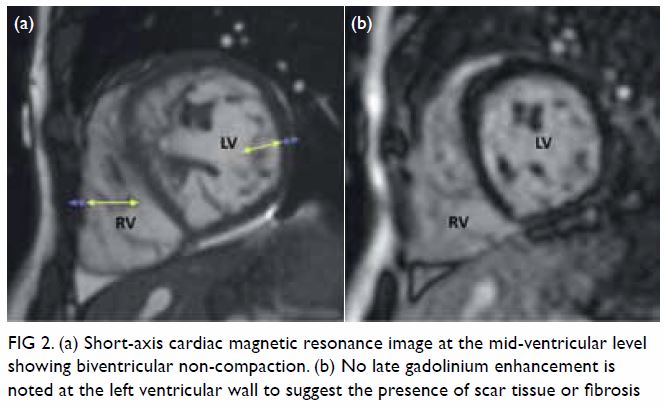
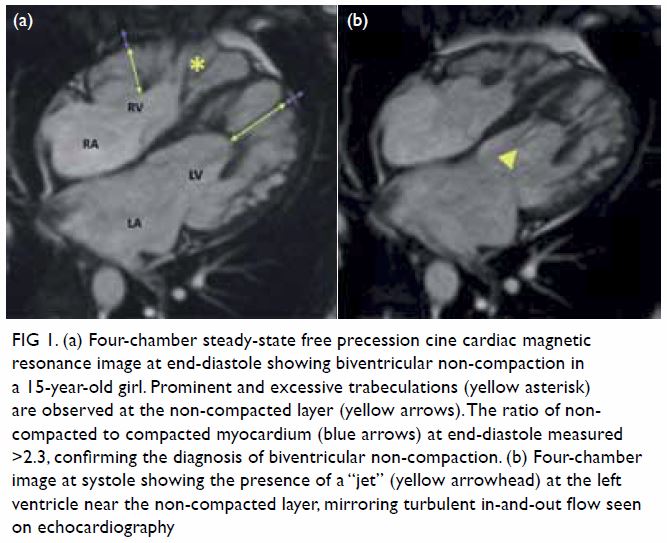
A 15-year-old Chinese girl with a history of scoliosis presented to Queen Mary Hospital, Hong Kong in April 2016 with an incidental finding of an ejection systolic murmur at the left lower sternal border. No history of chest pain, syncope, reduced effort tolerance, or significant family history of congenital cardiac disease was present. Echocardiography revealed heavy trabeculations over the left ventricular (LV) apical region. Colour Doppler revealed abnormal in-and-out flow at the deep crypts. Overall features were suspicious of LV non-compaction (NC). The patient subsequently underwent cardiac magnetic resonance imaging for further assessment, using a 1.5-T magnetic resonance imaging scanner (Magnetom Aera; Siemens Healthcare, Forchheim, Germany). Cardiac magnetic resonance confirmed the diagnosis of biventricular NC with diffuse involvement (Fig 1). The ratio of non-compacted to compacted diastolic myocardium was 2.95 (>2.3). The LV ejection fraction (EF) was 32.6%, and the right ventricular (RV) EF was 32.5%. Moderate global hypokinesia of both ventricles was observed. Mild mitral regurgitation was present. No significant left to right cardiac shunt or late gadolinium enhancement was seen at the LV wall to suggest presence of scar or fibrosis (Fig 2). No abnormal thinning of the wall, focal/regional RV wall motion abnormality, or aneurysmal change was noted. No thrombus was present within the cardiac chambers. A normal configuration of a left-sided aortic arch was observed with absence of coarctation. Subsequent genetic testing for pathogenic mutations for NC was negative in this patient.
 

Figure 1. (a) Four-chamber steady-state free precession cine cardiac magnetic resonance image at end-diastole showing biventricular non-compaction in a 15-year-old girl. Prominent and excessive trabeculations (yellow asterisk) are observed at the non-compacted layer (yellow arrows). The ratio of noncompacted to compacted myocardium (blue arrows) at end-diastole measured >2.3, confirming the diagnosis of biventricular non-compaction. (b) Four-chamber image at systole showing the presence of a “jet” (yellow arrowhead) at the left ventricle near the non-compacted layer, mirroring turbulent in-and-out flow seen on echocardiography
 

Figure 2. (a) Short-axis cardiac magnetic resonance image at the mid-ventricular level showing biventricular non-compaction. (b) No late gadolinium enhancement is noted at the left ventricular wall to suggest the presence of scar tissue or fibrosis
 
Ventricular NC of the myocardium, also known as spongiform cardiomyopathy, is a rare cardiomyopathy arising from arrested endomyocardial development during embryogenesis,1 with an incidence of approximately 0.05%.2 Non-compaction is a group of genetically heterogeneous disorders and can be inherited in autosomal dominant, autosomal recessive and X-linked recessive pattern.3 However, the majority of NC have idiopathic pathogenesis, and the diagnostic yield of gene panel testing in LVNC is low (~9%). Patients with isolated NC are less likely to have a positive genetic test result.3 Morphologically, NC is characterised by an altered myocardial wall with resultant prominent trabeculae and deep intertrabecular recesses,4 leading to an abnormal thickened bilayer of compacted and non-compacted myocardium. The LV is more frequently involved and biventricular involvement is less commonly encountered. The absence of wall thinning, RV wall motion abnormality or aneurysmal change, although not diagnostic, suggests an alternative diagnosis to that of arrhythmogenic RV dysplasia. Principal clinical manifestations of NC include: heart failure, arrhythmia, cardioembolic events, syncope, and sudden cardiac death.4 Even though our patient had remained asymptomatic prior to diagnosis, there were notable reductions in LVEF and RVEF, suggesting heart failure.
 
Cardiac magnetic resonance in establishing suspected NC cases would be crucial in: (1) confirming the diagnosis, (2) establishing residual cardiac function, and (3) determining presence of other associated cardiac malformations, such as LV outflow tract abnormalities (eg, bicuspid aortic valve), Ebstein anomaly, tetralogy of Fallot (more commonly diagnosed at a younger age-group) or coarctation of the aorta. Cardiac magnetic resonance is also superior to echocardiography in delineating RV anatomy and function, evaluating RV involvement of NC, determining presence of intracardiac thrombus and myocardial scarring. After the above diagnostic considerations have been addressed, management of biventricular NC may include anticoagulation, treatment of heart failure, and the placement of implantable cardioverter defibrillator or pacemaker where clinically appropriate. However, cardiac transplantation remains as the only definitive treatment of biventricular NC.
 
Author contributions
All authors had full access to the data, contributed to the study, approved the final version for publication, and take responsibility for its accuracy and integrity. All authors contributed to the concept, image acquisition, image and data interpretation, drafting of the article, and critical revision for important intellectual content.
 
Conflicts of interest
The authors have no conflicts of interest to disclose.
 
Funding/support
This research received no specific grant from any funding agency in the public, commercial, or not-for-profit sectors.
 
Ethics approval
Patient consent was obtained for the purpose of this case report.
 
References
1. Maron BJ, Towbin JA, Thiene G, et al. Contemporary definitions and classification of the cardiomyopathies: an American Heart Association scientific statement from the Council on Clinical Cardiology, Heart Failure and Transplantation Committee; Quality of Care and Outcomes Research and Functional Genomics and Translational Biology Interdisciplinary Working Groups; and Council on Epidemiology and Prevention. Circulation 2006;113:1807-16. Crossref
2. Richardson P, McKenna RW, Bristow M, et al. Report of the 1995 World Health Organization/International Society and Federation of Cardiology task force on the definition and classification of cardiomyopathies. Circulation 1996;93:841-2. Crossref
3. Miller EM, Hinton RB, Czosek R, et al. Genetic testing in pediatric left ventricular noncompaction. Circ Cardiovasc Genet 2017;10. pii:e001735. Crossref
4. Odiete O, Nagendra R, Lawson MA, Okafor H. Biventricular noncompaction cardiomyopathy in a patient presenting with new onset seizure: case report. Case Rep Cardiol article 2012;2012:924865. Crossref

Radiological progression of penicillin-sensitive Staphylococcus aureus aortitis

© Hong Kong Academy of Medicine. CC BY-NC-ND 4.0
 
PICTORIAL MEDICINE
Radiological progression of penicillin-sensitive Staphylococcus aureus aortitis
S Zheng, MB, BS, MRCP
Department of General Medicine, Sengkang General Hospital, Singapore
 
Corresponding author: Dr S Zheng ( zheng.shuwei@singhealth.com.sg)
 
 Full paper in PDF
 
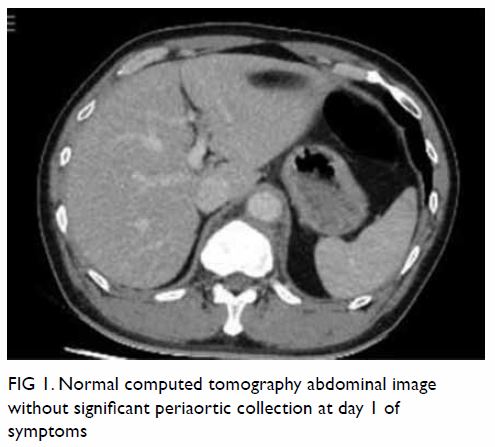
In June 2017, a 58-year-old man, with no known cardiovascular risk factors, was admitted to a hospital in Singapore, presenting with a 1-week history of fever and progressively worsening epigastric pain. On the first day of his symptoms, he had visited the emergency department at another hospital where a computed tomography (CT) scan of the abdomen performed had not revealed significant pathology (Fig 1). He was treated symptomatically as for a viral infection, but he represented to our hospital a week later without significant symptomatic improvement. The patient had a known history of reaction to penicillin and a history of traumatic spinal injury more than 20 years ago requiring spinal instrumentation at the L4/5 level. On examination, the patient was febrile but haemodynamically stable. Abdominal examination revealed epigastric tenderness on deep palpation. Cardiorespiratory examination was unremarkable. The patient had leucocytosis of 15.37 × 10³/uL, raised C-reactive protein level of 109.2 mg/L, and erythrocyte sedimentation rate of 46 mm/h. Renal and liver function tests, and serum amylase and lipase levels were unremarkable. He was started empirically on intravenous ceftriaxone following blood cultures.
 

Figure 1. Normal computed tomography abdominal image without significant periaortic collection at day 1 of symptoms
 
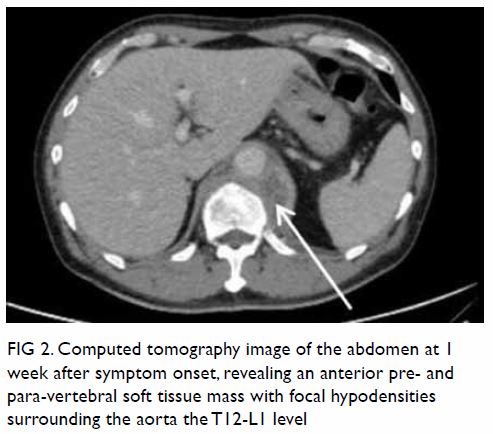
A new CT scan of the abdomen was performed, revealing an anterior pre- and para-vertebral soft tissue mass with focal hypodensities surrounding the aorta at the T12-L1 level (Fig 2). Blood culture results (which were received 3 days later) were positive for penicillin-sensitive Staphylococcus aureus. Magnetic resonance imaging of the thoracolumbar spine illustrated paravertebral soft tissue thickening at level of T12-L1 that appears multiloculated with rim enhancement, suggestive of an underlying paravertebral abscess without epidural extension. A transthoracic echocardiogram did not reveal any valvular lesions. The presence of an inflammatory collection around the aorta prompted concerns for an infectious aortitis.
 

Figure 2. Computed tomography image of the abdomen at 1 week after symptom onset, revealing an anterior pre- and para-vertebral soft tissue mass with focal hypodensities surrounding the aorta the T12-L1 level
 
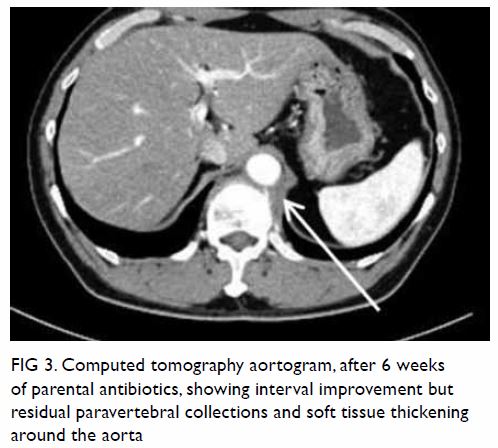
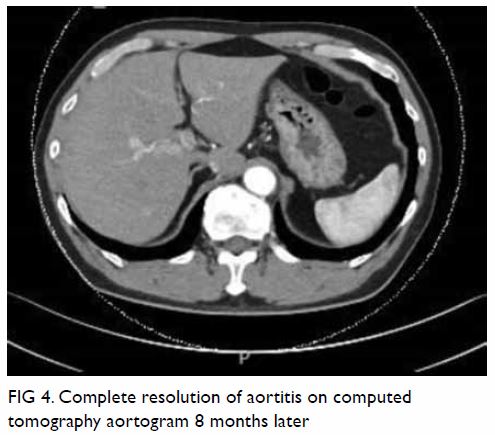
Antimicrobial therapy was switched to intravenous cefazolin, which was continued for 6 weeks with symptomatic improvement. Repeated blood cultures did not show evidence of persistent S aureus bacteraemia. Monitoring of C-reactive protein level and erythrocyte sedimentation rate showed gradual improvement. A CT aortogram, after 6 weeks of parenteral antibiotics, showed interval improvement of the paravertebral collections and soft tissue thickening around the aorta, suggesting improving aortitis (Fig 3). Antibiotics were switched to oral trimethoprim and sulfamethoxazole. Another CT aortogram 8 months later showed complete resolution of aortitis and paravertebral abscess (Fig 4).
 

Figure 3. Computed tomography aortogram, after 6 weeks of parental antibiotics, showing interval improvement but residual paravertebral collections and soft tissue thickening around the aorta
 

Figure 4. Complete resolution of aortitis on computed tomography aortogram 8 months later
 
In the antibiotic era, infectious aortitis is a rare clinical entity. Gram-positive micro-organisms are most commonly implicated, in up to 60% of cases, with S aureus being the most frequently encountered micro-organism. Other micro-organisms commonly implicated include Enterococcus species, Streptococcus pneumoniae, Salmonella species, Mycobacterium tuberculosis, and in the more distant past, syphilis.1 Rare case reports have featured the radiological evolution of infectious aortitis while on conservative treatment, and these often illustrate peri-aortic soft tissue masses progressing to aneurysmal formation from S aureus or Salmonella species infection.1 2 3 4 5 Prompt antimicrobial therapy is crucial along with endovascular or surgical intervention.5 Our patient demonstrated radiological normality to pathology within a week of symptom onset and subsequent improvement while on conservative therapy alone, followed by full radiological resolution. We believe that his successful recovery is in part due to early appropriate and prolonged antimicrobial therapy.
 
Author contributions
The author designed the study, contributed to acquisition and analysis of data, drafted the article, and contributed to the critical revision for important intellectual content. The author had full access to the data, contributed to the study, approved the final version for publication, and takes responsibility for its accuracy and integrity.
 
Conflicts of interest
The author has disclosed no conflicts of interest.
 
Funding/support
This research received no specific grant from any funding agency in the public, commercial, or not-for-profit sectors.
 
Ethics approval
This study was conducted in accordance with the principles outlined in the Declaration of Helsinki.
 
References
1. Cevasco M, Menard MT, Bafford R, McNamee CJ. Acute infectious pseudoaneurysm of the descending thoracic aorta and review of infectious aortitis. Vasc Endovascular Surg 2010;44:697-700. Crossref
2. Carreras M, Larena JA, Tabernero G, Langara E, Pena JM. Evolution of salmonella aortitis towards the formation of abdominal aneurysm. Eur Radiol 1997;7:54-6. Crossref
3. Rozenblit A, Bennett J, Suggs W. Evolution of the infected abdominal aortic aneurysm: CT observation of early aortitis. Abdom Imaging 1996;21:512-4. Crossref
4. Wein M, Bartel T, Kabatnik M, Sadony V, Dirsch Olaf, Erbel R. Rapid progression of bacterial aortitis to an ascending aortic mycotic aneurysm documented by transesophageal echocardiography. J Am Soc Echocardiogr 2001;14:646-9. Crossref
5. Kan CD, Lee HL, Yang YJ. Outcome after endovascular stent graft treatment for mycotic aortic aneurysm: a systematic review. J Vasc Surg 2007;46:906-12. Crossref

Native T1 mapping for the diagnosis of Anderson-Fabry disease with myocardial hypertrophy

© Hong Kong Academy of Medicine. CC BY-NC-ND 4.0
 
PICTORIAL MEDICINE
Native T1 mapping for the diagnosis of Anderson-Fabry disease with myocardial hypertrophy
Victor SH Chan, MB, BS, FRCR1; W Zhou, MB, BS2; Stephen CW Cheung, MRCP, FHKAM (Radiology)1; MY Ng, BMBS, FRCR2
1 Department of Radiology, Queen Mary Hospital, Pokfulam, Hong Kong
2 Department of Diagnostic Radiology, Li Ka Shing Faculty of Medicine, The University of Hong Kong, Pokfulam, Hong Kong
 
Corresponding author: Dr MY Ng (myng2@hku.hk)
 
 Full paper in PDF
 
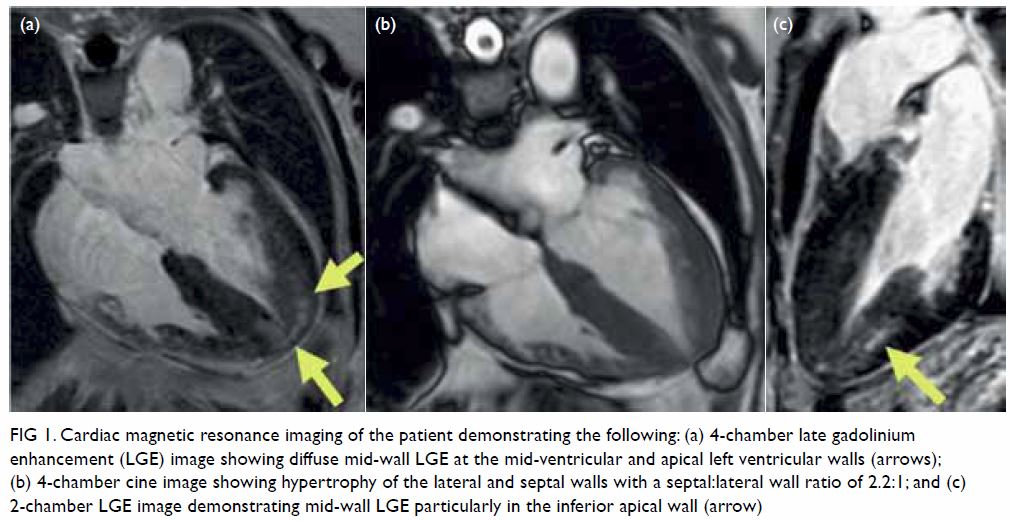
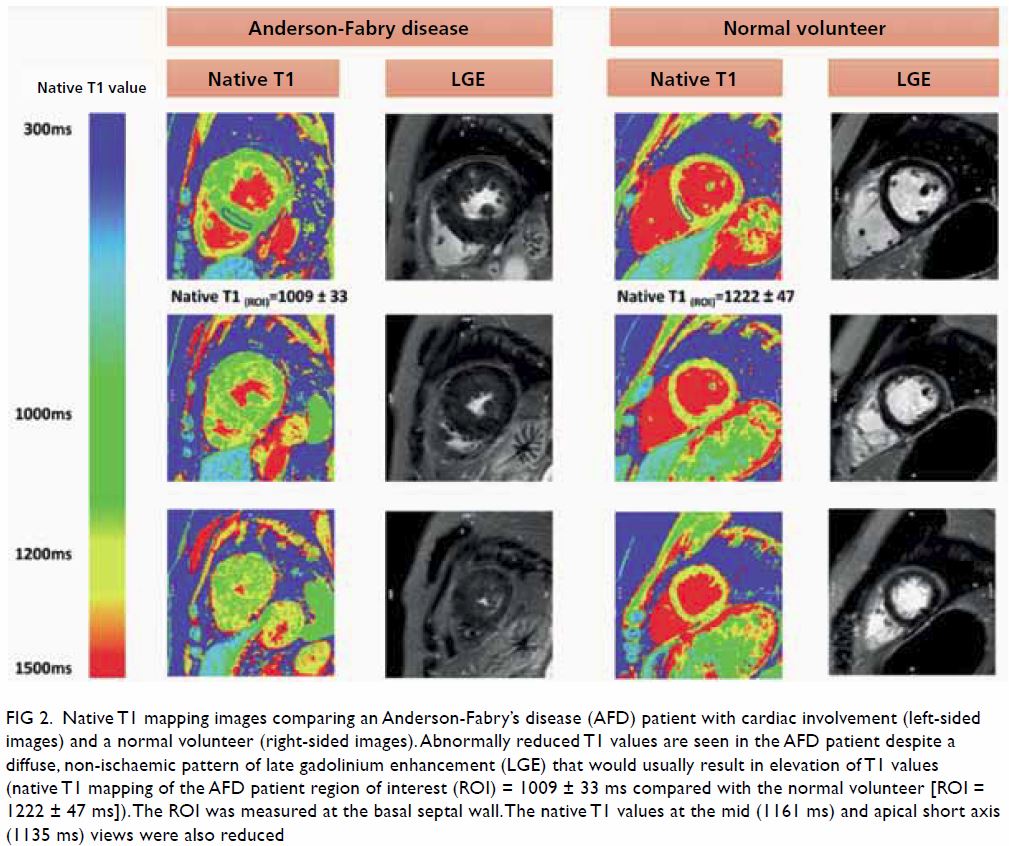
A 66-year-old woman previously treated for hypertrophic cardiomyopathy (HCM) underwent cardiac magnetic resonance imaging for further assessment. The modified Look-Locker sequence 5s(3s)3s was performed on a Philips Achieva 3T magnetic resonance scanner (Philips, Amsterdam, Netherlands). Cardiac magnetic resonance had revealed a combined apical and asymmetrical hypertrophy of the left ventricle (Fig 1). There was a diffuse, non-ischaemic pattern of late gadolinium enhancement in the region of hypertrophy in keeping with HCM. The septal:lateral wall ratio on the 4-chamber view was 2.2:1. The mid-inferoseptal:anterolateral ratio on the short-axis view was 1.32:1. However, native T1 mapping was abnormally low (1009 ms; normal range on our scanner, 1226-1256 ms) [Fig 2]. T2 mapping values were in the normal range indicating no underlying iron deposition to account for the low T1 values. Low native T1 mapping values are atypical of HCM that would normally be associated with a slight increase in native T1. This suggested underlying Anderson-Fabry disease (AFD), subsequently proven by genetic testing in this patient.
 

Figure 1. Cardiac magnetic resonance imaging of the patient demonstrating the following: (a) 4-chamber late gadolinium enhancement (LGE) image showing diffuse mid-wall LGE at the mid-ventricular and apical left ventricular walls (arrows); (b) 4-chamber cine image showing hypertrophy of the lateral and septal walls with a septal:lateral wall ratio of 2.2:1; and (c) 2-chamber LGE image demonstrating mid-wall LGE particularly in the inferior apical wall (arrow)
 

Figure 2. Native T1 mapping images comparing an Anderson-Fabry’s disease (AFD) patient with cardiac involvement (left-sided images) and a normal volunteer (right-sided images). Abnormally reduced T1 values are seen in the AFD patient despite a diffuse, non-ischaemic pattern of late gadolinium enhancement (LGE) that would usually result in elevation of T1 values (native T1 mapping of the AFD patient region of interest (ROI) = 1009 ± 33 ms compared with the normal volunteer [ROI = 1222 ± 47 ms]). The ROI was measured at the basal septal wall. The native T1 values at the mid (1161 ms) and apical short axis (1135 ms) views were also reduced
 
Anderson-Fabry disease is an uncommon X-linked sphingolipid storage disorder resulting from deficiency of the lysosomal enzyme α-galactosidase. The principal driver of mortality in AFD is cardiac disease.1 Disease manifestations include left ventricle hypertrophy that can mimic HCM.2 Other complications of AFD include valve thickening, myocardial scarring, cardiac failure and arrhythmic death.3 Enzyme replacement therapy for AFD should be started early to prevent progression of cardiac disease. Cardiac magnetic resonance myocardial native T1 is decreased in AFD and is a non-invasive method that may raise suspicion of AFD in the context of left ventricle hypertrophy or suspected HCM. Native T1 mapping is an established reproducible technique.1 Raising suspicion and later confirming AFD is crucial to managing these patients appropriately as well as initiating screening in asymptomatic family members.
 
Author contributions
All authors have made substantial contributions to the concept or design of this study; acquisition of data; analysis or interpretation of data; drafting of the manuscript; and critical revision for important intellectual content. All authors had full access to the data, contributed to the study, approved the final version for publication, and take responsibility for its accuracy and integrity.
 
Conflicts of interest
The authors have no conflicts of interest to disclose.
 
Funding/support
This research received no specific grant from any funding agency in the public, commercial, or not-for-profit sectors.
 
Ethics approval
Relevant patient consent was obtained for the purpose of this case study.
 
References
1. Pica S, Sado DM, Maestrini V, et al. Reproducibility of native myocardial T1 mapping in the assessment of Fabry disease and its role in early detection of cardiac involvement by cardiovascular magnetic resonance. J Cardiovasc Magn Reson 2014;16:99. Crossref
2. Deva DP, Hanneman K, Li Q, et al. Cardiovascular magnetic resonance demonstration of the spectrum of morphological phenotypes and patterns of myocardial scarring in Anderson-Fabry disease. J Cardiovasc Magn Reson 2016,18:14. Crossref
3. O’Mahony C, Elliott P. Anderson-Fabry disease and the heart. Prog Cardiovasc Dis 2010;52:326-35. Crossref

Diabetic mastopathy: a breast carcinoma mimic

© Hong Kong Academy of Medicine. CC BY-NC-ND 4.0
 
PICTORIAL MEDICINE
Diabetic mastopathy: a breast carcinoma mimic
WK Ng, MB, BS, FRCR1; SK Chan, MB, ChB, FHKCPath2; KM Kwok, FRCR, FHKAM (Radiology)3; PY Fung, FRCR, FHKAM (Radiology)3
1 Department of Radiology, Tuen Mun Hospital, Hong Kong
2 Department of Pathology, Kwong Wah Hospital, Hong Kong
3 Department of Diagnostic and Interventional Radiology, Kwong Wah Hospital, Hong Kong
 
Corresponding author: Dr WK Ng (wingki.ng712@gmail.com)
 
 Full paper in PDF
 
A 62-year-old woman with a long-standing history of type 1 diabetes mellitus presented to the breast clinic with a palpable breast lump. She had incidentally discovered a painless lump in her left breast that had increased in size over the last 3 months. She denied nipple discharge or overlying skin changes but reported a family history of one maternal aunt who had breast cancer diagnosed in her sixties.
 
Clinical examination revealed an irregular hard mass at the upper outer quadrant of the left breast with no evidence of axillary lymphadenopathy. The right breast was unremarkable.
 
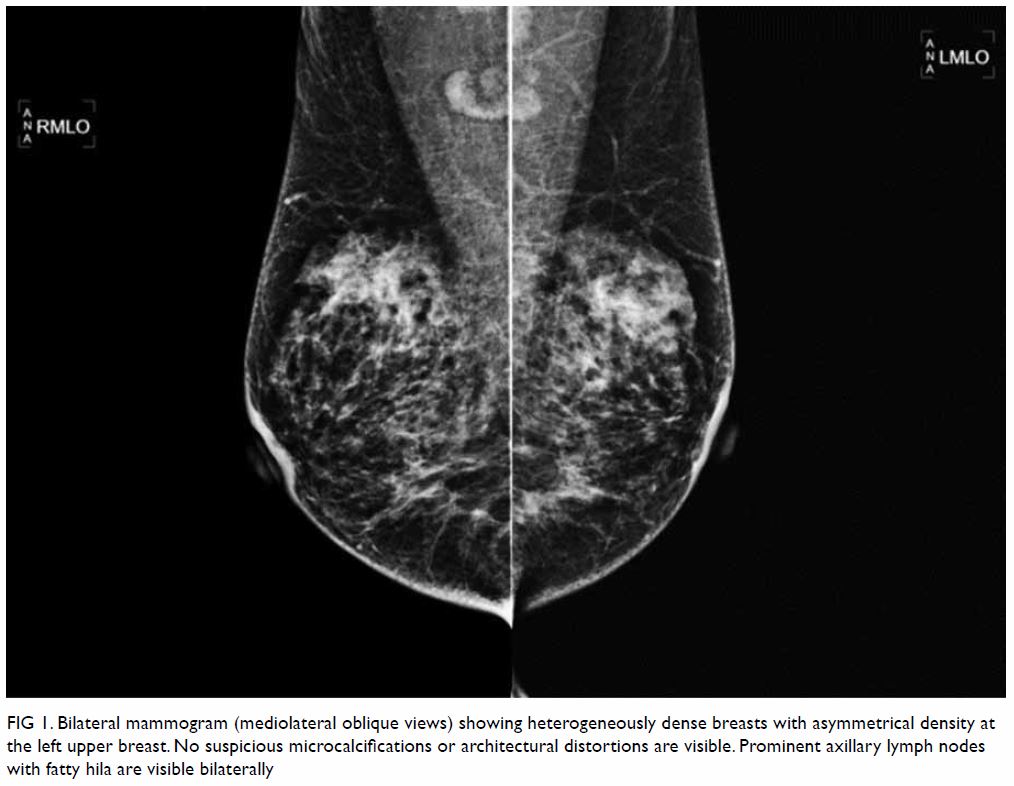
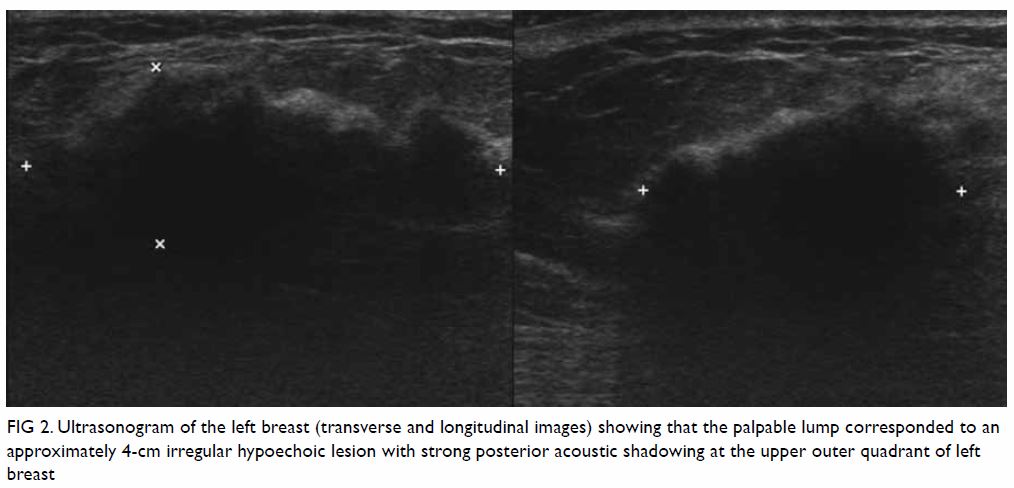
Mammography showed heterogeneously dense breasts with asymmetrical density at the left upper breast, but no discrete mass or spiculations (Fig 1). There were also no suspicious microcalcifications or architectural distortion. Ultrasonography revealed an approximately 4-cm irregular hypoechoic lesion with strong posterior acoustic shadowing at the upper outer quadrant of the left breast and no increase in vascularity (Fig 2). Overall features were suspicious of malignancy.
 

Figure 1. Bilateral mammogram (mediolateral oblique views) showing heterogeneously dense breasts with asymmetrical density at the left upper breast. No suspicious microcalcifications or architectural distortions are visible. Prominent axillary lymph nodes with fatty hila are visible bilaterally
 

Figure 2. Ultrasonogram of the left breast (transverse and longitudinal images) showing that the palpable lump corresponded to an approximately 4-cm irregular hypoechoic lesion with strong posterior acoustic shadowing at the upper outer quadrant of left breast
 
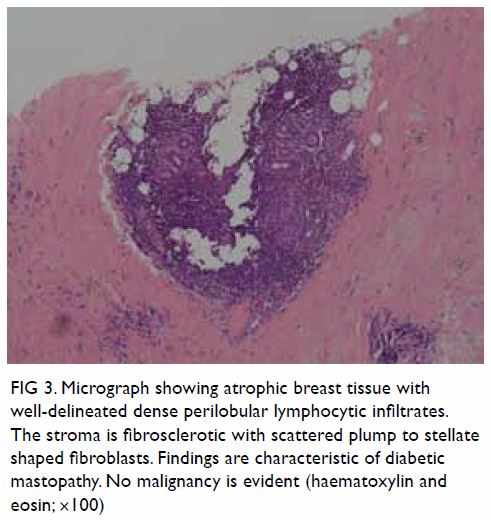
Ultrasound-guided core biopsy was performed. Histological examination showed lymphocytic lobular mastitis associated with stromal fibrosis of the breast, findings compatible with diabetic mastopathy (Fig 3).
 

Figure 3. Micrograph showing atrophic breast tissue with well-delineated dense perilobular lymphocytic infiltrates. The stroma is fibrosclerotic with scattered plump to stellate shaped fibroblasts. Findings are characteristic of diabetic mastopathy. No malignancy is evident (haematoxylin and eosin; ×100)
 
Diabetic mastopathy is a rare fibro-inflammatory disease of the breast. It is usually seen in association with type 1 diabetes mellitus,1 although rarely can also been with long-standing type 2 diabetes mellitus. It is typically found in premenopausal women. Many such patients are known to have other complications of diabetes mellitus such as retinopathy, nephropathy, and neuropathy.1 Its exact pathogenesis is not well understood but likely multifactorial, probably related to an inflammatory or immunological reaction.
 
Clinically, diabetic mastopathy often presents as a hard, painless, irregular breast mass that can also be multiple and bilateral (60% of the cases). The clinical findings are often suspicious of breast carcinoma and patients are thus referred for imaging.
 
On mammogram, diabetic mastopathy may appear as an ill-defined mass or asymmetric density, without associated calcifications or spiculations, corresponding to the site of presenting palpable abnormality, but very often obscured by dense breast tissue.2 On ultrasonogram, diabetic mastopathy appears as an irregular poorly defined hypoechoic mass of between 2 and 6 cm in size, with moderate to marked posterior shadowing and absence of vascularity on colour Doppler imaging.3
 
Clinical examination and imaging studies cannot differentiate diabetic mastopathy from breast carcinoma, and ultimately the diagnosis can only be made on histology from core or excisional biopsy.
 
Diabetic mastopathy is a benign entity without malignant potential4 5 and should therefore be treated conservatively. Surgery should be avoided as the recurrence rate following surgical excision has been reported to be rather high at around 32%, and usually within 5 years.6 Recurrences can be single or multiple, and can occur at the ipsilateral, contralateral, or bilateral breasts. Clinicians should be aware of this entity if a diabetic patient presents with a palpable breast lump, after eliminating the possibility of breast carcinoma. Once this benign condition is diagnosed, the patient should be advised to perform routine breast self-examination and have regular clinical breast examinations. If any changes are detected, they should be referred for imaging and core biopsy performed if necessary.
 
In summary, diabetic mastopathy is an uncommon but important benign entity that can mimic breast carcinoma clinically and radiologically. Ultrasound-guided core needle biopsy of the lesion is required to establish the diagnosis. Increasing awareness of this condition and careful correlation of radiological and pathological findings are essential to avoid unnecessary surgical intervention, reduce patient anxiety, and ensure optimal patient care.
 
Author contributions
All authors have made substantial contributions to the concept or design of the study, acquisition of data, analysis or interpretation of data, drafting of the manuscript, and critical revision for important intellectual content. All authors had full access to the data, contributed to the study, approved the final version for publication, and take responsibility for its accuracy and integrity.
 
Conflicts of interest
The authors have no conflicts of interest to disclose.
 
Funding/support
This research received no specific grant from any funding agency in the public, commercial, or not-for-profit sectors.
 
Ethics approval
This study was conducted in accordance with the principles outlined in the Declaration of Helsinki. The patient provided verbal informed consent.
 
References
1. Kudva YC, Reynolds C, O’Brien T, Powell C, Oberg AL, Crotty TB. “Diabetic mastopathy,” or sclerosing lymphocytic lobulitis, is strongly associated with type 1 diabetes. Diabetes Care 2002;25:121-6. Crossref
2. Wong KT, Tse GM, Yang WT. Ultrasound and MR imaging of diabetic mastopathy. Clin Radiol 2002;57:730-5. Crossref
3. Baratelli GM, Riva C. Diabetic fibrous mastopathy: sonographic-pathologic correlation. J Clin Ultrasound 2005;33:34-7. Crossref
4. Camuto PM, Zetrenne E, Ponn T. Diabetic mastopathy: a report of 5 cases and a review of the literature. Arch Surg 2000;135:1190-3. Crossref
5. Thorncroft K, Forsyth L, Desmond S, Audisio RA. The diagnosis and management of diabetic mastopathy. Breast J 2007;13:607-13. Crossref
6. Ely KA, Tse G, Simpson JF, Clarfeld R, Page DL. Diabetic mastopathy. A clinicopathologic review. Am J Clin Pathol 2000;113:541-5. Crossref

Primary pelvic retroperitoneal ancient schwannoma—a rare diagnosis of pelvic complex cystic lesion

© Hong Kong Academy of Medicine. CC BY-NC-ND 4.0
 
PICTORIAL MEDICINE
Primary pelvic retroperitoneal ancient schwannoma—a rare diagnosis of pelvic complex cystic lesion
TS Chan, MB, BS, FRCR; T Wong, FRCR, FHKAM (Radiology); NY Pan, FRCR, FHKAM (Radiology)
Department of Radiology, Princess Margaret Hospital, Kwai Chung, Hong Kong
 
Corresponding author: Dr TS Chan (drsunchan@gmail.com)
 
 Full paper in PDF
 
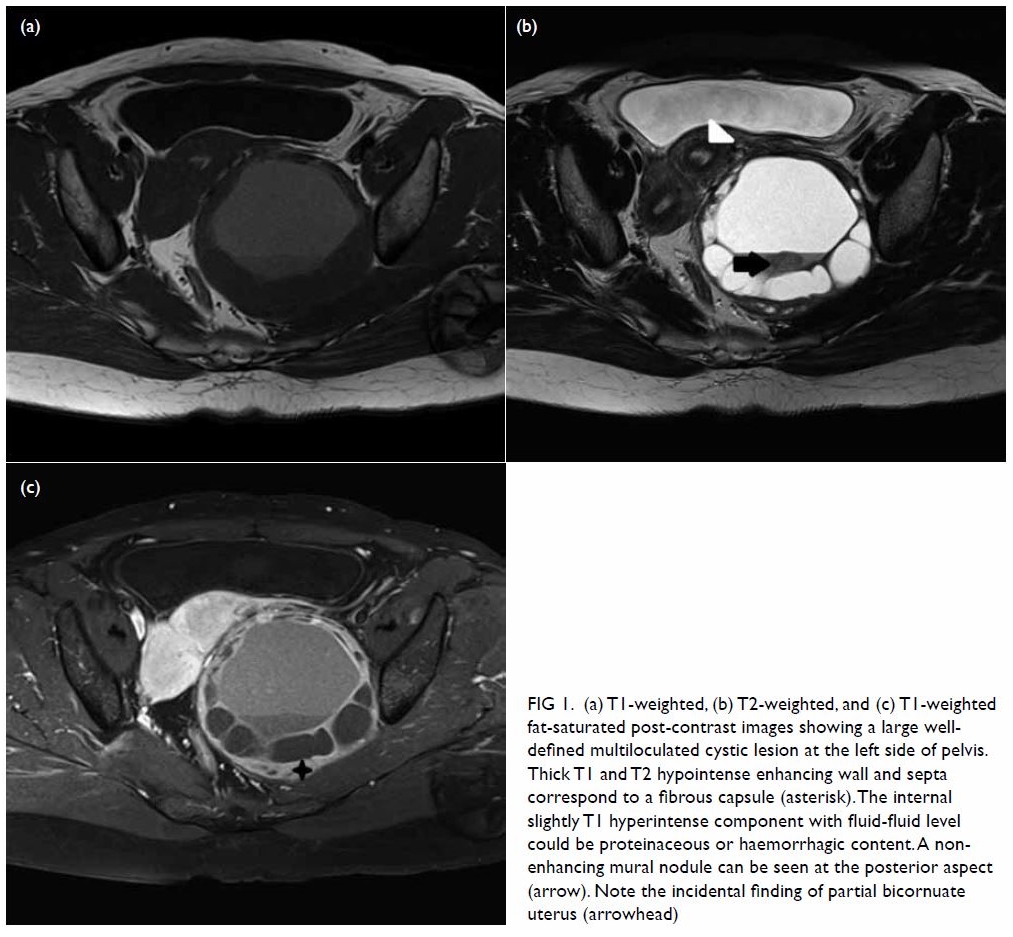
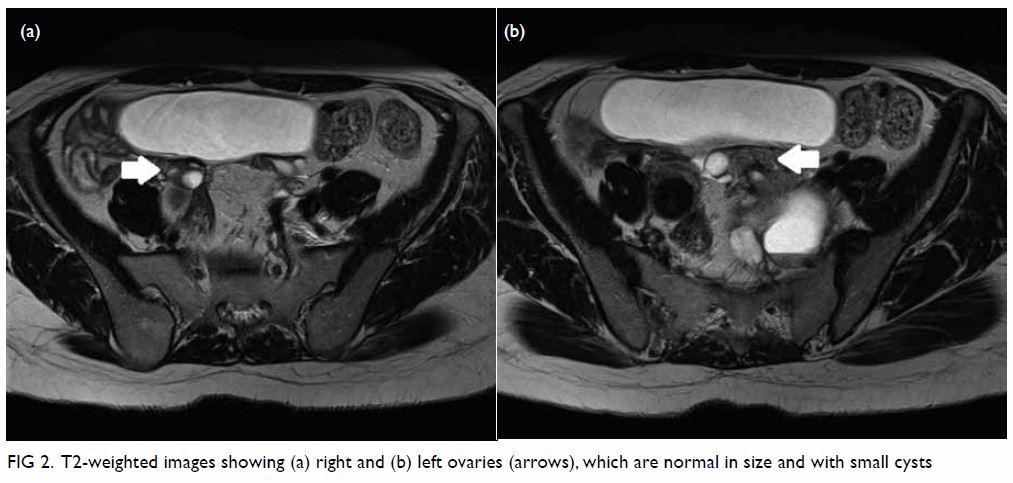
A 42-year-old woman was admitted through our emergency department for subacute onset of lower abdominal pain in September 2014. Bedside ultrasound by a gynaecology specialist showed a left adnexal cyst with fluid interface. Magnetic resonance imaging of the pelvis showed a large well-defined multiloculated cystic lesion measuring 9.2 cm (width) × 8.5 cm (depth) × 8.9 cm (height) with thick T1 and T2 hypointense enhancing wall and septa at the left side of the pelvis (Fig 1). An internal slightly T1 hyperintense component with fluid-fluid level was suspected to be proteinaceous or haemorrhagic content. A 1.6-cm non-enhancing mural nodule was noted at the posterior aspect. Partial bicornuate uterus was noted. Bilateral ovaries were normal in size with small cysts (Fig 2). Laparoscopy was done, with excision of the lesion. Intra-operative frozen section showed a benign spindle cell tumour. Final histopathological evaluation revealed a retroperitoneal schwannoma.
 

Figure 1. (a) T1-weighted, (b) T2-weighted, and (c) T1-weighted fat-saturated post-contrast images showing a large welldefined multiloculated cystic lesion at the left side of pelvis. Thick T1 and T2 hypointense enhancing wall and septa correspond to a fibrous capsule (asterisk). The internal slightly T1 hyperintense component with fluid-fluid level could be proteinaceous or haemorrhagic content. A nonenhancing mural nodule can be seen at the posterior aspect (arrow). Note the incidental finding of partial bicornuate uterus (arrowhead)
 

Figure 2. T2-weighted images showing (a) right and (b) left ovaries (arrows), which are normal in size and with small cysts
 
The majority of cystic pelvic masses originate from the ovary. Mimics of ovarian cystic masses have a wide variety of diagnoses. It is important to understand the relationship of a mass with its anatomic location, identify normal ovaries at imaging, and correlate imaging findings with the patient’s clinical history to avoid misdiagnosis.
 
Retroperitoneal schwannoma is a rare tumour and is difficult to diagnose, accounting for only 6% of retroperitoneal neoplasms. A retroperitoneal schwannoma is usually located in the paravertebral space or pre-sacral pelvic retroperitoneum.1 It usually occurs in young to middle-aged adults, and women are affected twice as often as men.1 The patient is usually asymptomatic, or complains of a wide variety of non-specific symptoms when the tumour is large in size.2 Malignant transformation is rare.1 On magnetic resonance images, a schwannoma appears as a well-defined mass with hypo- or iso-intensity on T1-weighted images and with hyperintensity on T2-weighted images. The nerve of origin is often difficult to identify. It is not unusual for a schwannoma to display cystic changes. However, prominent cystic changes are uncommon and point to ancient schwannoma, a rare variant of schwannoma that is characterised by degeneration and decreased cellularity.3 On magnetic resonance images, ancient schwannoma appears as a well-defined, complex cystic mass with a variable enhancement pattern. Thick T1 and T2 hypointense enhancing wall and septa correspond to a fibrous capsule, consisting of epineurium and residual nerve fibres.4
 
Identification of the nerve adjacent to or along the tumour is useful for differentiating ancient schwannomas from other complex cystic lesions, such as serous or mucinous cystadenocarcinoma, abscess, necrotic soft-tissue sarcoma, or necrotic metastatic lymphadenopathy.5
 
In the present case, the patient did not complain of any neurological symptoms at presentation. The presence of normal ovaries and fibrous capsule indicated a preoperative diagnosis of ancient schwannoma. This case illustrates the importance of considering this uncommon diagnosis when a pelvic complex cystic lesion is detected in imaging, and seeking specific imaging features (such as fibrous capsule and close relationship to the nerve) to confirm or exclude this diagnosis. This would facilitate surgical planning and minimise the risk of complications such as major neurological deficit.
 
Author contributions
All authors contributed to the concept or design, acquisition of data, analysis or interpretation of data, drafting of the manuscript, and critical revision for important intellectual content. All authors had full access to the data, contributed to the study, approved the final version for publication, and take responsibility for its accuracy and integrity.
 
Conflicts of interest
All authors have disclosed no conflicts of interest.
 
Funding/support
This research received no specific grant from any funding agency in the public, commercial, or not-for-profit sectors.
 
References
1. Rha SE, Byun JY, Jung SE, Chun HJ, Lee HG, Lee JM. Neurogenic tumors in the abdomen: tumor types and imaging characteristics. Radiographics 2003;23:29-43. Crossref
2. Kim SH, Choi BI, Han MC, Kim YI. Retroperitoneal neurilemoma: CT and MR findings. AJR Am J Roentgenol 1992;159:1023-6. Crossref
3. Dahl I. Ancient neurilemmoma (schwannoma). Acta Pathol Microbiol Scand A 1977;85:812-8. Crossref
4. Takeuchi M, Matsuzaki K, Nishitani H, Uehara H. Ancient schwannoma of the female pelvis. Abdom Imaging 2008;33:247-52. Crossref
5. Isobe K, Shimizu T, Akahane T, Kato H. Imaging of ancient schwannoma. AJR Am J Roentgenol 2004;183:331-6. Crossref

Catheterised hutch diverticulum masquerading as intraperitoneal bladder perforation

© Hong Kong Academy of Medicine. CC BY-NC-ND 4.0
 
PICTORIAL MEDICINE
Catheterised hutch diverticulum masquerading as intraperitoneal bladder perforation
Victor SH Chan, MB, BS, FRCR (UK)1; WM Kwok, MB, BS2; Stephen CW Cheung, MRCP, FHKAM (Radiology)1
1 Department of Radiology, Queen Mary Hospital, Pokfulam, Hong Kong
2 Department of Accident and Emergency, Queen Mary Hospital, Pokfulam, Hong Kong
 
Corresponding author: Dr Victor SH Chan (victorchansh@gmail.com)
 
 Full paper in PDF
 
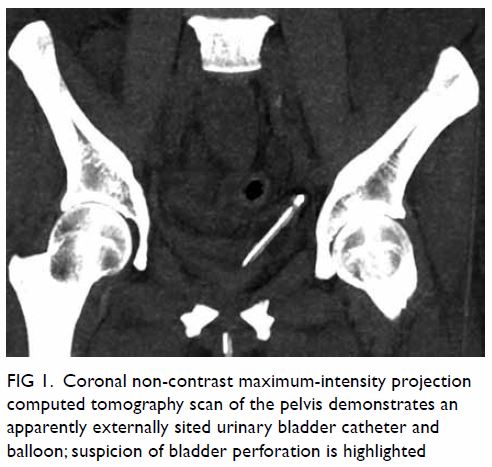
A computed tomography (CT) scan was performed in a 64-year-old man with a history of end-stage renal failure to evaluate recent acute-on-chronic graft failure. To conserve remnant renal function, no intravenous contrast was administered. There was no hydronephrosis but the balloon of the indwelling Foley catheter was seen adjacent to but exterior to the bladder (Fig 1). No evidence of pneumoperitoneum was seen. Free fluid was noted in the pelvis, compatible with the history of peritoneal dialysis. The suspicion of perforated urinary bladder was conveyed to the referring physicians, and the patient was admitted for further evaluation. No abdominal distension, tenderness or guarding was elicited on physical examination. Urine output via the indwelling catheter was within normal limits. The patient was haemodynamically stable with no leukocytosis.
 

Figure 1. Coronal non-contrast maximum-intensity projection computed tomography scan of the pelvis demonstrates an apparently externally sited urinary bladder catheter and balloon; suspicion of bladder perforation is highlighted
 
Computed tomography cystography was performed: 20 mL of water-soluble contrast medium (Omnipaque 300) was diluted in 500 mL of normal saline. Transurethral perfusion of 250 mL of the prepared contrast medium was performed by free gravitational flow. Pre-instillation and post-instillation CT cystography (5 minutes and delayed 10 minutes) was performed. No intravenous contrast was administered.
 
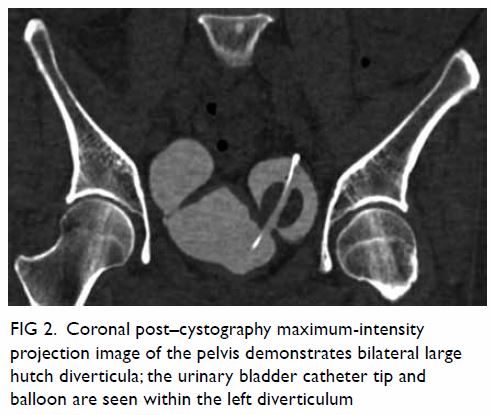
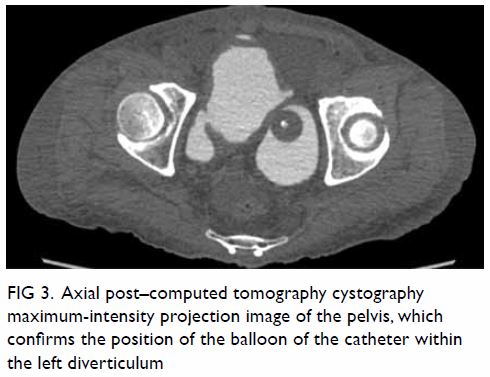
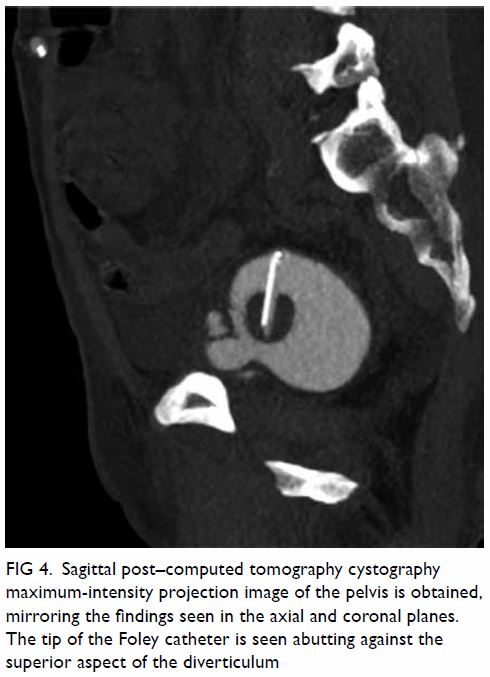
Cross-sectional imaging revealed two large urinary bladder diverticula sited posteriorly, close to the native vesicoureteric junctions. The right diverticulum measured 3.8 × 4.6 cm with a 0.9-cm neck; the left diverticulum measured 4.5 × 5.8 cm with a 1.1-cm neck. On coronal images, a “Mickey-Mouse” appearance was noted, compatible with bilateral hutch diverticula. The inflated balloon of the urinary catheter was sited within the left diverticulum (Figs 2 3 4). The bladder contour was smooth. No evidence of intraperitoneal rupture was demonstrated. On pre-cystography images, the appearance had mimicked an externally sited catheter balloon due to the collapsed state of the bladder.
 

Figure 2. Coronal post–cystography maximum-intensity projection image of the pelvis demonstrates bilateral large hutch diverticula; the urinary bladder catheter tip and balloon are seen within the left diverticulum
 

Figure 3. Axial post–computed tomography cystography maximum-intensity projection image of the pelvis, which confirms the position of the balloon of the catheter within the left diverticulum
 

Figure 4. Sagittal post–computed tomography cystography maximum-intensity projection image of the pelvis is obtained, mirroring the findings seen in the axial and coronal planes. The tip of the Foley catheter is seen abutting against the superior aspect of the diverticulum
 
Spontaneous bladder perforation is rare but potentially fatal. Most such cases present with features of peritonitis. Some possible aetiologies include gonorrhoeal infection, radiation therapy, diabetes mellitus, neurogenic bladder, bladder diverticula, and indwelling urinary catheter.1 2 As our patient was largely pain-free with minimal abdominal symptoms, the overall clinical evidence did not favour bladder rupture even though the CT images were alarming.
 
Saline instillation and bedside ultrasound for rapid disposition of polytrauma patients and early diagnosis of bladder rupture has been described in the literature, with sensitivity reaching 90%.3 In cases with low clinical risk for perforation and when the patient is unfit for immediate CT, instillation of sterile saline to distend the bladder followed by ultrasound assessment provides a possible alternative to exclude bladder perforation. However, ultrasound results are highly operator-dependent and this procedure should be performed only in carefully selected patients. In experienced hands, following retrograde instillation of approximately 300 mL of sterile saline via the catheter, this imaging modality can be used to determine presence of ascites, evaluate the distension and configuration of the urinary bladder, look for bladder diverticula, and determine the position of the catheter balloon. This can be performed at the bedside for critically ill patients, involves no radiation and removes the risk of intravenous contrast-related anaphylaxis.
 
Author contributions
All authors contributed to the concept, image acquisition, image and data interpretation, manuscript drafting and critical revision for important intellectual content. All authors had full access to the data, contributed to the study, approved the final version for publication, and take responsibility for its accuracy and integrity.
 
Conflicts of interest
The authors have no conflicts of interest to disclose.
 
Funding/support
This research received no specific grant from any funding agency in the public, commercial, or not-for-profit sectors.
 
Ethics approval
Relevant patient consent was obtained for the purpose of this case study.
 
References
1. Sawalmeh H, Al-Ozaibi L, Hussein A, Al-Badri F. Spontaneous rupture of the urinary bladder (SRUB); A case report and review of literature. Int J Surg Case Rep 2015;16:116-8. Crossref
2. Ogawa S, Date T, Muraki O. Intraperitoneal urinary bladder perforation observed in a patient with an indwelling urethral catheter. Case Rep Urol 2013;2013:765704. Crossref
3. Karim T, Topno M. Bedside sonography to diagnose bladder trauma in the emergency department. J Emerg Trauma Shock 2010;3;305. Crossref

Dynamic dual-source computed tomography imaging for myocardial perfusion

© Hong Kong Academy of Medicine. CC BY-NC-ND 4.0
 
PICTORIAL MEDICINE
Dynamic dual-source computed tomography imaging for myocardial perfusion
Allen Li, MB, ChB, FHKAM (Radiology)1; YH Chan, MB, BS, FHKAM (Medicine)2; BE Wu, MB, BS, FHKAM (Medicine)3; CS Lam, MB, BS, FHKAM (Medicine)2
1 Department of Radiology and Nuclear Medicine, Tuen Mun Hospital, Tuen Mun, Hong Kong
2 Department of Medicine and Geriatrics, Pok Oi Hospital, Yuen Long, Hong Kong
3 Department of Medicine and Therapeutics, Prince of Wales Hospital, Shatin, Hong Kong
 
Corresponding author: Dr Allen Li (liallen@yahoo.com)
 
 Full paper in PDF
 
A 54-year-old man who was an ex-smoker was admitted to Pok Oi Hospital in August 2015 with acute chest pain that was subsequently confirmed to be a non-ST elevation myocardial infarction. Echocardiogram revealed anterior wall hypokinesia. Computed tomography (CT) coronary angiography demonstrated chronic total occlusion of the right coronary artery and a 90% stenotic lesion in the proximal to mid left anterior descending artery that was deemed to be the culprit lesion. Percutaneous coronary intervention was subsequently performed with a drug-eluting stent deployed across the proximal to mid left anterior descending artery stenosis. Angiographic results were excellent.
 
At clinical follow-up, the patient complained of persistent chest discomfort. Repeated echocardiogram was unremarkable showing normal left ventricular function without any regional wall motion abnormality. A CT stress myocardial perfusion and viability study was requested to guide subsequent management. The study protocol included quantitative evaluation of myocardial perfusion with pharmacological stress using a dynamic approach, followed by a delayed scan for the presence or absence of late myocardial enhancement.
 
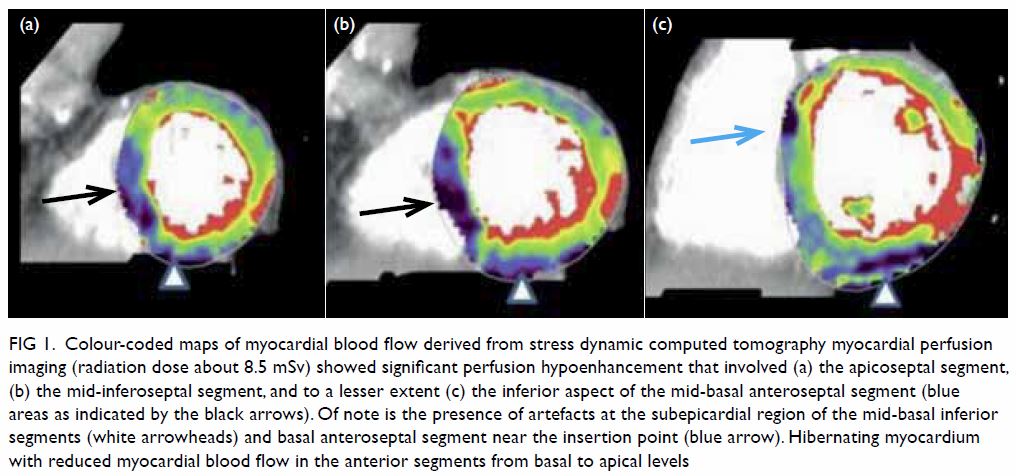
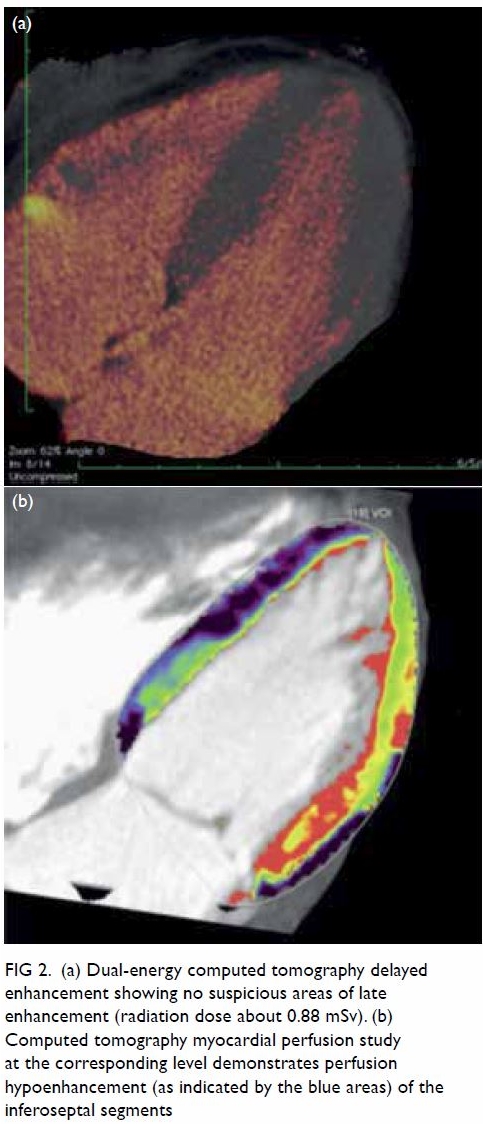
Adenosine stress myocardial perfusion study with colour-coded maps demonstrated perfusion defects in the apicoseptal segment, the mid-inferoseptal segment, and to a lesser extent the basal inferoseptal segment (Fig 1). For quantitative evaluation, the normal areas had a myocardial blood flow of approximately 128 mL/100 mL/min, whereas areas with ischaemia had a flow of around 40 mL/100 mL/min. No delayed enhancement of the corresponding segments was evident to suggest scarring due to prior myocardial infarction (Fig 2).
 

Figure 1. Colour-coded maps of myocardial blood flow derived from stress dynamic computed tomography myocardial perfusion imaging (radiation dose about 8.5 mSv) showed significant perfusion hypoenhancement that involved (a) the apicoseptal segment, (b) the mid-inferoseptal segment, and to a lesser extent (c) the inferior aspect of the mid-basal anteroseptal segment (blue areas as indicated by the black arrows). Of note is the presence of artefacts at the subepicardial region of the mid-basal inferior segments (white arrowheads) and basal anteroseptal segment near the insertion point (blue arrow). Hibernating myocardium with reduced myocardial blood flow in the anterior segments from basal to apical levels
 

Figure 2. (a) Dual-energy computed tomography delayed enhancement showing no suspicious areas of late enhancement (radiation dose about 0.88 mSv). (b) Computed tomography myocardial perfusion study at the corresponding level demonstrates perfusion hypoenhancement (as indicated by the blue areas) of the inferoseptal segments
 
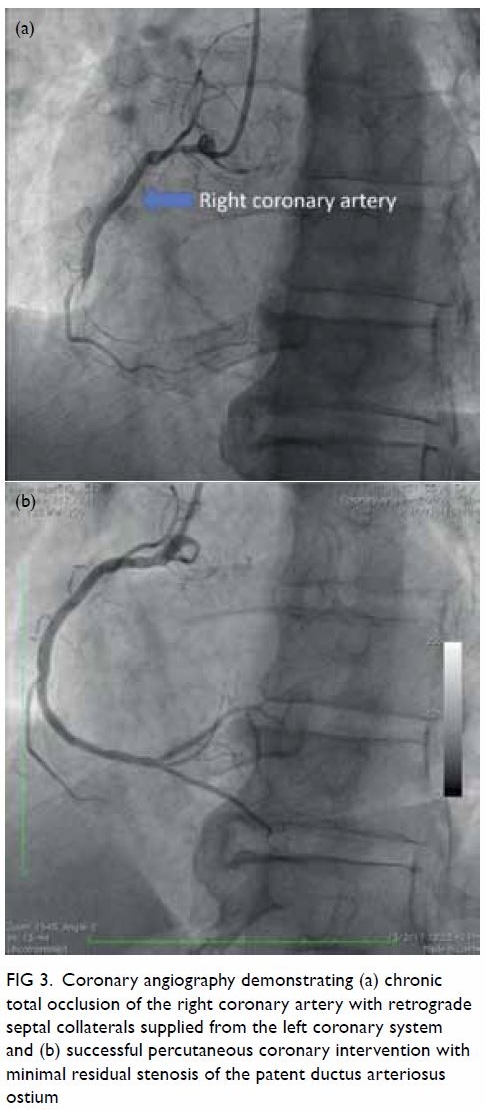
Eventually the patient underwent a percutaneous coronary intervention to the chronic total occlusion of the right coronary artery in 2016 via a combined radial and femoral arterial approach with successful stent deployment across the occluded segment. Final angiography showed excellent results with mild residual stenosis in patent ductus arteriosus ostium (Fig 3). To date, the patient remains symptom-free with improvements in both his exercise tolerance and mood, and psychiatric reports revealing reduced dosage of antidepressants.
 

Figure 3. Coronary angiography demonstrating (a) chronic total occlusion of the right coronary artery with retrograde septal collaterals supplied from the left coronary system and (b) successful percutaneous coronary intervention with minimal residual stenosis of the patent ductus arteriosus ostium
 
Discussion
Various imaging modalities are available for stress myocardial perfusion assessment.1 The present case demonstrates how a state-of-the-art dynamic and quantitative assessment of myocardial perfusion using a dual-source CT scanner enables detection of ischaemia along with viability assessment in a rapid and non-invasive fashion within an acceptable radiation dose.2
 
Conventional “static” CT myocardial imaging allows visual qualitative assessment of a single snapshot of myocardial iodine contrast attenuation that requires precise timing of the arrival of contrast to preserve diagnostic integrity. With a dual-source CT, quantitative assessment of myocardial perfusion in multiple cardiac phases with precise anatomic localisation of the ischaemic area becomes possible. To date, many studies have assessed the reliability of dual-source multiple-detector CT in the dynamic and quantitative evaluation of myocardial perfusion.2 3 4 5
 
Stress CT myocardial perfusion is emerging as a potentially promising non-invasive technique to detect myocardial ischaemia both qualitatively and quantitatively. With new-generation multiple-detector CT scanners, a one-stop non-invasive comprehensive evaluation of the heart including the coronary artery, ventricular function, myocardial perfusion, and viability is possible. Stress CT myocardial perfusion provides incremental benefit to standard coronary CT angiography, particularly for intermediate coronary lesions.2
 
Author contributions
All authors had full access to the data, contributed to the study, approved the final version for publication, and take responsibility for its accuracy and integrity.
 
Concept or design: All authors.
Acquisition of data: A Li, YH Chan.
Analysis of data: A Li, YH Chan.
Drafting of manuscript: A Li, YH Chan.
Critical revision for important intellectual content: All authors.
 
Conflicts of interest
All authors have disclosed no conflicts of interest.
 
Funding/support
This research received no specific grant from any funding agency in the public, commercial, or not-for-profit sectors.
 
References
1. Ko SM, Hwang HK, Kim SM, Cho IH. Multi-modality imaging for the assessment of myocardial perfusion with emphasis on stress perfusion CT and MR imaging. Int J Cardiovasc Imaging 2015;31(Suppl 1):1-21. Crossref
2. Rossi A, Dharampal A, Wragg A, et al. Diagnostic performance of hyperaemic myocardial blood flow index obtained by dynamic computed tomography: does it predict functionally significant coronary lesions? Eur Heart J Cardiovasc Imaging 2014;15:85-94. Crossref
3. Kim SM, Choi JH, Chang SA, Choe YH. Additional value of adenosine-stress dynamic CT myocardial perfusion imaging in the reclassification of severity of coronary artery stenosis at coronary CT angiography. Clin Radiol 2013;68:659-68. Crossref
4. Bamberg F, Becker A, Schwarz F, et al. Detection of hemodynamically significant coronary artery stenosis: incremental diagnostic value of dynamic CT-based myocardial perfusion imaging. Radiology 2011;260:689-98. Crossref
5. Varga-Szemes A, Meinel FG, De Cecco CN, Fuller SR, Bayer RR 2nd, Schoepf UJ. CT myocardial perfusion imaging. AJR Am J Roentgenol 2015;204:487-97. Crossref

Caesarean scar ectopic pregnancy: imaging findings of this rare but potentially life-threatening condition

DOI: 10.12809/hkmj176953
© Hong Kong Academy of Medicine. CC BY-NC-ND 4.0
 
PICTORIAL MEDICINE
Caesarean scar ectopic pregnancy: imaging findings of this rare but potentially life-threatening condition
Joseph Andrew WK Tang, MB, ChB, FRCR1; Esther MF Wong, MB, BS, FHKAM (Radiology)1; Wendy Shu, MB, BCh, FHKCOG2
1 Department of Radiology, Pamela Youde Nethersole Eastern Hospital, Chai Wan, Hong Kong
2 Department of Obstetrics and Gynaecology, Pamela Youde Nethersole Eastern Hospital, Chai Wan, Hong Kong
 
Corresponding author: Dr Joseph Andrew WK Tang (tangwingkin2000@gmail.com)
 
 Full paper in PDF
 
Caesarean scar ectopic pregnancy is a rare pregnancy complication with an estimated incidence of 1/1800 to 1/2500 pregnancies.1 2 Complications include uterine rupture, massive haemorrhage, placenta accrete, and pregnancy loss.3 Ultrasound examination is usually the first-line investigation. Magnetic resonance imaging (MRI) serves as a powerful confirmation tool. With its inherent superior tissue contrast and mulitplanar capability, MRI depicts anatomical details with robust reproducibility.4 Caesarean scar ectopic pregnancy is associated with a high risk of uterine rupture and uncontrollable haemorrhage. Expectant management is possible but not advocated. Surgical treatment leads to quicker postoperative recovery but may be associated with major haemorrhage.5 Other treatment includes systemic methotrexate and uterine artery embolisation.3
 
A high index of suspicion is required to diagnose this condition so that timely treatment can be initiated and life-threatening complications from a ruptured ectopic pregnancy prevented.
 
Case
A 34-year-old woman with a history of Caesarean section presented to the emergency department with per vaginal bleeding. Her pregnancy was 7 weeks of gestation by date.
 
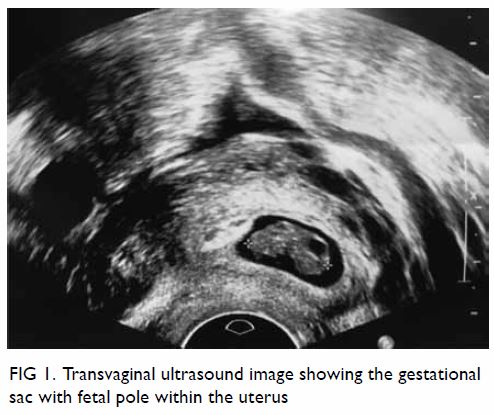
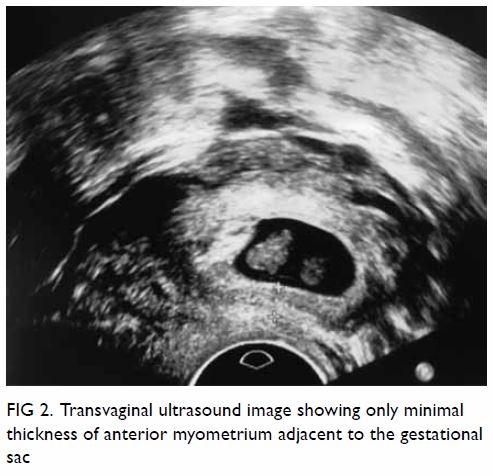
On vaginal examination, the cervical os was closed and mildly blood-stained. She was haemodynamically stable with a normal haemoglobin of 12.9 g/dL and beta–human chorionic gonadotropin 15 877 mIU/mL. Transvaginal ultrasound revealed a single intrauterine gestational sac in the lower segment of the uterus, closely related to the myometrium (Fig 1). The fetal pole with positive fetal heart beat was identified. Crown to rump length was 11 mm, corresponding with 7 weeks and 1 day of gestation. The anterior uterine wall adjacent to the gestational sac was very thin with a thickness of only 4 mm (Fig 2). However, it was uncertain whether the placenta was directly implanted onto the Caesarean scar. A provisional diagnosis was made of pending abortion or Caesarean scar ectopic pregnancy. Magnetic resonance imaging of the pelvis was performed to determine whether the thin layer of soft tissue at the anterior uterine wall represented myometrium in the Caesarean scar with placental implantation elsewhere or if the placental tissue was implanted directly onto the scar.
 

Figure 1. Transvaginal ultrasound image showing the gestational sac with fetal pole within the uterus
 

Figure 2. Transvaginal ultrasound image showing only minimal thickness of anterior myometrium adjacent to the gestational sac
 
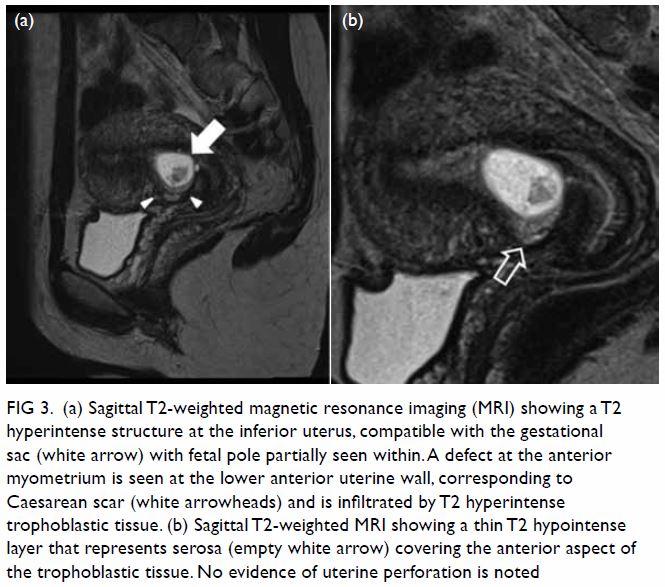
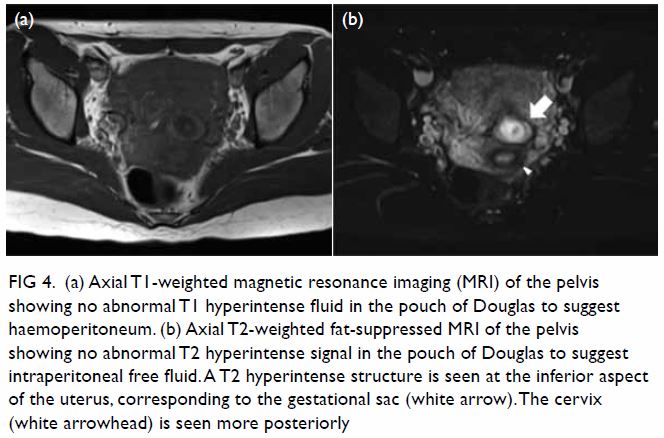
Magnetic resonance imaging showed a 1.7-cm defect at the anterior lower segment of the myometrium, corresponding to the Caesarean section scar. It was distended by a gestational sac. A singleton pregnancy was identified with crown-rump length consistent with gestational age. Trophoblastic tissue was seen implanted onto the serosa of the uterus (Fig 3). Overall MRI findings were compatible with Caesarean scar ectopic pregnancy. There was no direct extension of trophoblastic tissue into adjacent organs such as the urinary bladder or sign of uterine rupture (Fig 4).
 

Figure 3. (a) Sagittal T2-weighted magnetic resonance imaging (MRI) showing a T2 hyperintense structure at the inferior uterus, compatible with the gestational sac (white arrow) with fetal pole partially seen within. A defect at the anterior myometrium is seen at the lower anterior uterine wall, corresponding to Caesarean scar (white arrowheads) and is infiltrated by T2 hyperintense trophoblastic tissue. (b) Sagittal T2-weighted MRI showing a thin T2 hypointense layer that represents serosa (empty white arrow) covering the anterior aspect of the trophoblastic tissue. No evidence of uterine perforation is noted
 

Figure 4. (a) Axial T1-weighted magnetic resonance imaging (MRI) of the pelvis showing no abnormal T1 hyperintense fluid in the pouch of Douglas to suggest haemoperitoneum. (b) Axial T2-weighted fat-suppressed MRI of the pelvis showing no abnormal T2 hyperintense signal in the pouch of Douglas to suggest intraperitoneal free fluid. A T2 hyperintense structure is seen at the inferior aspect of the uterus, corresponding to the gestational sac (white arrow). The cervix (white arrowhead) is seen more posteriorly
 
The superior contrast resolution in MRI for different soft tissues is advantageous in the differentiation of uterine serosa, myometrium, endometrium, and trophoblastic tissue. This helped confirm the diagnosis of Caesarean scar ectopic pregnancy in our patient and would have been difficult if only ultrasound findings were available.
 
The patient received intramuscular methotrexate therapy. Serial beta–human chorionic gonadotropin levels showed a decreasing trend. Subsequent definitive treatment with suction evacuation was performed. The patient made an uneventful recovery.
 
Author contributions
Concept and design of the study: All authors.
Acquisition of data: EMF Wong, W Shu.
Analysis and interpretation of data: EMF Wong, W Shu.
Drafting of the manuscript: JAWK Tang.
Critical revision for important intellectual content: JAWK Tang, EMF Wong.
 
Declaration
All authors have disclosed no conflicts of interest. All authors had full access to the data, contributed to the study, approved the final version for publication, and take responsibility for its accuracy and integrity.
 
References
1. Seow KM, Huang LW, Lin YH, Lin MY, Tsai YL, Hwang JL. Caesarean scar pregnancy: issues in management. Ultrasound Obstet Gynecol 2004;23:247-53. Crossref
2. Jurkovic D, Hillaby K, Woelfer B, Lawrence A, Salim R, Elson CJ. First-trimester diagnosis and management of pregnancies implanted into the lower uterine segment caesarean section scar. Ultrasound Obstet Gynecol 2003;21:220-7. Crossref
3. Michaels AY, Washburn EE, Pocius KD, Benson CB, Doubilet PM, Carusi DA. Outcome of cesarean scar pregnancies diagnosed sonographically in the first trimester. J Ultrasound Med 2015;34:595-9. Crossref
4. Kao LY, Scheinfeld MH, Chernyak V, Rozenblit AM, Oh S, Dym RJ. Beyond ultrasound: CT and MRI of ectopic pregnancy. AJR Am J Roentgenol 2014;202:904-11. Crossref
5. Alalade AO, Smith FJ, Kendall CE, Odejinmi F. Evidencebased management of non-tubal ectopic pregnancies. J Obstet Gynaecol 2017;37:982-91. Crossref

Magnetic resonance imaging monitoring of post-treatment changes to Crohn’s disease–related anal fistula in patients prescribed infliximab

DOI: 10.12809/hkmj176964
© Hong Kong Academy of Medicine. CC BY-NC-ND 4.0
 
PICTORIAL MEDICINE
Magnetic resonance imaging monitoring of post-treatment changes to Crohn’s disease–related anal fistula in patients prescribed infliximab
KY Man, MB, ChB, FRCR1; Esther MF Wong, MB, BS, FHKCR1; Francis KY Cho, MB, BS, FHKCR1; CM Leung, FHKAM (Medicine)2
1 Department of Radiology, Pamela Youde Nethersole Eastern Hospital, Chai Wan, Hong Kong
2 Department of Medicine, Pamela Youde Nethersole Eastern Hospital, Chai Wan, Hong Kong
 
Corresponding author: Dr KY Man (dsgundam@hotmail.com)
 
 Full paper in PDF
 
The incidence of inflammatory bowel disease, particularly Crohn’s disease, is rising in Hong Kong.1 The age-adjusted incidence of Crohn’s disease increased from 0.01 per 100 000 population in 1985 to 1.46 per 100 000 population in 2014.1 Crohn’s disease is a multisystem disorder with specific radiological features such as transmural inflammation, fistulation, and skip lesions. Perianal fistulas often complicate Crohn’s disease, affecting up to 36% of patients.2
 
Infliximab, a monoclonal antibody against tumour necrosis factor-α, has revolutionised the treatment of Crohn’s disease–related anal fistula. Current evidence shows encouraging results for closure of perianal fistulas. According to a local consensus statement, biologics are advocated in patients with active fistulising Crohn’s disease, particularly those with complex perianal fistulising disease.3
 
Response to monoclonal antibody therapy needs to be monitored. This pictorial review illustrates the post-treatment changes on magnetic resonance imaging (MRI) of anal fistula in patients prescribed infliximab.
 
Patients with a known history of Crohn’s disease complicated by perianal fistula and prescribed infliximab between 2012 and 2016 were reviewed. The treatment regimen at our centre comprises an intravenous loading dose of infliximab 5 mg/kg, followed by the same dose at week 2 and week 6. Thereafter a maintenance dose of 5 mg/kg is given every 8 weeks.
 
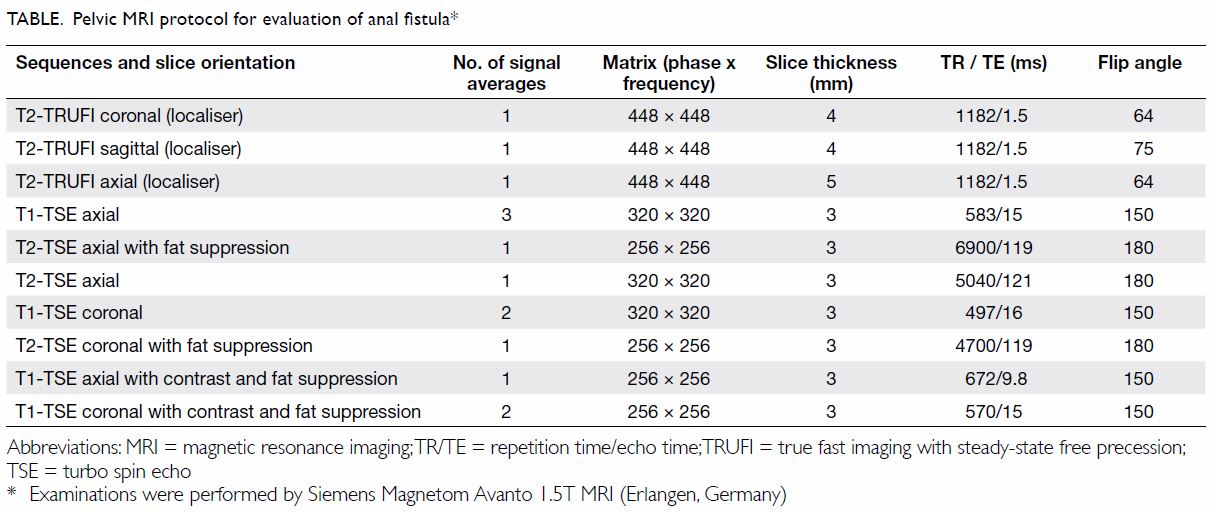
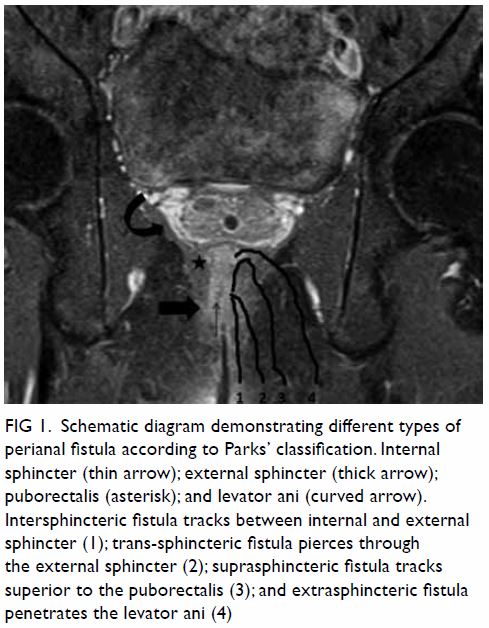
Magnetic resonance images were acquired with the 1.5T Siemens Magnetom Avanto system (Erlangen, Germany). The pelvic MRI protocol for perianal fistula evaluation consists of T1-weighted and high-spatial-resolution T2-weighted imaging sequences without fat saturation to delineate the muscle groups, fat planes, and fistula tract. T2-weighted imaging with fat suppression is used to assess oedema and fluid-containing tracts and cavities, whereas fat-suppressed T1-weighted unenhanced and contrast-enhanced sequences are used to assess the presence and degree of inflammation (Table). Diffusion-weighted imaging is not routinely performed in view of the need for an extended examination time. Information about the presence of fluid, oedema, cavities, and inflammation can be obtained through these sequences. Anal fistulae are classified according to the Parks’ classification system (Fig 1).4
 

Table. Pelvic MRI protocol for evaluation of anal fistula
 

Figure 1. Schematic diagram demonstrating different types of perianal fistula according to Parks’ classification. Internal sphincter (thin arrow); external sphincter (thick arrow); puborectalis (asterisk); and levator ani (curved arrow). Intersphincteric fistula tracks between internal and external sphincter (1); trans-sphincteric fistula pierces through the external sphincter (2); suprasphincteric fistula tracks superior to the puborectalis (3); and extrasphincteric fistula penetrates the levator ani (4)
 
Three patients (two men, one woman) were reviewed and all received infliximab. At least one pre-treatment and one post-treatment MRI were performed.
 
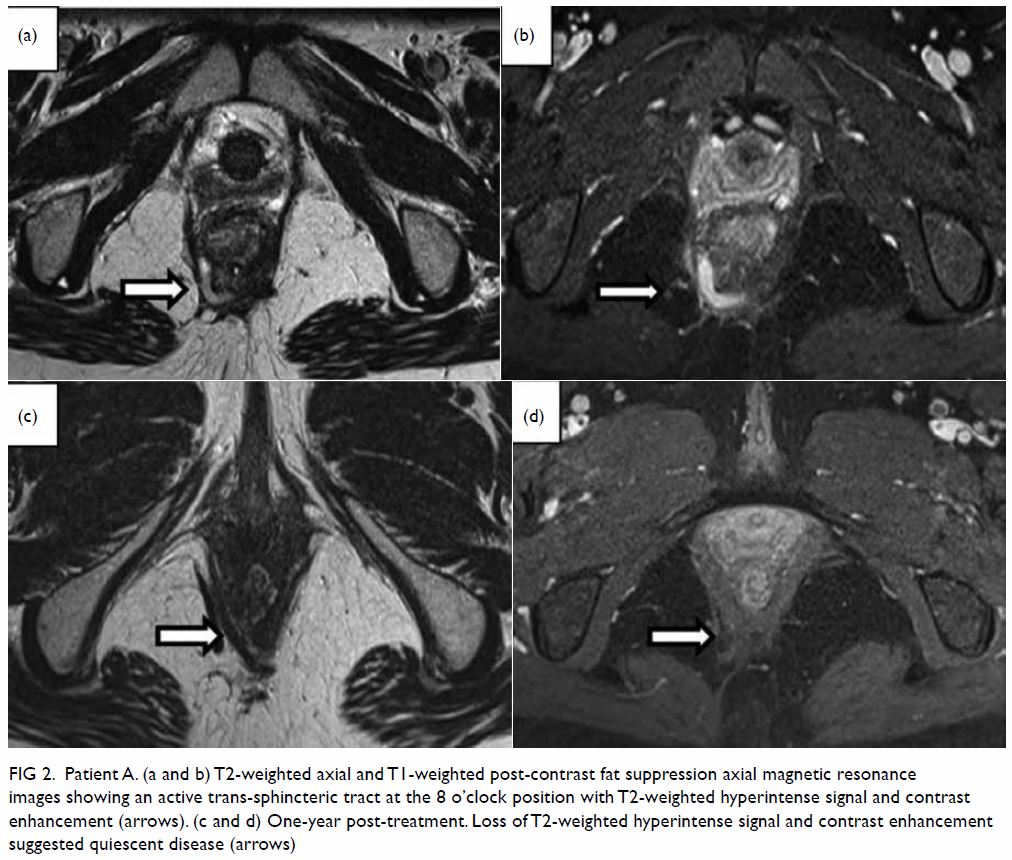
Patient A was a 34-year-old woman with a history of systemic lupus erythematosus, retinitis, and neuropsychiatric lupus. She had had recurrent ischiorectal abscess and perianal fistula since 2002. Rectal biopsy confirmed Crohn’s disease. Despite treatment with azathioprine, the perianal fistula failed to close. She was scheduled to initially receive three doses of infliximab. Close monitoring was essential in view of the potential to develop lupus-like disease. Progress MRI after the third dose of infliximab showed slight interval improvement in her perianal fistula. Biologics were continued in view of the residual disease. After the seventh dose of infliximab, progress MRI revealed a largely quiescent perianal fistula (Fig 2). In view of the radiologically healed fistula, clinical improvement and potential risk of lupus-like disease, the decision was taken to stop the infliximab infusion but continue close clinical and radiological monitoring.
 

Figure 2. Patient A. (a and b) T2-weighted axial and T1-weighted post-contrast fat suppression axial magnetic resonance images showing an active trans-sphincteric tract at the 8 o’clock position with T2-weighted hyperintense signal and contrast enhancement (arrows). (c and d) One-year post-treatment. Loss of T2-weighted hyperintense signal and contrast enhancement suggested quiescent disease (arrows)
 
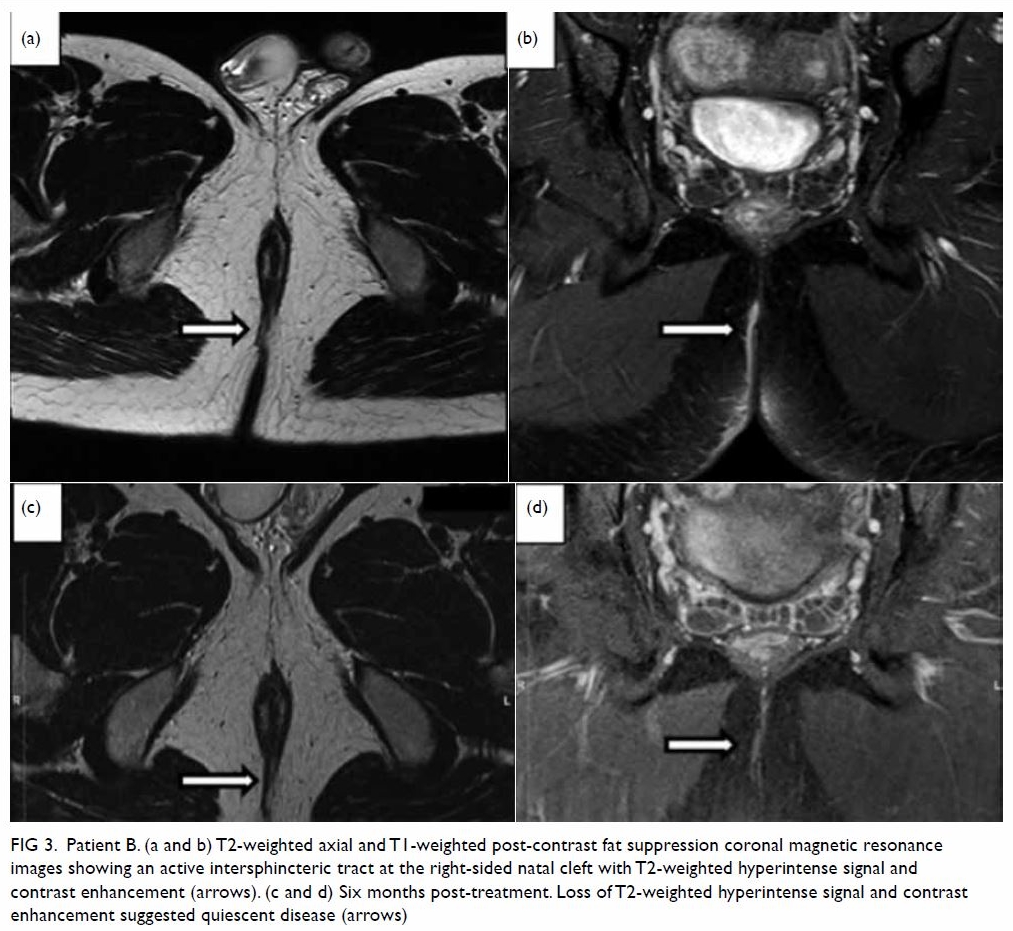
Patient B was a 24-year-old man with a history of perianal fistula since 2015 and an episode of perianal abscess that required incision and drainage. Crohn’s disease was confirmed on rectal biopsy. He had previously developed azathioprine-induced pancytopenia. Subsequent infusion of infliximab infusion resulted in responsive disease, evident on MRI (Fig 3). Clinical and radiological monitoring (progress MRI) at 6-month intervals was carried out to determine progress of the perianal fistula. Infliximab would be stopped when there was evidence of healed tract and clinical improvement.
 

Figure 3. Patient B. (a and b) T2-weighted axial and T1-weighted post-contrast fat suppression coronal magnetic resonance images showing an active intersphincteric tract at the right-sided natal cleft with T2-weighted hyperintense signal and contrast enhancement (arrows). (c and d) Six months post-treatment. Loss of T2-weighted hyperintense signal and contrast enhancement suggested quiescent disease (arrows)
 
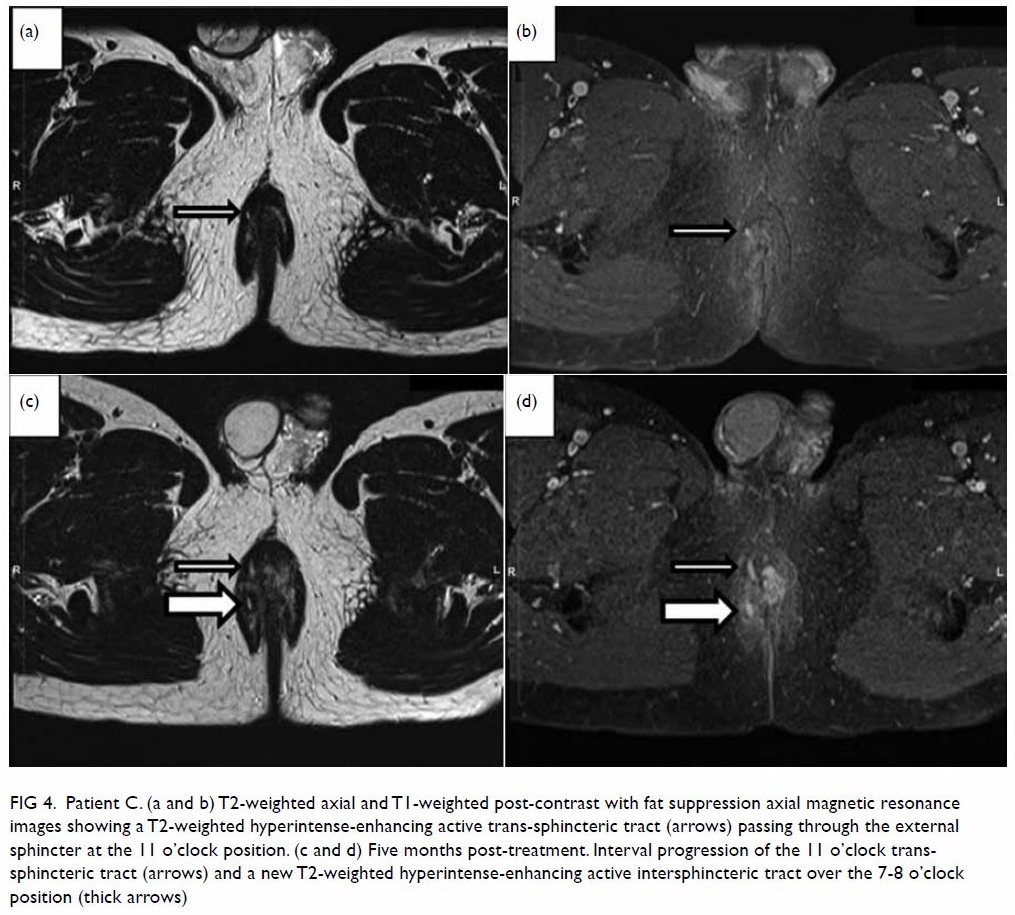
Patient C, a 42-year-old man had a history of ileocolic Crohn’s disease since 2008, with episodes of perianal abscess and fistula refractory to steroid and azathioprine treatment. Magnetic resonance imaging showed progressive perianal fistula (Fig 4) after the second maintenance dose of infliximab. Previous infliximab dose/frequency was continued and progress MRI planned for the purpose of reassessment and consideration of alternative treatment if there was persistent progression.
 

Figure 4. Patient C. (a and b) T2-weighted axial and T1-weighted post-contrast with fat suppression axial magnetic resonance images showing a T2-weighted hyperintense-enhancing active trans-sphincteric tract (arrows) passing through the external sphincter at the 11 o’clock position. (c and d) Five months post-treatment. Interval progression of the 11 o’clock transsphincteric tract (arrows) and a new T2-weighted hyperintense-enhancing active intersphincteric tract over the 7-8 o’clock position (thick arrows)
 
Crohn’s disease–related anal fistulae are frequently encountered in radiologic practice due to their complexity and propensity for incomplete treatment response and relapse.
 
Magnetic resonance imaging is a well-established diagnostic tool for anal fistula. Its inherent high spatial and contrast resolution allows precise anatomical delineation.5 Magnetic resonance imaging plays a critical role in helping determine the appropriate treatment that should be individualised according to the type of perianal fistula and the degree of involvement of surrounding pelvic structures. Clinical examination can often be difficult because of induration and inflammation in patients with anal sepsis. At MRI, identification and localisation of the entire fistula, including the external opening, the primary track, secondary tracks, abscesses, and the internal opening, are essential for fistula classification and treatment. Inadequate assessment may result in progression of a simple fistula to a complex fistula, and failure to recognise secondary extensions can result in recurrent sepsis. Anti–tumour necrosis factor antibodies (infliximab) have been introduced with good clinical results. Magnetic resonance imaging also plays an important role in evaluation of the response to medical therapy. Magnetic resonance imaging does not have field of view limitations and offers excellent views of the supralevator, retrorectal and anteroanal spaces, where occult sepsis may be missed clinically due to extensive scarring or a remote location.6
 
This pictorial review demonstrates the ability of MRI to monitor the response to therapy of anal fistula in Crohn’s disease patients receiving infliximab.
 
Author contributions
KY Man is responsible for the design, acquisition and interpretation of data, and drafting of the article. EMF Wong, FKY Cho, and CM Leung are responsible for critical revision for important intellectual content.
 
Declaration
All authors have disclosed no conflicts of interest. All authors had full access to the data, contributed to the study, approved the final version for publication, and take responsibility for its accuracy and integrity.
 
References
1. Ng SC, Leung WK, Shi HY, et al. Epidemiology of inflammatory bowel disease from 1981 to 2014: results from a territory-wide population-based registry in Hong Kong. Inflamm Bowel Dis 2016;22:1954-60. Crossref
2. Leong RW, Lau JY, Sung JJ. The epidemiology and phenotype of Crohn’s disease in the Chinese population. Inflamm Bowel Dis 2004;10:646-51. Crossref
3. Leung WK, Ng SC, Chow DK, et al. Use of biologics for inflammatory bowel disease in Hong Kong: consensus statement. Hong Kong Med J 2013;19:61-8.
4. Parks AG, Gordon PH, Hardcastle JD. A classification of fistula-in-ano. Br J Surg 1976;63:1-12. Crossref
5. Buchanan G, Halligan S, Williams A, et al. Effect of MRI on clinical outcome of recurrent fistula-in-ano. Lancet 2002;360:1661-2. Crossref
6. Bell SJ, Halligan S, Windsor AC, Williams AB, Wiesel P, Kamm MA. Response of fistulating Crohn’s disease to infliximab treatment assessed by magnetic resonance imaging. Aliment Pharmacol Ther 2003;17:387-93. Crossref

Pages