Creamy clues to monogenic hypertriglyceridaemia

Hong Kong Med J 2026 Apr;32(2):174–5.e1–2 | Epub 9 Apr 2026
© Hong Kong Academy of Medicine. CC BY-NC-ND 4.0
 
PICTORIAL MEDICINE
Creamy clues to monogenic hypertriglyceridaemia
Antony Fu, MB, ChB, FHKAM (Paediatrics); Cindy Chan, MB, BS, FHKAM (Paediatrics)
Department of Paediatrics and Adolescent Medicine, Princess Margaret Hospital, Hong Kong SAR, China
 
Corresponding author: Dr Antony Fu (antony.fu@ha.org.hk)
 
 Full paper in PDF
 
 
A previously healthy 21-month-old Pakistani girl presented to our institution in June 2025 with a 1-year history of a pruritic papulovesicular rash affecting her limbs and groin. Apart from intermittent viral illnesses, there were no reported episodes of abdominal pain, vomiting or other symptoms suggestive of acute pancreatitis. She had been thriving well with normal intake, urine output and bowel habit. She was born at term by vaginal delivery with an uneventful perinatal history. Her parents were healthy second cousins.
 
Physical examination of the patient revealed multiple discrete yellow papules over all four limbs and the groin, sparing the face, trunk and back. Otherwise, she appeared well with age-appropriate growth parameters.
 
Two months prior to the current presentation, the patient had been admitted with an upper respiratory tract infection. Laboratory investigations showed mild microcytic anaemia, but routine biochemistry was unremarkable. The chemical pathology report noted serum turbidity requiring clearance by high-speed centrifugation prior to non-lipid analysis; however, this critical finding was overlooked, and the patient was discharged home.
 
At the latest clinic visit, the skin lesions were recognised as eruptive xanthomas, appearing as small yellow papules with a creamy centre (Fig 1). A grossly lipaemic blood sample showed a thick creamy layer (Fig 2), raising clinical suspicion of severe hypertriglyceridaemia. Laboratory testing confirmed this, with triglyceride level measuring 100.6 mmol/L.
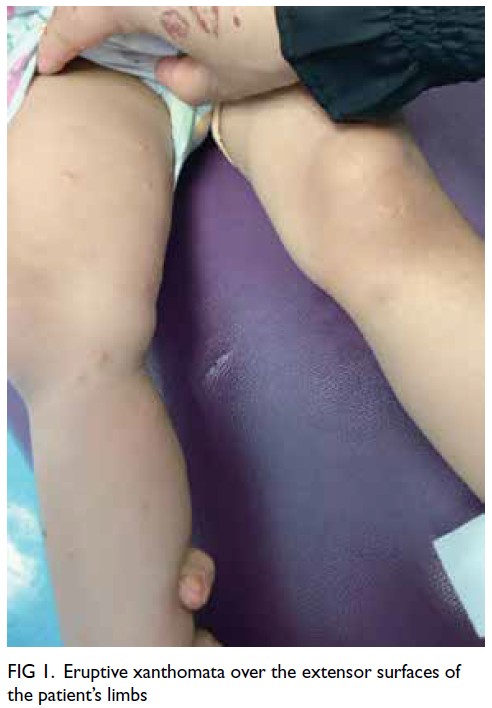
 

Figure 1. Eruptive xanthomata over the extensor surfaces of the patient’s limbs
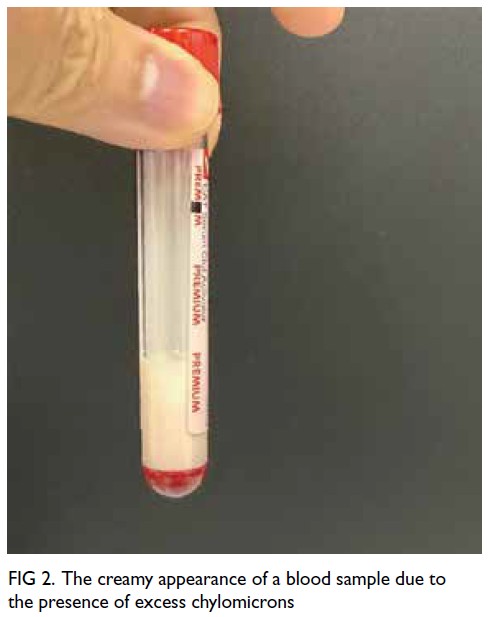
 

Figure 2. The creamy appearance of a blood sample due to the presence of excess chylomicrons
 
The patient was admitted to the paediatric intensive care unit, kept nil by mouth and commenced on intravenous Actrapid (Bagsværd, Denmark) 0.1 unit/kg/hr, with a dextrose infusion to maintain euglycaemia. After 43.5 hours of infusion therapy, triglyceride level had reduced to 1.3 mmol/L (Fig 3). Following intravenous insulin therapy, she was managed with dietary restriction and essential fatty acid supplementation. Throughout the course, serial amylase and lipase levels remained normal. Computed tomography excluded acute pancreatitis. A family history revealed a nephew with monogenic hypertriglyceridaemia due to a GPIHBP1 mutation, which was subsequently confirmed in our patient.
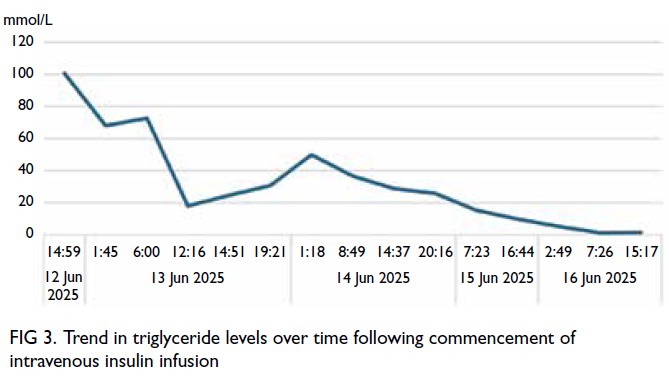
Figure 3. Trend in triglyceride levels over time following commencement of intravenous insulin infusion
 
Monogenic hypertriglyceridaemia, also known as type I hyperlipidaemia, is an uncommon autosomal recessive condition most often resulting from LPL gene mutations that impair lipoprotein lipase function.1 The disorder usually manifests in childhood with recurrent abdominal pain, pancreatitis, or characteristic features such as eruptive xanthomas, lipaemia retinalis, and hepatosplenomegaly. Without appropriate management, recurrent pancreatitis may progress to chronic disease with subsequent exocrine and endocrine insufficiency. Clinical manifestations typically emerge before 10 years of age, and approximately one quarter of cases present within the first year of life.2
 
Acute pancreatitis typically arises when serum triglyceride concentrations exceed 11.3 mmol/L.3 4 Management involves fasting, intravenous fluid support, and continuous insulin infusion. This activates lipoprotein lipase, accelerating triglyceride clearance—reducing levels within 24 hours by approximately 40% with insulin alone and up to 80% when combined with fasting.5 Despite this, some individuals, as in our case, remain asymptomatic even with extreme hypertriglyceridaemia.6 In retrospect, earlier recognition of these ‘creamy’ clues—eruptive xanthomas and lipaemic serum—could have enabled a timelier diagnosis of this rare lipid disorder.
 
Author contributions
Concept or design: A Fu.
Acquisition of data: Both authors.
Analysis or interpretation of data: Both authors.
Drafting of the manuscript: A Fu.
Critical revision of the manuscript for important intellectual content: A Fu.
 
Both authors had full access to the data, contributed to the study, approved the final version for publication, and take responsibility for its accuracy and integrity.
 
Conflicts of interest
Both authors have disclosed no conflicts of interest.
 
Acknowledgement
The authors thank Dr Doris Ching and her team from the Department of Chemical Pathology, Princess Margaret Hospital for their unwavering support in facilitating the molecular diagnosis of the patient.
 
Funding/support
This study received no specific grant from any funding agency in the public, commercial, or not-for-profit sectors.
 
Ethics approval
The patient was treated in accordance with the Declaration of Helsinki. The parents of the patient provided written consent for all treatments and procedures, and verbal consent for publication, including the publication of the accompanying clinical images.
 
References
1. Chyzhyk V, Brown AS. Familial chylomicronemia syndrome: a rare but devastating autosomal recessive disorder characterized by refractory hypertriglyceridemia and recurrent pancreatitis. Trends Cardiovasc Med 2020;30:80-5. Crossref
2. Mustafa M, Almheiri M. Six-year follow-up of a child with familial chylomicronemia syndrome: disease course and effectiveness of gemfibrozil treatment—case report and literature review. Ann Pediatr Endocrinol Metab 2024;29:130-4. Crossref
3. Krishnamurthy A, Homan E, Kim SM. Diagnosis, evaluation, and management of severe hypertriglyceridemia. Curr Cardiovasc Risk Rep 2025;19:6. Crossref
4. Valaiyapathi B, Ashraf AP. Hospital management of severe hypertriglyceridemia in children. Curr Pediatr Rev 2017;13:225-31. Crossref
5. Witztum JL, Gaudet D, Freedman SD, et al. Volanesorsen and triglyceride levels in familial chylomicronemia syndrome. N Engl J Med 2019;381:531-42. Crossref
6. Schaefer EW, Leung A, Kravarusic J, Stone NJ. Management of severe hypertriglyceridemia in the hospital: a review. J Hosp Med 2012;7:431-8. Crossref
Inflammatory myofibroblastic tumour presenting as a gastric submucosal tumour

Hong Kong Med J 2026 Feb;32(1):70–1.e1–2 | Epub 26 Jan 2026
© Hong Kong Academy of Medicine. CC BY-NC-ND 4.0
 
PICTORIAL MEDICINE
Inflammatory myofibroblastic tumour presenting as a gastric submucosal tumour
Huahui Zhang, MD1,2,3; Shouying Li, MD1,2,3, Ling Ren, MD1,2,3
1 Department of Gastroenterology, The Affiliated Lianyungang Hospital of Xuzhou Medical University/The First People’s Hospital of Lianyungang, Lianyungang, China
2 Department of Gastroenterology, The First Affiliated Hospital of Kangda College, Nanjing Medical University/The First People’s Hospital of Lianyungang, Lianyungang, China
3 Department of Gastroenterology, Lianyungang Clinical College of Nanjing Medical University/The First People’s Hospital of Lianyungang, Lianyungang, China
 
Corresponding author: Dr Ling Ren (ruby804904@126.com)
 
 Full paper in PDF
 
 
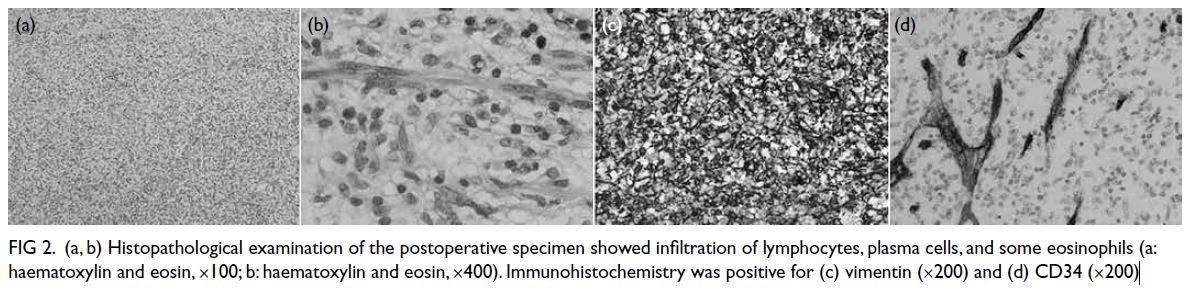
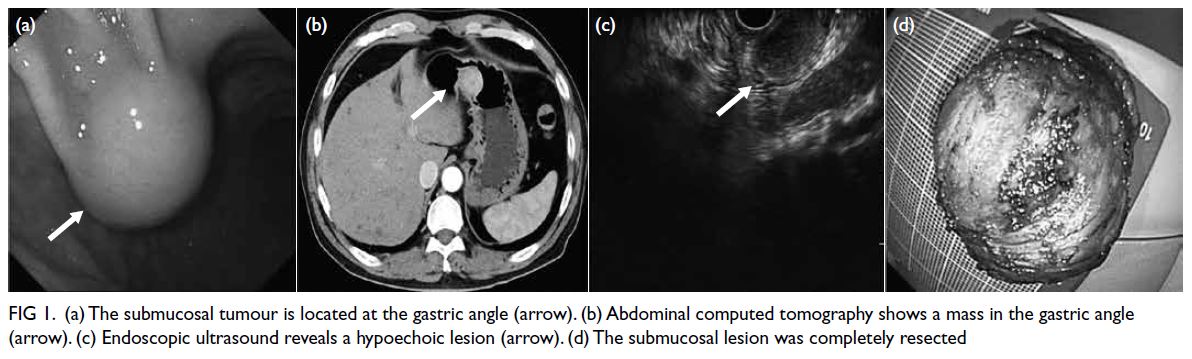
A 56-year-old male presented to our gastroenterology department with a 1-month history of abdominal discomfort. He had a 5-year history of interstitial lung disease and was regularly taking pirfenidone, prednisone, cyclosporine, and hydroxychloroquine. He denied any family history of malignancy. Laboratory tests, electrocardiography, and physical examination revealed no significant abnormalities. Gastroscopy identified a 40-mm submucosal tumour (SMT) in the gastric angle (Fig 1a). Abdominal computed tomography revealed an SMT with intraluminal growth (Fig 1b). Endoscopic ultrasound gastroscopy showed a well-defined and hypoechoic lesion originating from the muscularis propria (Fig 1c). The SMT was completely resected en bloc via endoscopic submucosal excavation (ESE) [Fig 1d]. Post-ESE histopathological examination revealed the tumour to be composed of spindle fibroblasts arranged in fascicles, with a background of lymphocytes, plasma cells, and some eosinophilic infiltration (Fig 2a and b). Immunohistochemical staining showed tumour cells positive for vimentin (Fig 2c) and CD34 (cluster of differentiation 34) [Fig 2d]. The frequency of Ki-67 positive proliferating cells was very low (1%). CD117 (cluster of differentiation 117), DOG-1, S100, SOX-10, SMA, desmin, and calponin were all negative. Histopathological and immunohistochemical findings confirmed the diagnosis of an inflammatory myofibroblastic tumour (IMT).
 

Figure 1. (a) The submucosal tumour is located at the gastric angle (arrow). (b) Abdominal computed tomography shows a mass in the gastric angle (arrow). (c) Endoscopic ultrasound reveals a hypoechoic lesion (arrow). (d) The submucosal lesion was completely resected
 

Figure 2. (a, b) Histopathological examination of the postoperative specimen showed infiltration of lymphocytes, plasma cells, and some eosinophils ([a] haematoxylin and eosin, ×100; [b] haematoxylin and eosin, ×400). Immunohistochemistry was positive for (c) vimentin (×200) and (d) cluster of differentiation 34 (×200)
 
Inflammatory myofibroblastic tumour is a rare type of mesenchymal tumour, first reported in the lungs in 1937.1 Primary gastric IMT is extremely rare and its biological behaviour remains poorly understood. Due to its non-specific endoscopic and radiographic features, it is challenging to differentiate from other SMTs. On immunohistochemistry, IMT is positive for anaplastic lymphoma kinase (ALK), vimentin, and CD34, and negative for S-100, DOG1 (discovered on gastrointestinal stromal tumours [GIST] 1), and CD117. Gastrointestinal stromal tumours, which are also composed of fascicular spindle cells, can be easily confused with IMTs. However, GISTs are strongly positive for CD117, DOG1, and CD34, but negative for ALK.2 Unlike IMT, an inflammatory background is not typical in GISTs. Another differential diagnosis is an inflammatory fibroid polyp, a SMT composed of spindle cells and inflammatory cell infiltration, predominantly eosinophils. These lesions are usually CD34-positive and CD117-negative. Anaplastic lymphoma kinase positivity is helpful in diagnosing IMT but is detected in only 50% to 60% of cases.3 Anaplastic lymphoma kinase negativity has been associated with a higher risk of distant metastasis,4 therefore long-term follow-up is required. Although our case was ALK-negative, the histological features were typical of IMT.
 
Endoscopic submucosal excavation can completely excavate the tumour in the muscularis propria along the lesion’s margin.5 The procedure is comparable to traditional endoscopic submucosal dissection, with the main difference being the depth of dissection. No evidence of recurrence was observed in our patient during 3 years of follow-up. To the best of our knowledge, this is the first report of gastric IMT treated with ESE.
 
Author contributions
Concept or design: L Ren.
Acquisition of data: S Li.
Analysis or interpretation of data: H Zhang.
Drafting of the manuscript: H Zhang, S Li.
Critical revision of the manuscript for important intellectual content: L Ren.
 
All authors had full access to the data, contributed to the study, approved the final version for publication, and take responsibility for its accuracy and integrity.
 
Conflicts of interest
All authors have disclosed no conflicts of interest.
 
Funding/support
This study received no specific grant from any funding agency in the public, commercial, or not-for-profit sectors.
 
Ethics approval
This study was conducted in accordance with the Declaration of Helsinki and was approved by the Ethics Committee of The First People’s Hospital of Lianyungang, China (Ref No.: LW- 20230612001-01). Informed patient consent was waived by the Committee due to the retrospective nature of the study, with the patient anonymised and no identifiable information included.
 
References
1. Sanders BM, West KW, Gingalewski C, Engum S, Davis M, Grosfeld JL. Inflammatory pseudotumor of the alimentary tract: clinical and surgical experience. J Pediatr Surg 2001;36:169-73. Crossref
2. Jadhav M, Harvi R, Patil R, Kittur S. Inflammatory myofibroblastic tumor of the stomach presenting as an exophytic mass—a diagnostic dilemma. Turk Patoloji Derg 2019;35:151-6. Crossref
3. Mahajan P, Casanova M, Ferrari A, Fordham A, Trahair T, Venkatramani R. Inflammatory myofibroblastic tumor: molecular landscape, targeted therapeutics, and remaining challenges. Curr Probl Cancer 2021;45:100768. Crossref
4. Coffin CM, Hornick JL, Fletcher CD. Inflammatory myofibroblastic tumor: comparison of clinicopathologic, histologic, and immunohistochemical features including ALK expression in atypical and aggressive cases. Am J Surg Pathol 2007;31:509-20. Crossref
5. Qi ZP, Shi Q, Liu JZ, et al. Efficacy and safety of endoscopic submucosal dissection for submucosal tumors of the colon and rectum. Gastrointest Endosc 2018;87:540-8.e1. Crossref

Third-trimester prenatal brain imaging for early diagnosis of glutaric aciduria type 1 in monochorionic diamniotic twins

Hong Kong Med J 2026 Feb;32(1):69.e1–2 | Epub 26 Jan 2026
© Hong Kong Academy of Medicine. CC BY-NC-ND 4.0
 
PICTORIAL MEDICINE
Third-trimester prenatal brain imaging for early diagnosis of glutaric aciduria type 1 in monochorionic diamniotic twins
Isabella YM Wah, MB, ChB, FRCOG1; Ye Cao, PhD, FACMG1; Natalie KL Wong, MRCOG, FRCOG1; KW Choy, PhD1; TY Leung, FRCOG1; Josephine SC Chong, FHAKM (Paediatrics)1,2; Lo Wong, MCROG1; YH Ting, FRCOG1; Liona C Poon, FRCOG1
1 Department of Obstetrics and Gynaecology, The Chinese University of Hong Kong, Hong Kong SAR, China
2 Department of Paediatrics, The Chinese University of Hong Kong, Hong Kong SAR, China
 
Corresponding author: Dr Isabella YM Wah (isabellawah@cuhk.edu.hk)
 
 Full paper in PDF
 
 
Case presentation
A 33-year-old primiparous Chinese woman presented for a 12-week ultrasound. Previous early ultrasound had confirmed monochorionic diamniotic twins. Her marriage was non-consanguineous. She had conceived spontaneously and had no family history of inborn errors of metabolism. The 12-week fetal scan revealed normal nuchal translucency in both twins, and non-invasive prenatal testing showed normal results.
 
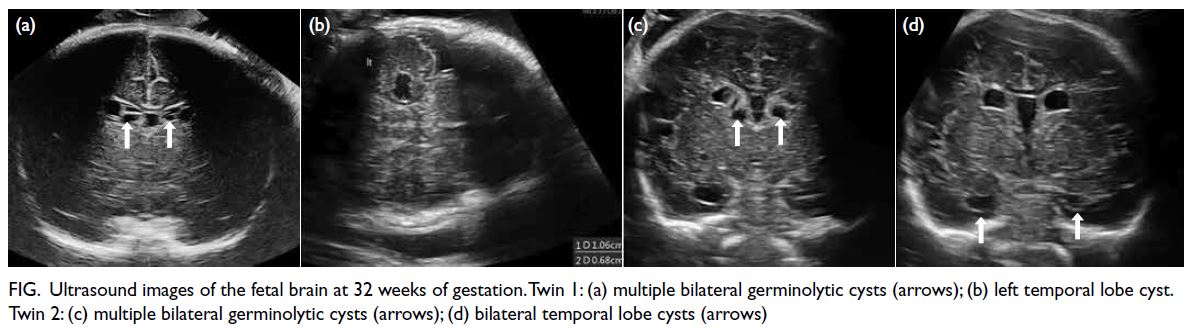
Serial ultrasound examinations were performed every 2 weeks from 16 weeks onwards to monitor fetal growth and detect early signs of twin-twin transfusion syndrome or twin anaemia-polycythaemia sequence. Both fetuses followed the 10th percentile growth curve in abdominal circumference, head circumference, and femur length. Morphology scan showed no abnormalities, and there was no evidence of twin-twin transfusion syndrome or twin anaemia-polycythaemia sequence throughout the pregnancy. Routine targeted neurosonography at 32 weeks showed multiple bilateral germinolytic cysts and temporal cysts in both fetuses (Fig). Brain findings were almost identical in both twins. Although abdominal circumference and femur length remained at the 10th percentile, the head circumference of Fetus A exceeded more than two standard deviations above the mean, while that of Fetus B was at the mean. Fetal magnetic resonance imaging (MRI) at 33 weeks demonstrated normal brain structure with cystic findings consistent with the ultrasound findings and no signs of ischaemia. Amniocentesis at 34 weeks for chromosomal microarray and cytomegalovirus polymerase chain reaction tests yielded negative results. Trio whole-genome sequencing was arranged. At 35 weeks, the mother developed pre-eclampsia, and an emergency lower-segment Caesarean section was performed the following day. Whole-genome sequencing results, available on the day of delivery, revealed a homozygous pathogenic variant, c.1244-2A>C, in the GCDH gene (NM_000159.4) associated with glutaric aciduria type 1 (GA1). Both parents were found to be heterozygous carriers of this variant. Fetus A weighed 2.4 kg with Apgar scores of 7 at 1 minute and 8 at 5 minutes, while Fetus B weighed 2.2 kg and had Apgar scores of 9 at 1 minute and 10 at 5 minutes. Umbilical cord arterial pH was 7.35 for Fetus A and 7.29 for Fetus B. Both neonates were admitted to the neonatal unit and promptly started on intravenous L-carnitine supplementation and a specialised formula diet. No seizures have been observed to date. Postnatal brain MRI at 1 month of age showed unchanged cystic findings in both twins, with no evidence of white matter involvement.
 

Figure. Ultrasound images of the fetal brain at 32 weeks of gestation. Twin 1: (a) multiple bilateral germinolytic cysts (arrows); (b) left temporal lobe cyst. Twin 2: (c) multiple bilateral germinolytic cysts (arrows); (d) bilateral temporal lobe cysts (arrows)
 
Discussion
This case highlights the importance of comprehensive prenatal evaluation, including detailed neurosonography and fetal brain MRI, when unusual fetal brain findings are detected. The initial concern was for transfusion-related complications; however, the absence of typical features prompted a broader differential diagnosis, ultimately leading to the diagnosis of GA1. Metabolic crises such as severe hypoglycaemia, hyperammonaemia, lactic acidosis, and permanent neurological or systemic complications can occur in patients diagnosed after the onset of symptoms. Early identification of GA1 enabled prompt multidisciplinary consultation and the initiation of appropriate treatment, including dietary management. Prenatal diagnosis of GA1 based on third-trimester brain features is possible and facilitates early postnatal management, enabling prompt treatment at birth and potentially improving long-term neurological outcomes.
 
Author contributions
Concept or design: IYM Wah.
Acquisition of data: All authors.
Interpretation of data: All authors.
Drafting of the manuscript: IYM Wah.
Critical revision of the manuscript for important intellectual content: All authors.
 
All authors had full access to the data, contributed to the study, approved the final version for publication, and take responsibility for its accuracy and integrity.
 
Conflicts of interest
All authors have disclosed no conflicts of interest.
 
Acknowledgement
The authors thank the Obstetrics and Gynaecology team, Maternal Fetal Medicine team, midwives, scientists, genetic counsellor and paediatricians at Prince of Wales Hospital for their support in managing the case.
 
Funding/support
This study received no specific grant from any funding agency in the public, commercial, or not-for-profit sectors.
 
Ethics approval
The patient was treated in accordance with the Declaration of Helsinki. Written informed consent was obtained from the patient for publication of the details of the medical case and the accompanying images.
 

Progressive supranuclear palsy–like parkinsonism ensuing from anti–N-methyl-Daspartate receptor encephalitis

Hong Kong Med J 2025 Dec;31(6):494–5.e1–3 | Epub 10 Nov 2025
© Hong Kong Academy of Medicine. CC BY-NC-ND 4.0
 
PICTORIAL MEDICINE
Progressive supranuclear palsy–like parkinsonism ensuing from anti–N-methyl-Daspartate receptor encephalitis
Yan Shen, MD, PhD; Chunyi Wang, MD, PhD; Ningyuan Wang, MD, PhD
Department of Neurology and Institute of Neurology, Ruijin Hospital, Shanghai Jiao Tong University School of Medicine, Shanghai, China
 
Corresponding author: Dr Yan Shen (shenyanzmins@sina.com)
 
 Full paper in PDF
 
 
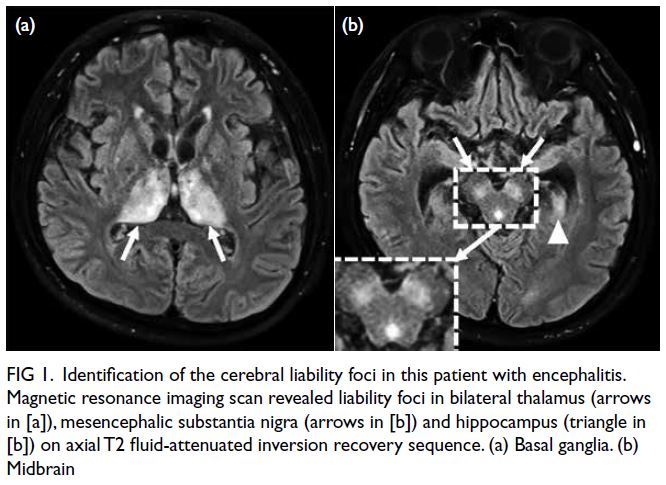
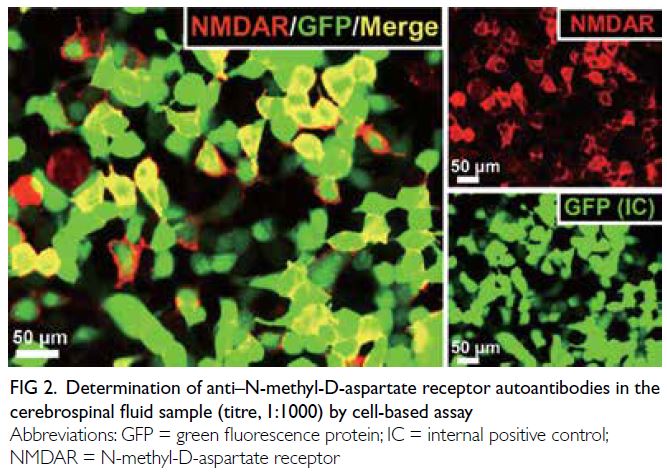
An 18-year-old male postencephalitic patient was admitted with a 2-year history of staggering gait, bradykinesia, limb tremor, and memory decline (online supplementary Fig). Two years previously, he developed continuous fever, headache, psychosis, and generalised seizures. Magnetic resonance imaging scan at the time revealed remarkably high signals in the bilateral thalamus, midbrain and hippocampus (Fig 1). Electroencephalography showed diffuse slow waves, spikes and sharp waves. Immunoelectrophoresis test determined a type II oligoclonal band in the cerebrospinal fluid (CSF). Antigen-specific cell-based assay detected anti–N-methyl-D-aspartate receptor (NMDAR) autoantibodies in the CSF (Fig 2). After exclusion of potential pathogenic microbes and carcinomas, a diagnosis of anti-NMDAR encephalitis was made. The patient was prescribed immediate intravenous immunoglobulin (0.4 g/kg/d for 5 days) and methylprednisolone (500 mg/d, halved every 5 days). Perampanel (8 mg/d) was also administered to control seizure attacks. His symptoms gradually resolved and he was discharged 1 month later.
 

Figure 1. Identification of the cerebral liability foci in this patient with encephalitis. Magnetic resonance imaging scan revealed liability foci in bilateral thalamus (arrows in [a]), mesencephalic substantia nigra (arrows in [b]) and hippocampus (triangle in [b]) on axial T2 fluid-attenuated inversion recovery sequence. (a) Basal ganglia. (b) Midbrain
 

Figure 2. Determination of anti–N-methyl-D-aspartate receptor autoantibodies in the cerebrospinal fluid sample (titre, 1:1000) by cell-based assay
 
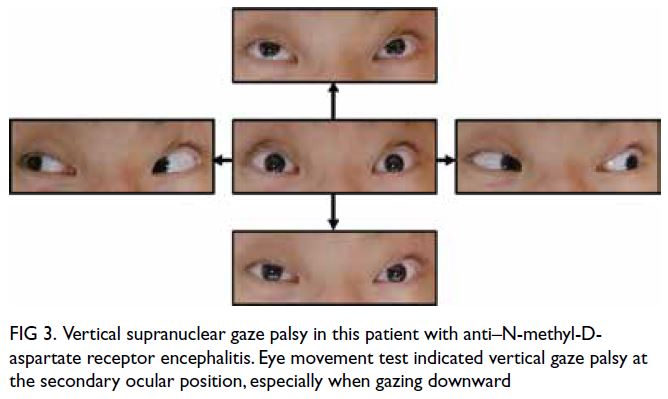
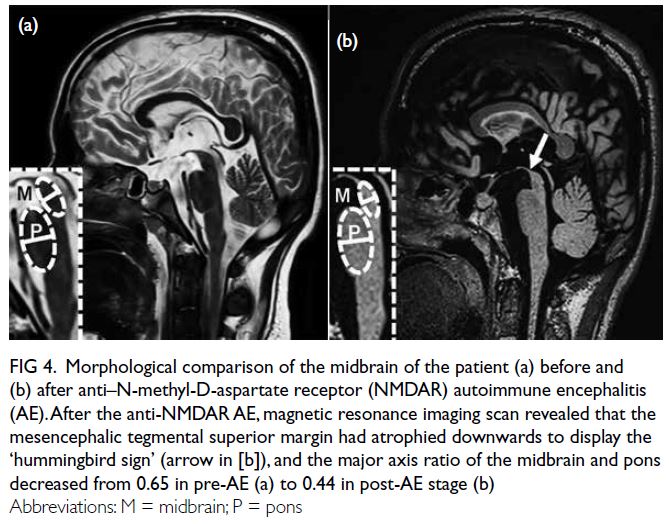
During the rehabilitation period, the patient reported no relapse of encephalitis but presented with insidious bradykinesia, limb tremor, unsteady gait, and memory decline. These symptoms had gradually worsened over the 2-year period and contributed to frequent falls. He was wheelchair-bound at admission. Physical examination revealed limb tremor, hyperreflexia, patellar clonus, a positive Babinski sign, and vertical supranuclear gaze palsy (Fig 3). Mental status examination revealed space-time disorientation. Magnetic resonance imaging scan indicated remarkable midbrain atrophy (Fig 4). In contrast with the ‘convex’ contour before the encephalitis (Fig 4a), the magnetic resonance imaing scan in the postencephalitic stage revealed a ‘concave’ mesencephalic tegmental superior margin and a decreased midbrain-to-pons axis ratio (Fig 4b), mimicking the characteristic ‘hummingbird sign’ seen in progressive supranuclear palsy. Antigen-specific cell-based assay of the CSF sample determined a modest titre (in the ratio of 1: 10) of anti-NMDAR autoantibodies. A compound therapeutic regimen of levodopa (750 mg/d), memantine (20 mg/d) and prednisone (60 mg/d) was initiated. At 3-month follow-up, the patient’s hypokinetic-rigid and cognitive deficits had gradually resolved, and he no longer required a wheelchair.
 

Figure 3. Vertical supranuclear gaze palsy in this patient with anti–N-methyl-Daspartate receptor encephalitis. Eye movement test indicated vertical gaze palsy at the secondary ocular position, especially when gazing downward
 

Figure 4. Morphological comparison of the midbrain of the patient (a) before and (b) after anti–N-methyl-D-aspartate receptor (NMDAR) autoimmune encephalitis (AE). After the anti-NMDAR AE, magnetic resonance imaging scan revealed that the mesencephalic tegmental superior margin had atrophied downwards to display the ‘hummingbird sign’ (arrow in [b]), and the major axis ratio of the midbrain and pons decreased from 0.65 in pre-AE (a) to 0.44 in post-AE stage (b)
 
Movement disorders are the third most frequently observed symptom in anti-NMDAR encephalitis.1 We reported the first case of progressive supranuclear palsy–like parkinsonism consequent to anti-NMDAR encephalitis. Intriguingly, the brain regions implicated in this case coincided with the susceptible nuclei identified in parkinsonism.
 
Excitatory glutamatergic NMDAR subunits are abundantly expressed on postsynaptic nigrostriatal projection neurons, and are simultaneously under the feedback modulation by dopaminergic afferents.2 Excessive glutamatergic activation, such as that seen in anti-NMDAR encephalitis, can drive excitotoxic neuronal death and contribute to progressive Parkinsonian motor and cognitive deficits.3 A previous study reported that co-morbidity of anti-NMDAR encephalitis in Parkinson’s disease worsens the existing extrapyramidal syndrome, resulting in severe bradykinesia or even akinesia.4 Another recent study indicated that anti-NMDAR autoantibodies correlated with worsening cognitive deficits in Parkinson’s disease patients.5
 
Similarly, the modest titre of anti-NMDAR antibody and amelioration of symptoms in this case following prednisone treatment suggest that persistent low-concentration autoantibody-mediated excitotoxicity might underlie the postencephalitic Parkinsonian and cognitive deficits, although not induce clinical relapse of autoimmune encephalitis. Nevertheless a proposed causal relationship between autoimmune encephalitis and postencephalitic neurodegeneration requires clarification in future follow-up cohort studies.
 
Author contributions
Concept or design: Y Shen.
Acquisition of data: N Wang, C Wang.
Analysis or interpretation of data: All authors.
Drafting of the manuscript: Y Shen.
Critical revision of the manuscript for important intellectual content: All authors.
 
All authors had full access to the data, contributed to the study, approved the final version for publication, and take responsibility for its accuracy and integrity.
 
Conflicts of interest
All authors have disclosed no conflicts of interest.
 
Funding/support
This study was supported by the National Natural Science Foundation of China (Ref No.: 82301419) and the China Postdoctoral Science Foundation (Ref No.: 2020M681442). The funders had no role in study design, data collection/analysis/interpretation or manuscript preparation.
 
Ethics approval
This study was performed in accordance with the Declaration of Helsinki. Informed consent was obtained from the patient for all treatments and procedures, and for publication of this article (including the clinical images).
 
Supplementary material
The supplementary material was provided by the authors and some information may not have been peer reviewed. Accepted supplementary material will be published as submitted by the authors, without any editing or formatting. Any opinions or recommendations discussed are solely those of the author(s) and are not endorsed by the Hong Kong Academy of Medicine and the Hong Kong Medical Association. The Hong Kong Academy of Medicine and the Hong Kong Medical Association disclaim all liability and responsibility arising from any reliance placed on the content.
 
References
1. Morgan A, Li Y, Thompson NR, et al. Longitudinal disability, cognitive impairment, and mood symptoms in patients with anti-NMDA receptor encephalitis. Neurology 2024;102:e208019. Crossref
2. Ravenscroft P, Brotchie J. NMDA receptors in the basal ganglia. J Anat 2000;196:577-85. Crossref
3. Campanelli F, Natale G, Marino G, Ghiglieri V, Calabresi P. Striatal glutamatergic hyperactivity in Parkinson’s disease. Neurobiol Dis 2022;168:105697. Crossref
4. Gastaldi M, Arbasino C, Dallocchio C, et al. NMDAR encephalitis presenting as akinesia in a patient with Parkinson disease. J Neuroimmunol 2019;328:35-7. Crossref
5. Gibson LL, Pollak TA, Hart M, et al. NMDA receptor antibodies and neuropsychiatric symptoms in Parkinson’s disease. J Neuropsychiatry Clin Neurosci 2023,35:236-43. Crossref

Giant dental calculus in an older patient

Hong Kong Med J 2025 Dec;31(6):493.e1–2 | Epub 26 Nov 2025
© Hong Kong Academy of Medicine. CC BY-NC-ND 4.0
 
PICTORIAL MEDICINE
Giant dental calculus in an older patient
Whitney CT Ip, FHKAM (Medicine); YF Shea, FHKAM (Medicine)
Department of Medicine, Queen Mary Hospital, The University of Hong Kong, Hong Kong SAR, China
 
Corresponding author: Dr Whitney CT Ip (ict992@ha.org.hk)
 
 Full paper in PDF
 
 
Dental examination remains an important step before the prescription of antiresorptive medication for osteoporosis. Antiresorptive medication may result in osteonecrosis of the jaw.1 Invasive dental procedures may require interruption of these medications, and the procedure itself may result in osteonecrosis if patients are concurrently taking them.1 Dental examination should include identification of obvious dental caries and periodontal disease. We report a case of an unusually large dental calculus in an older adult, highlighting the importance of routine dental examination, particularly in this population.
 
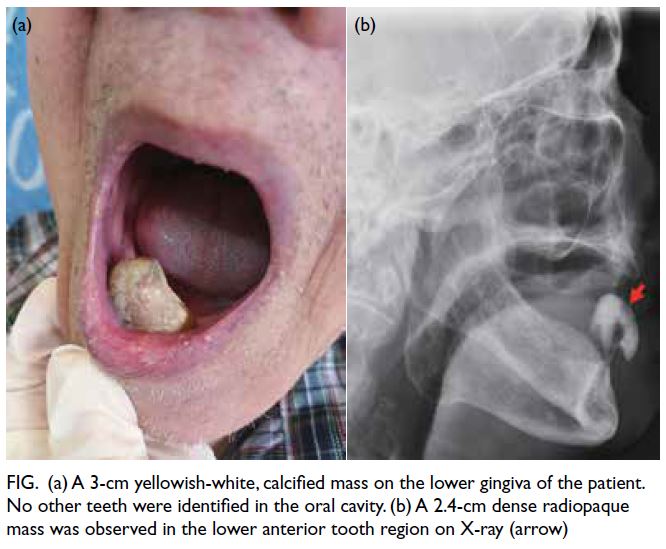
A 92-year-old man was admitted to our institution in March 2025 with vertebral fractures at the 1st lumbar and 12th thoracic vertebrae. Past medical history included minor stroke, hypertension, gout and atrial fibrillation for which the patient was prescribed an oral anticoagulant. Physical examination revealed no neurological deficit. Dual energy X-ray absorptiometry had not previously been performed. Examination of the oral cavity, performed before prescribing antiresorptive medication, revealed a 3-cm yellowish-white, calcified mass on the lower gingiva (Fig a). No teeth were seen in the oral cavity. The tooth to which the calculus might have been attached could not be identified. The deposit had been present for over 20 years, but the patient had not sought dental evaluation. X-ray revealed an oval-shaped calcified mass near the mandible (Fig b). Microscopic examination of the scraped lesion showed calcified foreign materials admixed with bacterial microorganisms and benign epithelial cells. A speech therapist was consulted and reported no dysphagia related to the calculus. The patient was referred to the dentist for extraction and to exclude malignancy, although he and his relatives were indecisive. Antiresorptive medication was not prescribed. He was prescribed a calcium and a vitamin D supplement.
 

Figure. (a) A 3-cm yellowish-white, calcified mass on the lower gingiva of the patient. No other teeth were identified in the oral cavity. (b) A 2.4-cm dense radiopaque mass was observed in the lower anterior tooth region on X-ray (arrow)
 
Dental calculus is a calcified deposit that forms on teeth and other oral structures when plaque hardens over time.2 3 4 Often it is related to poor oral hygiene.2 3 4 Although small amounts of calculus are common, the presence of a large, longstanding deposit is rare and can lead to significant oral and systemic health issues if left untreated. There have been previous case reports of huge dental calculus reported and often extraction is needed to allow complete examination for underlying malignancy.3 4 Prominent calculus impairs mastication and increases the risk of periodontal disease, limiting food choices and increasing the risk of malnutrition and sarcopenia.2 In addition, the potential need for invasive dental procedures will preclude the early prescription of antiresorptive agents.
 
Previously, there were concerns about the provision of non-urgent public dental services for older adults in Hong Kong.5 With the provision of an electronic booking system, the Community Care Fund Elderly Dental Assistance Programme and the Elderly Health Care Voucher Scheme, it is hoped that older adults will have improved access to local non-emergent dental services.5
 
This case underscores the need for dental examination in older adults before starting antiresorptive medication.
 
Author contributions
Both authors contributed equally to the concept or design, acquisition of data, analysis or interpretation of data, drafting of the manuscript, and critical revision of the manuscript for important intellectual content. Both authors had full access to the data, contributed to the study, approved the final version for publication, and take responsibility for its accuracy and integrity.
 
Conflicts of interest
Both authors have disclosed no conflicts of interest.
 
Funding/support
This study received no specific grant from any funding agency in the public, commercial, or not-for-profit sectors.
 
Ethics approval
The patient was treated in accordance with the Declaration of Helsinki. Informed consent was obtained from the patient for all treatments and procedures. The patient also provided written consent for publication of this case report with the accompanying images.
 
References
1. OSHK Task Group for the Formulation of the 2024 OSHK Guideline for Clinical Management of Postmenopausal Osteoporosis in Hong Kong; Ip TP, Lee CA, et al. 2024 OSHK Guideline for Clinical Management of Postmenopausal Osteoporosis in Hong Kong. Hong Kong Med J 2024;30 Suppl 2:1-44.
2. Azzolino D, Passarelli PC, De Angelis P, Piccirillo GB, D'Addona A, Cesari M. Poor oral health as a determinant of malnutrition and sarcopenia. Nutrients 2019;11:2898. Crossref
3. Chauhan Y, Jain S, Ratre MS, Khetarpal S, Varma M. Giant dental calculus: a rare case report and review. Int J Appl Basic Med Res 2020;10:134-6. Crossref
4. Woodmansey K, Severine A, Lembariti BS. Giant calculus: review and report of a case. Gen Dent 2013;61:e14-6.
5. Shea YF, Shum CK, Lee SW. Urgent need to improve dental services for older adults in Hong Kong. Asian J Gerontol Geriatr 2024;19:5-7. Crossref

Dermatomyositis following COVID-19 vaccination

Hong Kong Med J 2025 Feb;31(1):74.e1–2 | Epub 10 Feb 2025
© Hong Kong Academy of Medicine. CC BY-NC-ND 4.0
 
PICTORIAL MEDICINE
Dermatomyositis following COVID-19 vaccination
TK Kong, FRCP, FHKAM (Medicine)
Department of Medicine and Therapeutics, Prince of Wales Hospital, The Chinese University of Hong Kong, Hong Kong SAR, China
 
Corresponding author: Dr TK Kong (tkkong@cuhk.edu.hk)
 
 Full paper in PDF
 
 
A 59-year-old Chinese woman, a workman with hypertension and non-smoking history, sought medical advice in April 2024 for a 16-month history of progressive weight loss, reduced appetite, proximal myalgia, arthralgia of the hands, abdominal discomfort and constipation since February 2023; and a 10-month history of dry cough and exertional dyspnoea. She had received four Comirnaty messenger ribonucleic acid coronavirus disease 2019 (COVID-19) vaccinations (Pfizer-BioNTech; Pfizer Inc, Philadelphia [PA], United States) between 8 July 2021 and 12 January 2023 and had two COVID-19 infections, one each in March 2022 and June 2023. She carried the beta thalassaemia trait, as did her father. Both her parents had lung cancer.
 
Investigations in January 2024 revealed raised carcinoembryonic antigen level (11.4 ug/L; reference range, <5.0); negative stool for occult blood; negative sputum for acid-fast bacilli smear/culture and positive anti–nuclear antigen antibodies (1:160). Whole-body positron emission tomography–computed tomography in January 2024 revealed patchy ground-glass opacities and fibrosis with mild 18F-fluorodeoxyglucose uptake in the lower lobes of the lungs, but no hypermetabolic lesion to suggest malignancy. Twelve days prior to consultation she had been hospitalised for dizziness and found to have a low haemoglobin level (6.7 g/dL). She was transfused to 8.5 g/dL and discharged the next day.
 
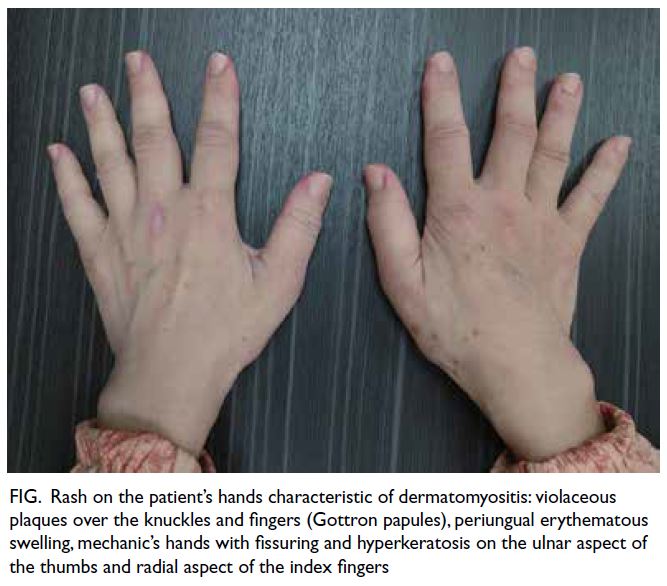
When seen at the clinic in April 2024, the patient’s body weight was 47.9 kg, compared with 68.2 kg 16 months previously. She expressed difficulty with working and in getting up from bed because of weakness. Physical examination revealed pallor, a rash on her hands suggestive of dermatomyositis (Fig), puffy eyelids without heliotrope rash, and proximal muscle wasting and weakness. Fine end-inspiratory crepitations were heard at the base of the lungs. There was no cervical lymphadenopathy nor palpable abdominal masses. Review showed a serial drop in haemoglobin level (from 10.2 g/dL in February 2023 to 6.7 g/dL in April 2024), increasing microcytosis (decrease in mean corpuscular volume from 63.1 fL in February 2023 to 59.0 fL in April 2024), and iron deficiency in the setting of chronic inflammation. The clinical diagnosis was dermatomyositis with myopathy, interstitial lung disease, and probable colon cancer with iron deficiency anaemia superimposed on beta thalassaemia trait. She was referred to hospital for further management. Muscle enzyme tests revealed normal creatine kinase level (113 U/L) but elevated lactate dehydrogenase (499 U/L) and alanine aminotransferase levels (65 U/L). Myositis antibody screening confirmed the diagnosis of anti–melanoma differentiation–associated protein 5 (anti-MDA5) antibody–positive dermatomyositis.
 

Figure. Rash on the patient’s hands characteristic of dermatomyositis: violaceous plaques over the knuckles and fingers (Gottron papules), periungual erythematous swelling, mechanic’s hands with fissuring and hyperkeratosis on the ulnar aspect of the thumbs and radial aspect of the index fingers
 
The patient’s illness onset in February 2023 following COVID-19 vaccination the month before suggested a trigger by vaccination, further aggravated by her COVID-19 infection in June 2023. Dermatomyositis, inflammatory myopathy, and rheumatic immune-mediated inflammatory diseases have been reported following COVID-19 vaccination and infection.1 2 3 In a systematic review up to May 2023,3 24 cases of post–COVID-19 vaccination dermatomyositis were reported worldwide, the majority following vaccination with Pfizer-BioNTech vaccine, and some following that with Moderna and Oxford–AstraZeneca vaccines. Only two such cases were reported among Chinese, one from mainland China (after Sinopharm’s inactivated Vero cell),4 one from Taiwan (after Oxford–AstraZeneca),5 but none from Hong Kong. The close temporal sequence and surge against a background of the reported case series suggest an association between severe acute respiratory syndrome coronavirus 2 infection/vaccination and the development of dermatomyositis, although proof of causality requires further research because of the limited number of cases reported.1 3 A recent bioinformatic study and transcriptome-derived insights point to a potential causal link between the surge in the Yorkshire region in the United Kingdom between 2020 and 2022 in anti-MDA5–positive dermatomyositis, autoimmune interstitial lung disease and COVID-19.6 The COVID-19 vaccination and infection may trigger a proinflammatory immune response involving type I interferon and stimulate production of dermatomyositis-specific autoantibodies such as MDA5 that are closely related to viral defence or viral RNA interaction supporting the concept of infection and vaccination-associated dermatomyositis.1 2 3 6
 
This case demonstrates that dermatomyositis can be induced by COVID-19 vaccination, ignorance of which and of the diagnostic clinical signs would lead to delayed diagnosis and management. Coronavirus disease 2019 vaccines are widely used. When patients present with constitutional symptoms with persistent muscle aches and weakness following COVID-19 vaccination, clinicians should consider dermatomyositis as a differential diagnosis and examine the skin for pathognomonic signs.
 
Author contributions
The author is solely responsible for the concept or design, acquisition of data, analysis or interpretation of data, drafting of the manuscript, and critical revision of the manuscript for important intellectual content. The author had full access to the data, contributed to the study, approved the final version for publication, and takes responsibility for its accuracy and integrity.
 
Conflicts of interest
The author has no conflicts of interest to disclose.
 
Funding/support
This study received no specific grant from any funding agency in the public, commercial, or not-for-profit sectors.
 
Ethics approval
The patient was treated in accordance with the Declaration of Helsinki. Patient consent was obtained for clinical photo of her hands and for publication of the article.
 
References
1. Holzer MT, Krusche M, Ruffer N, et al. New-onset dermatomyositis following SARS-CoV-2 infection and vaccination: a case-based review. Rheumatol Int 2022;42:2267-76. Crossref
2. Ding Y, Ge Y. Inflammatory myopathy following coronavirus disease 2019 vaccination: a systematic review. Front Public Health 2022;10:1007637. Crossref
3. Nune A, Durkowski V, Pillay SS, et al. New-onset rheumatic immune-mediated inflammatory diseases following SARS-CoV-2 vaccinations until May 2023: a systematic review. Vaccines (Basel) 2023;11:1571. Crossref
4. Yang L, Ye T, Liu H, Huang C, Tian W, Cai Y. A case of anti-MDA5–positive dermatomyositis after inactivated COVID-19 vaccine. J Eur Acad Dermatol Venereol 2023;37:e127-9. Crossref
5. Huang ST, Lee TJ, Chen KH, et al. Fatal myositis, rhabdomyolysis and compartment syndrome after ChAdOx1 nCoV-19 vaccination. J Microbiol Immunol Infect 2022;55:1131-3. Crossref
6. David P, Sinha S, Iqbal K, et al. MDA5-autoimmunity and interstitial pneumonitis contemporaneous with the COVID-19 pandemic (MIP-C). EBioMedicine 2024:104:105136. Crossref

Duplication of the portal vein and the implications for procedural planning

Hong Kong Med J 2025 Feb;31(1):72–3.e1–3 | Epub 6 Feb 2025
© Hong Kong Academy of Medicine. CC BY-NC-ND 4.0
 
PICTORIAL MEDICINE
Duplication of the portal vein and the implications for procedural planning
OL Chan, MB, BS, FRCR1; YS Lee, FRCR, FHKAM (Radiology)1; CH Ho, FRCR, FHKAM (Radiology)1; CC Lee, FRCS, FHKAM (Surgery)2; CC Cheung, FRCS, FHKAM (Surgery)2
1 Department of Radiology and Nuclear Medicine, Tuen Mun Hospital, Hong Kong SAR, China
2 Department of Surgery, Tuen Mun Hospital, Hong Kong SAR, China
 
Corresponding author: Dr OL Chan (col950@ha.org.hk)
 
 Full paper in PDF
 
 
A 72-year-old man with recurrent hepatitis B virus–related hepatocellular carcinoma was referred for right portal vein embolisation (PVE) prior to right hepatectomy. He had Child-Pugh class A cirrhosis, with calculated indocyanine green–R15 of 8%. Portal embolisation was indicated due to the presence of multiple co-morbidities and marginal future liver remnant volume of 35%.
 
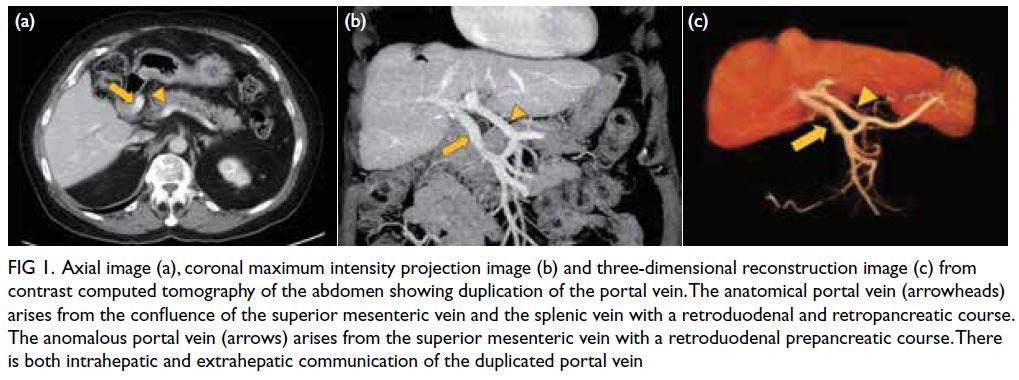
Preprocedural computed tomography revealed duplication of the portal vein (DPV) [Fig 1]. The anatomy and feasibility of the procedure was discussed with hepatic surgeons. Right PVE was successfully performed with n-butyl cyanoacrylate glue. Left hepatic lobe hypertrophy from 430 cm3 to 560 cm3 was achieved. The patient subsequently underwent an uneventful right hepatectomy.
 

Figure 1. Axial image (a), coronal maximum intensity projection image (b) and three-dimensional reconstruction image (c) from contrast computed tomography of the abdomen showing duplication of the portal vein. The anatomical portal vein (arrowheads) arises from the confluence of the superior mesenteric vein and the splenic vein with a retroduodenal and retropancreatic course. The anomalous portal vein (arrows) arises from the superior mesenteric vein with a retroduodenal prepancreatic course. There is both intrahepatic and extrahepatic communication of the duplicated portal vein
 
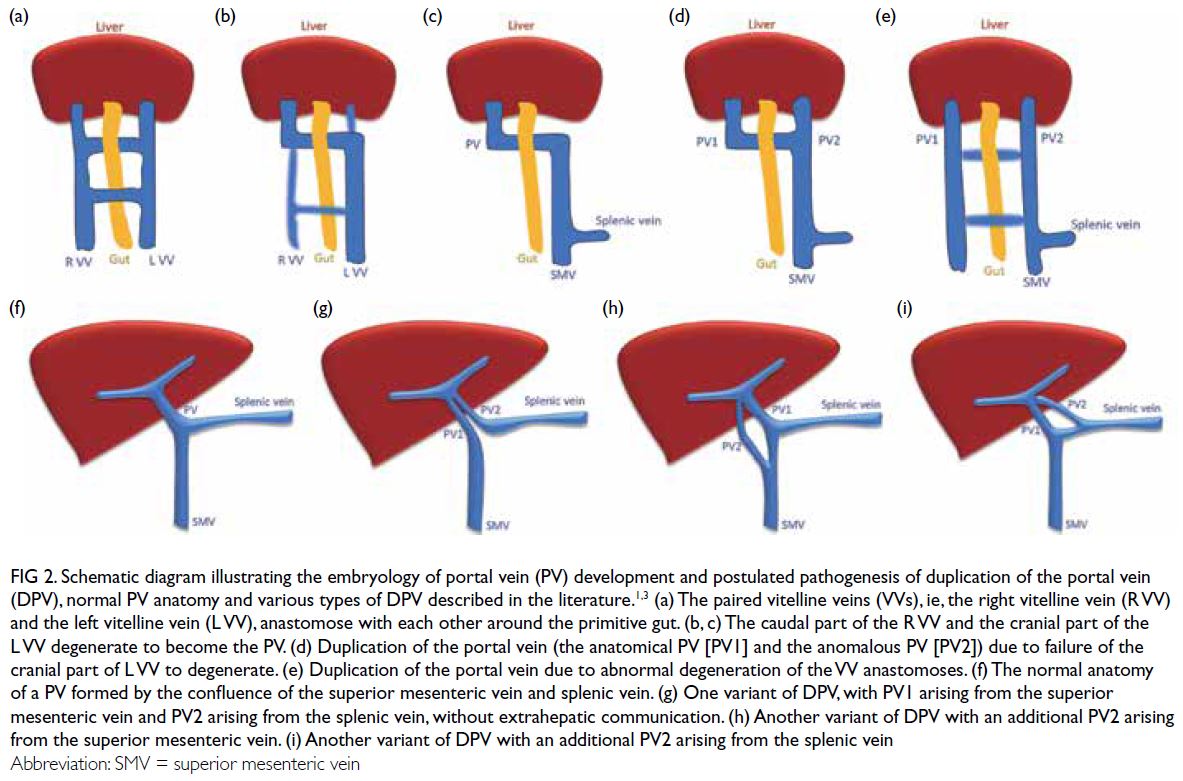
Portal vein embolisation is a commonly adopted strategy to induce future liver remnant hypertrophy prior to hepatectomy. Knowledge of the portal venous anatomy and its variants is vital for treatment planning. Duplication of the portal vein is a rare congenital anomaly that has been described only in case reports. It is related to the spectrum of vitelline vein regression anomaly with pathogenesis believed to be failed regression of the left cranial part of the vitelline vein (Fig 2a-e).1 A variation of DPV has been reported; some authors describe two portal veins arising separately without extrahepatic communications,2 while some describe an additional portal vein arising anomalously from either the superior mesenteric vein or the splenic vein (Fig 2f-i).3 The latter was evident in our patient (Fig 1).
 

Figure 2. Schematic diagram illustrating the embryology of portal vein (PV) development and postulated pathogenesis of duplication of the portal vein (DPV), normal PV anatomy and various types of DPV described in the literature.1,3 (a) The paired vitelline veins (VVs), ie, the right vitelline vein (R VV) and the left vitelline vein (L VV), anastomose with each other around the primitive gut. (b, c) The caudal part of the R VV and the cranial part of the L VV degenerate to become the PV. (d) Duplication of the portal vein (the anatomical PV [PV1] and the anomalous PV [PV2]) due to failure of the cranial part of L VV to degenerate. (e) Duplication of the portal vein due to abnormal degeneration of the VV anastomoses. (f) The normal anatomy of a PV formed by the confluence of the superior mesenteric vein and splenic vein. (g) One variant of DPV, with PV1 arising from the superior mesenteric vein and PV2 arising from the splenic vein, without extrahepatic communication. (h) Another variant of DPV with an additional PV2 arising from the superior mesenteric vein. (i) Another variant of DPV with an additional PV2 arising from the splenic vein
 
Another anomaly with double channel portal vein is portal vein fenestration in which there is a small fenestration at the mid portion of the main portal vein.4 The exact pathogenesis and its relationship with portal vein duplication remains unknown.
 
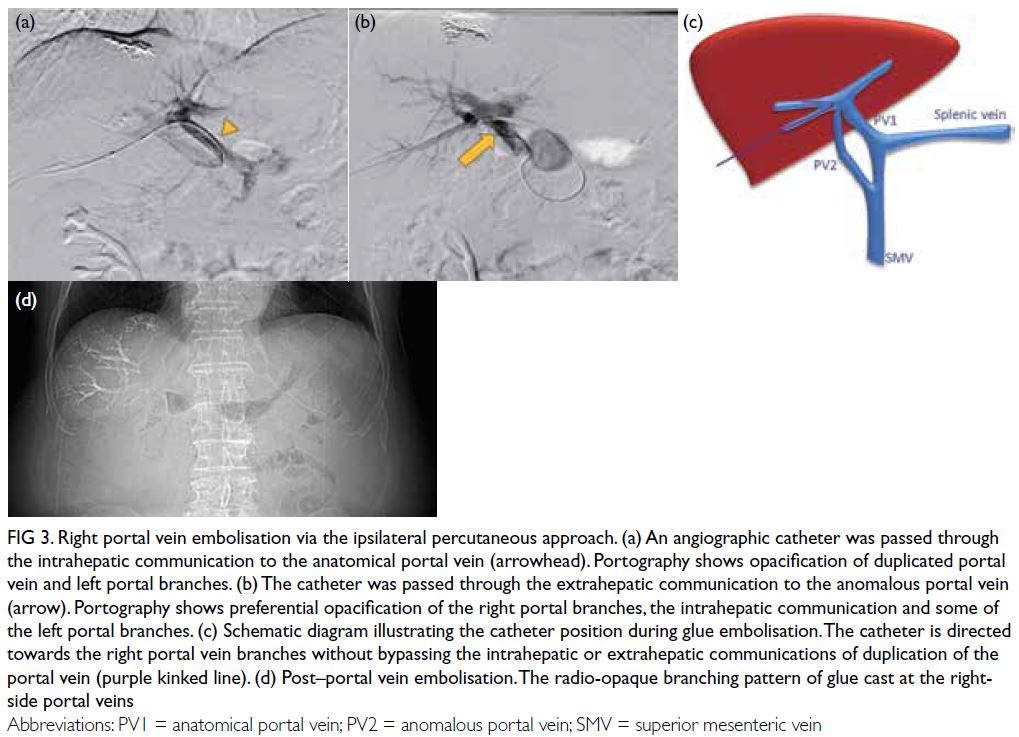
In the presence of DPV, there was altered flow dynamic with preferential opacification of the right or left portal vein branches depending on different catheter tip positions (Fig 3). There was preferential flow towards the left portal branches at the intrahepatic communication at the hepatic hilum, giving a narrow safety margin for embolisation to prevent non-target embolisation of the left portal vein that could jeopardise the future liver remnant.
 

Figure 3. Right portal vein embolisation via the ipsilateral percutaneous approach. (a) An angiographic catheter was passed through the intrahepatic communication to the anatomical portal vein (arrowhead). Portography shows opacification of duplicated portal vein and left portal branches. (b) The catheter was passed through the extrahepatic communication to the anomalous portal vein (arrow). Portography shows preferential opacification of the right portal branches, the intrahepatic communication and some of the left portal branches. (c) Schematic diagram illustrating the catheter position during glue embolisation. The catheter is directed towards the right portal vein branches without bypassing the intrahepatic or extrahepatic communications of duplication of the portal vein (purple kinked line). (d) Post–portal vein embolisation. The radio-opaque branching pattern of glue cast at the right-side portal veins
 
Our patient successfully underwent PVE without complication. The degree of hypertrophy was similar to that reported in local cohorts.5 Surgeons discussed whether the anomalous portal vein could be embolised to improve the efficacy of PVE but there was also a risk of jeopardising venous return from small branches of the superior mesenteric vein that may worsen liver function.
 
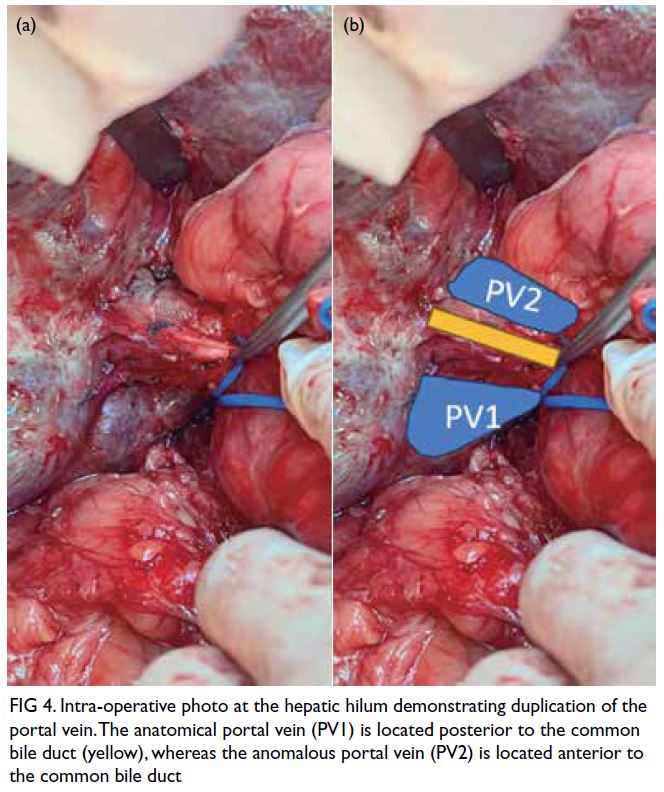
During hepatectomy, DPV was confirmed (Fig 4). It did not affect surgical planning and the patient underwent right hepatectomy uneventfully.
 

Figure 4. Intra-operative photo at the hepatic hilum demonstrating duplication of the portal vein. The anatomical portal vein (PV1) is located posterior to the common bile duct (yellow), whereas the anomalous portal vein (PV2) is located anterior to the common bile duct
 
Duplication of the portal vein is a rare congenital anomaly. Because of the possible altered flow dynamics, it is important to identify this anomaly on preprocedural imaging and arrange multidisciplinary team discussion to plan PVE and ensure a safe and effective procedure.
 
Author contributions
Concept or design: All authors.
Acquisition of data: All authors.
Analysis or interpretation of data: OL Chan, YS Lee.
Drafting of the manuscript: OL Chan, YS Lee.
Critical revision of the manuscript for important intellectual content: All authors.
 
All authors had full access to the data, contributed to the study, approved the final version for publication, and take responsibility for its accuracy and integrity.
 
Conflicts of interest
All authors have disclosed no conflicts of interest.
 
Funding/support
This study received no specific grant from any funding agency in the public, commercial, or not-for-profit sectors.
 
Ethics approval
This study was approved by the Central Institutional Review Board of Hospital Authority, Hong Kong (Ref No.: CIRB-2023-064-1). Written informed consent was obtained from the patient for publication of this article.
 
References
1. Qin Y, Wen H, Liang M, et al. A new classification of congenital abnormalities of UPVS: sonographic appearances, screening strategy and clinical significance. Insights Imaging 2021;12:125. Crossref
2. Dighe M, Vaidya S. Case report. Duplication of the portal vein: a rare congenital anomaly. Br J Radiol 2009;82:e32-4. Crossref
3. Kitagawa S. Anomalous duplication of the portal vein with prepancreatic postduodenal portal vein. J Rural Med 2022;17:259-61. Crossref
4. Balradja I, Har B, Rastogi R, Agarwal S, Gupta S. Portal vein fenestration: a case report of an unusual portal vein developmental anomaly. Korean J Transplant 2022;36:298-301. Crossref
5. Yu KC, Wong SS, Wong YC, et al. Procedure time, efficacy, and safety of portal vein embolisation using a sheathless needle-only technique compared with traditional technique. Hong Kong J Radiol 2022;25:35-44. Crossref

Atypical imaging manifestations in non-alcoholic Wernicke’s encephalopathy: a potentially reversible neurological condition not to be missed

Hong Kong Med J 2024 Dec;30(6):509.e1-3 | Epub 18 Dec 2024
© Hong Kong Academy of Medicine. CC BY-NC-ND 4.0
 
PICTORIAL MEDICINE
Atypical imaging manifestations in non-alcoholic Wernicke’s encephalopathy: a potentially reversible neurological condition not to be missed
Cherry CY Chan, MB, ChB, FRCR (Radiology)1; Kevin KF Fung, FHKCR, FHKAM (Radiology)1,2; Elaine YL Kan, FHKCR, FHKAM (Radiology)2
1 Department of Diagnostic and Interventional Radiology, Kwong Wah Hospital, Hong Kong SAR, China
2 Department of Radiology, Hong Kong Children’s Hospital, Hong Kong SAR, China
 
Corresponding author: Dr Cherry CY Chan (chancherrycy@gmail.com)
 
 Full paper in PDF
 
 
An 18-year-old female with good past health was diagnosed with right tibial osteosarcoma in February 2019. She underwent wide excision of the right proximal tibia and distal femur with total knee replacement. Postoperatively, her adjuvant chemotherapy was complicated by multiple episodes of opportunistic infection, acute renal impairment due to drug toxicity and electrolyte disturbance. She was hospitalised for >6 months with suboptimal oral intake.
 
Over the course of a week, the patient had two episodes of seizure. Her general consciousness deteriorated acutely to a Glasgow Coma Scale score of 8/15 (E4V1M3). Physical examination revealed decorticate posture, generalised flaccidity and areflexia. Serum sodium level and urea were markedly elevated (154 mmol/L and 17.0 mmol/L, respectively), in keeping with hypernatraemic dehydration. Electroencephalogram showed diffuse slow-wave encephalopathy. Her Glasgow Coma Scale score did not improve following correction of hypernatraemia.
 
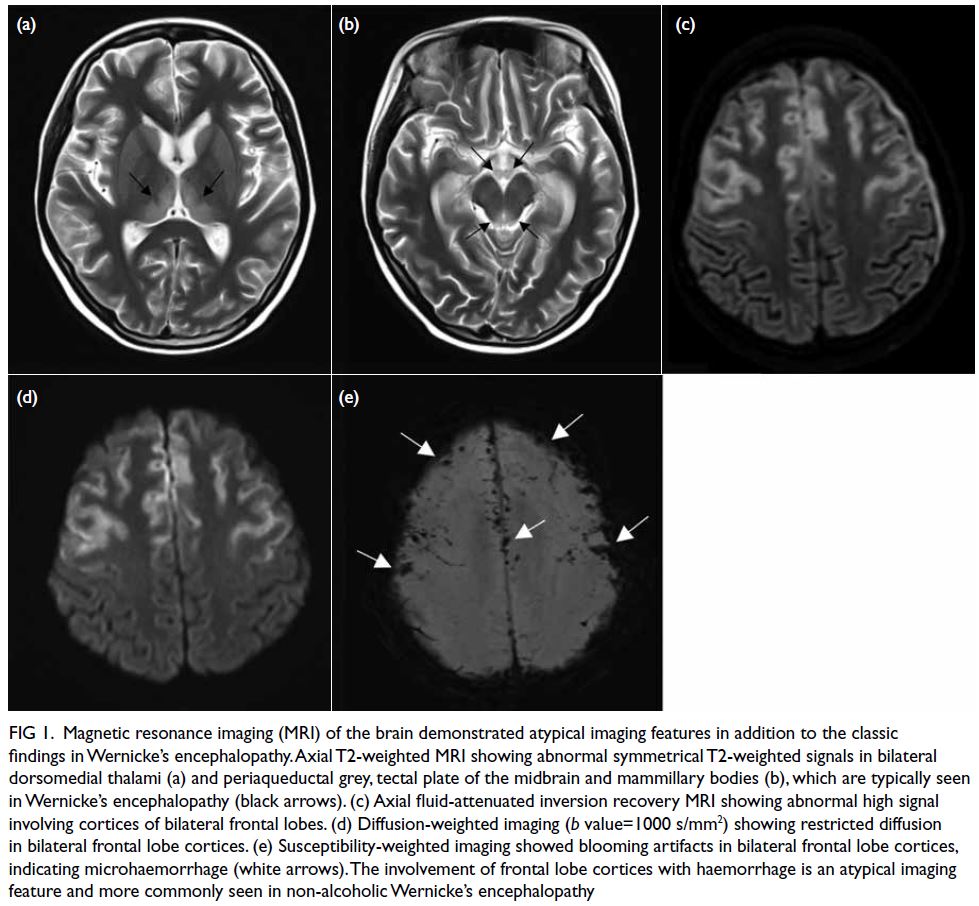
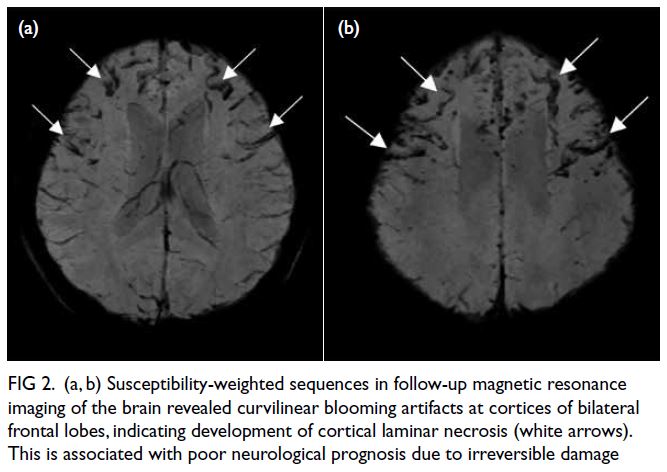
Magnetic resonance imaging of the brain revealed an abnormal high T2-weighted signal and restricted diffusion in bilateral frontal lobe cortices, dorsomedial thalami, periaqueductal grey, tectal plate of the midbrain and mammillary bodies (Fig 1a-d). Based on these findings, the patient was diagnosed with Wernicke’s encephalopathy and high-dose intravenous thiamine (vitamin B1) was initiated. Although her level of consciousness improved rapidly, there was poor recovery of limb power. Follow-up magnetic resonance imaging of the brain demonstrated cortical laminar necrosis and haemorrhage at bilateral frontal cortices (Figs 1e and 2). After 2 years of intensive rehabilitation, she regained most of her upper limb power, but lower limb power remained impaired.
 

Figure 1. Magnetic resonance imaging (MRI) of the brain demonstrated atypical imaging features in addition to the classic findings in Wernicke’s encephalopathy. Axial T2-weighted MRI showing abnormal symmetrical T2-weighted signals in bilateral dorsomedial thalami (a) and periaqueductal grey, tectal plate of the midbrain and mammillary bodies (b), which are typically seen in Wernicke’s encephalopathy (black arrows). (c) Axial fluid-attenuated inversion recovery MRI showing abnormal high signal involving cortices of bilateral frontal lobes. (d) Diffusion-weighted imaging (b value=1000 s/mm2) showing restricted diffusion in bilateral frontal lobe cortices. (e) Susceptibility-weighted imaging showed blooming artifacts in bilateral frontal lobe cortices, indicating microhaemorrhage (white arrows). The involvement of frontal lobe cortices with haemorrhage is an atypical imaging feature and more commonly seen in non-alcoholic Wernicke’s encephalopathy
 

Figure 2. (a, b) Susceptibility-weighted sequences in follow-up magnetic resonance imaging of the brain revealed curvilinear blooming artifacts at cortices of bilateral frontal lobes, indicating development of cortical laminar necrosis (white arrows). This is associated with poor neurological prognosis due to irreversible damage
 
Wernicke’s encephalopathy is an acute neurological syndrome caused by depletion of intracellular thiamine in neurons that is essential for production of neurotransmitters. The bodily reserve of thiamine in a healthy individual is exhausted within 4 to 6 weeks in the absence of dietary thiamine.1 Wernicke’s encephalopathy is most commonly associated with chronic alcoholism but can result from any condition that causes malnutrition or malabsorption.1 The classic clinical triad consists of confusion, ataxia and ophthalmoplegia, although only a small proportion of patients exhibits all three.2 Left untreated, Wernicke’s encephalopathy carries significant neurological morbidity and death. The condition is potentially reversible if recognised and treated early with intravenous thiamine replacement.
 
Classic imaging features of alcohol-associated Wernicke’s encephalopathy include abnormal signal involving deep periventricular and periaqueductal grey matter in basal ganglia and brainstem, most notably in the mamillary bodies.3 Atypical findings are more frequently seen in non-alcoholic Wernicke’s encephalopathy. These include abnormal signal in other locations such as the cerebral cortex, splenium, caudate nuclei, red nuclei, cranial nerve nuclei, cerebellum and vermis.4 Further progression to cortical laminar necrosis and haemorrhage, as seen in our case, is rare and associated with a poor prognosis due to irreversible neurological damage.5
 
In patients with a poor nutritional state who present with reduced consciousness, a high index of clinical suspicion and prompt imaging are important to establish the diagnosis of Wernicke’s encephalopathy. Atypical imaging manifestations are more commonly seen in non-alcoholic Wernicke’s encephalopathy. Timely diagnosis is crucial since the neurological impairment is potentially reversible with intravenous thiamine replacement therapy.
 
Author contributions
Concept or design: CCY Chan, KKF Fung.
Acquisition of data: CCY Chan, KKF Fung.
Analysis or interpretation of data: All authors.
Drafting of the manuscript: CCY Chan, KKF Fung.
Critical revision of the manuscript for important intellectual content: All authors.
 
All authors had full access to the data, contributed to the study, approved the final version for publication, and take responsibility for its accuracy and integrity.
 
Conflicts of interest
All authors have disclosed no conflicts of interest.
 
Funding/support
This study received no specific grant from any funding agency in the public, commercial, or not-for-profit sectors.
 
Ethics approval
The patient was treated in accordance with the Declaration of Helsinki. Informed consent was obtained from the patient for all treatments and procedures, and consent for publication.
 
References
1. Chandrakumar A, Bhardwaj A, ’t Jong GW. Review of thiamine deficiency disorders: Wernicke encephalopathy and Korsakoff psychosis. J Basic Clin Physiol Pharmacol 2018;30:153-62. Crossref
2. Harpe CG, Giles M, Finlay-Jones R. Clinical signs in the Wernicke–Korsakoff complex: a retrospective analysis of 131 cases diagnosed at necropsy. J Neurol Neurosurg Psychiatry 1986;49:341-5. Crossref
3. Zuccoli. G, Pipitone N. Neuroimaging findings in acute Wernicke’s encephalopathy: review of the literature. AJR Am J Roentgenol 2009;192:501-8. Crossref
4. Bae SJ, Lee HK, Lee JH, Choi CG, Suh DC. Wernicke’s encephalopathy: atypical manifestation at MR imaging. AJNR Am J Neuroradiol 2001;22:1480-2.
5. Pereira DB, Pereira ML, Gasparetto EL. Nonalcoholic Wernicke encephalopathy with extensive cortical involvement: cortical laminar necrosis and hemorrhage demonstrated with susceptibility-weighted MR phase images. AJNR Am J Neuroradiol 2011;32:E37-8. Crossref

Marchiafava–Bignami disease

Hong Kong Med J 2024 Oct;30(5):417.e1-2 | Epub 15 Oct 2024
© Hong Kong Academy of Medicine. CC BY-NC-ND 4.0
 
PICTORIAL MEDICINE
Marchiafava–Bignami disease
F Ren, MD1; Q Wang, MD2
1 Department of Radiology, Hospital of Chengdu University of Traditional Chinese Medicine, Chengdu, China
2 Department of Ultrasound, Hospital of Chengdu University of Traditional Chinese Medicine, Chengdu, China
 
Corresponding author: Dr Q Wang (444028177@qq.com)
 
 Full paper in PDF
 
 
A 67-year-old female was admitted to the neurology department in October 2020 with abnormal behaviour and cognitive impairment. Her memory and numeracy had declined, and symptoms progressed over the preceding week. She had a 30-year history of chronic alcohol abuse with an average daily intake of 500-mL liquor.
 
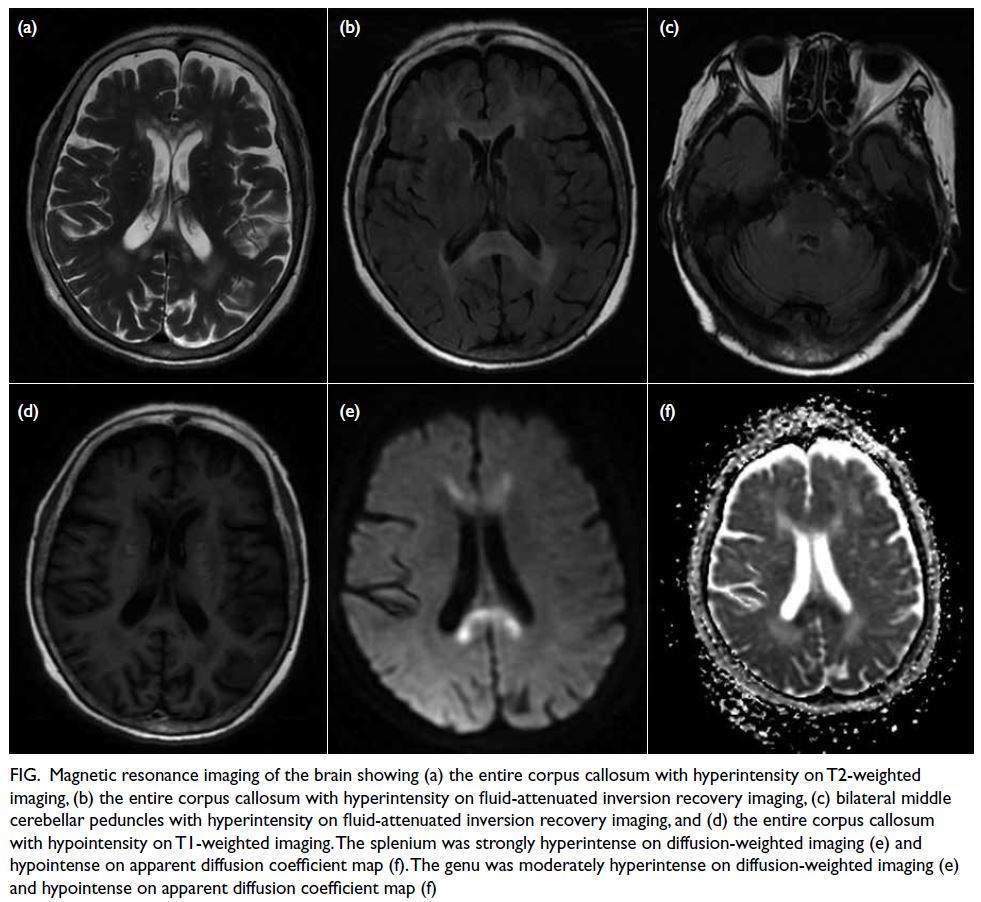
Routine biochemistry including electrolytes, liver function, and vitamin B12 were within normal limits. Magnetic resonance imaging of the brain showed areas of hyperintensity of the corpus callosum (splenium, body, and genu), bilateral middle cerebellar peduncles, periventricular white matter, and subcortical white matter of the frontal lobe on T2-weighted and fluid-attenuated inversion recovery images. Diffusion-weighted imaging revealed prominent high-intensity signal lesions involving the splenium, and these corresponding lesions were hypointense on the apparent diffusion coefficient map (Fig). Based on her history, physical examination and magnetic resonance imaging features, the patient was diagnosed with Marchiafava–Bignami disease (MBD). Despite a normal level of serum vitamins, the patient was prescribed vitamin B and neurotrophic treatment. Symptoms improved and she made a good recovery over the next 30 days.
 

Figure. Magnetic resonance imaging of the brain showing (a) the entire corpus callosum with hyperintensity on T2-weighted imaging, (b) the entire corpus callosum with hyperintensity on fluid-attenuated inversion recovery imaging, (c) bilateral middle cerebellar peduncles with hyperintensity on fluid-attenuated inversion recovery imaging, and (d) the entire corpus callosum with hypointensity on T1-weighted imaging. The splenium was strongly hyperintense on diffusion-weighted imaging (e) and hypointense on apparent diffusion coefficient map (f). The genu was moderately hyperintense on diffusion-weighted imaging (e) and hypointense on apparent diffusion coefficient map (f)
 
Marchiafava–Bignami disease is a rare neurological syndrome characterised by primary degeneration and necrosis of the corpus callosum associated with chronic alcoholism and malnutrition. The clinical manifestations of MBD are severe and nonspecific and include an altered mental state, impaired walking, deficient memory, and dysarthria. Symptoms and imaging findings may improve following thiamine treatment.1 2 The role of magnetic resonance imaging is essential to confirm the diagnosis. Chronic alcohol abuse plays an important role in its development although MBD has been occasionally diagnosed in patients with no history of alcohol abuse, in particular individuals with poorly controlled diabetes mellitus or following surgery.3 4 The aetiology and pathophysiology of MBD remain unclear. Possible mechanisms include cytotoxic oedema, blood-brain barrier breakdown, demyelination, and necrosis. Early pathological manifestations are mainly intramyelinic or cytotoxic oedema. In the later stages, demyelination and necrosis of the corpus callosum (especially in the genu and the body) may follow5 with necrosis leading to atrophy and cavitation in chronic stages, and a decreased number of oligodendrocytes. Occasionally, similar lesions can involve extracallosal regions, such as the anterior and posterior commissures, subcortical white matter, middle cerebellar peduncle, optic chiasm, putamen, internal capsules, hippocampus, and frontal cortex.2
 
The recent advances in neuroradiology techniques help understand the pathophysiological processes of MBD. Studies with diffusion-weighted imaging have shown a low apparent diffusion coefficient, which has been interpreted as irreversible cytotoxic oedema, and may precede the development of demyelination and necrosis and predict a poor or partial recovery.2 5 Nonetheless the high apparent diffusion coefficient showing reversible signal changes favoured an underlying vasogenic oedema-related process. In magnetic resonance spectroscopy studies, an increased choline/creatine ratio indicates demyelination during the acute phase of MBD, while a reduced N-acetylaspartate/creatine ratio suggests secondary axonal injury. In addition, decreased cerebral blood flow and cerebral blood volume in magnetic resonance perfusion suggest hypoperfusion. Recognition of the neuroradiological features is crucial to establish a diagnosis.
 
Author contributions
Concept or design: Both authors.
Acquisition of data: Q Wang.
Analysis or interpretation of data: F Ren.
Drafting of the manuscript: F Ren.
Critical revision of the manuscript for important intellectual content: Q Wang.
 
Both authors had full access to the data, contributed to the study, approved the final version for publication, and take responsibility for its accuracy and integrity.
 
Conflicts of interest
Both authors have disclosed no conflicts of interest.
 
Funding/support
This study received no specific grant from any funding agency in the public, commercial, or not-for-profit sectors.
 
Ethics approval
This study was approved by the Hospital of Chengdu University of Traditional Chinese Medicine Research Ethics Committee, China. Informed consent for all treatments and procedures, and consent for publication were obtained from the patient.
 
References
1. Tsai CY, Huang PK, Huang P. Simultaneous acute Marchiafava–Bignami disease and central pontine myelinolysis: a case report of a challenging diagnosis. Medicine (Baltimore) 2018;97:e9878. Crossref
2. Hillbom M, Saloheimo P, Fujioka S, Wszolek ZK, Juvela S, Leone MA. Diagnosis and management of Marchiafava–Bignami disease: a review of CT/MRI confirmed cases. J Neurol Neurosurg Psychiatry 2014;85:168-73. Crossref
3. Pérez Álvarez AI, Ramón Carbajo C, Morís de la Tassa G, Pascual Gómez J. Marchiafava–Bignami disease triggered by poorly controlled diabetes mellitus [in English, Spanish]. Neurologia 2016;31:498-500. Crossref
4. Bachar M, Fatakhov E, Banerjee C, Todnem N. Rapidly resolving nonalcoholic Marchiafava–Bignami disease in the setting of malnourishment after gastric bypass surgery. J Investig Med High Impact Case Rep 2018;6:2324709618784318. Crossref
5. Ménégon P, Sibon I, Pachai C, Orgogozo JM, Dousset V. Marchiafava–Bignami disease: diffusion-weighted MRI in corpus callosum and cortical lesions. Neurology 2005;65:475-7. Crossref

Pseudo fat-saturation and orbital lipolysis in cancer cachexia: a diagnostic trap

Hong Kong Med J 2024 Aug;30(4):331.e1-3 | Epub 11 Jul 2024
© Hong Kong Academy of Medicine. CC BY-NC-ND 4.0
 
PICTORIAL MEDICINE
Pseudo fat-saturation and orbital lipolysis in cancer cachexia: a diagnostic trap
SM Yu, MB, BS, FRCR; William KM Kwong, BAS, MHlthSc (MRS); Yan YY Law, BSc, MSc; Ann D King, MD, FRCR
Department of Imaging and Interventional Radiology, Prince of Wales Hospital, Hong Kong SAR, China
 
Corresponding author: Dr SM Yu (fayeyupwr@gmail.com)
 
 Full paper in PDF
 
 
A 59-year-old woman was diagnosed in June 2022 with locally advanced nasopharyngeal carcinoma. She declined standard chemoradiotherapy and opted to pursue traditional Chinese Medicine. In May 2023, she presented with bilateral sixth nerve palsy, poor oral intake, and progressive weight loss from 32 kg to 20 kg over 6 months.
 
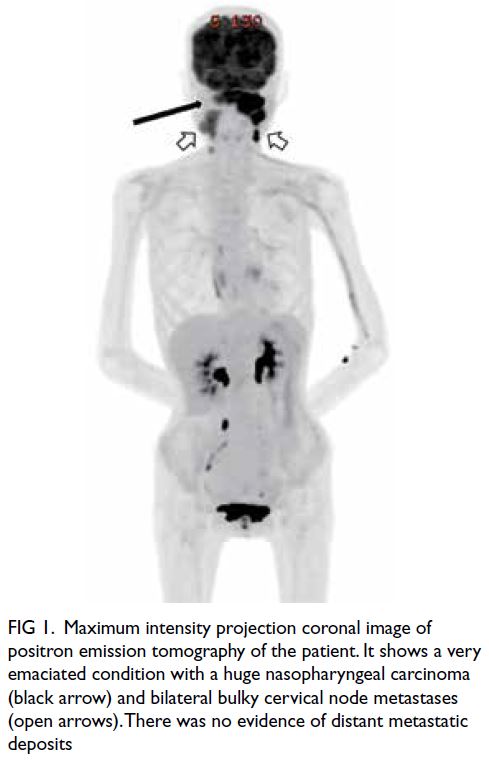
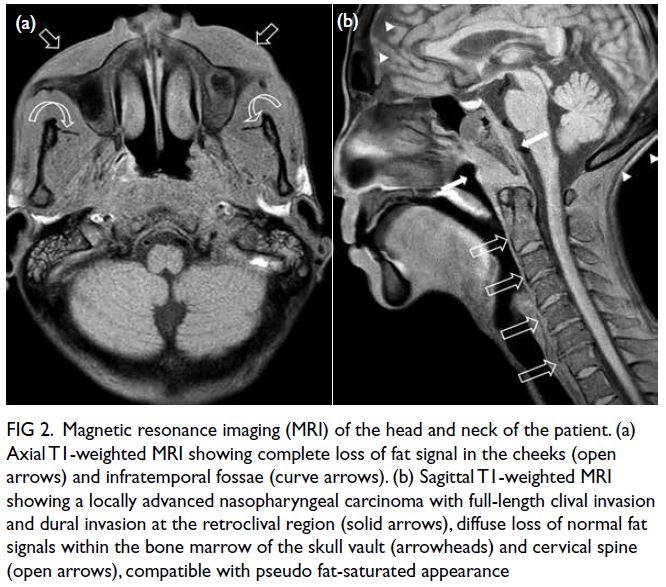
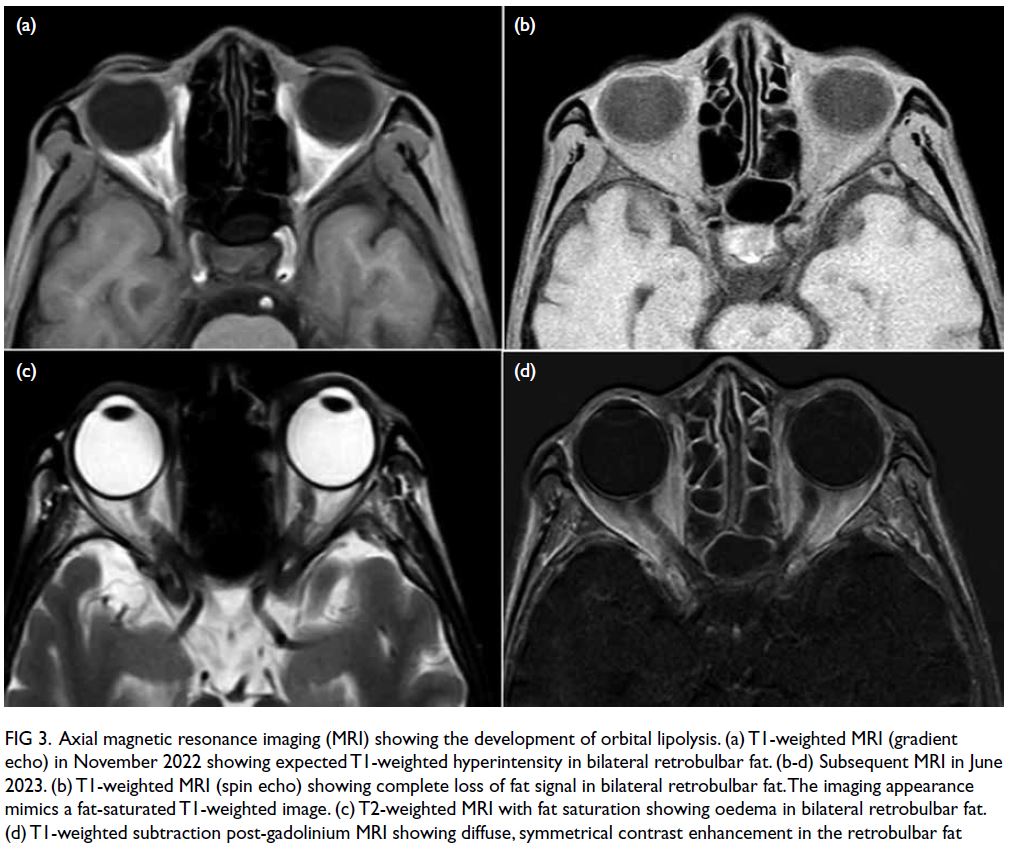
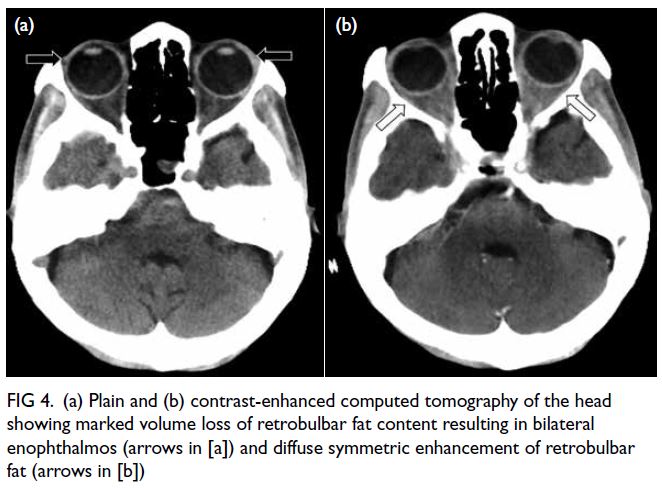
The restaging positron emission tomography–computed tomography showed that she was extremely emaciated and had locoregionally advanced nasopharyngeal carcinoma without distant metastases (Fig 1). Magnetic resonance imaging (MRI) of the head and neck revealed diffuse loss of T1 hyperintense signal in the fat of the subcutaneous and deep soft tissues and in the bone marrow of the cervical spine and skull vault giving the images a pseudo fat-saturated appearance (Fig 2). The scanning parameters were verified to ensure the correct repetition time and echo time (568 ms and 7 ms, respectively) had been selected. Compared with the earlier MRI performed in November 2022, there was complete loss of normal T1-weighted hyperintense signals in the retrobulbar fat with development of diffuse oedema and enhancement in the post-septal orbits (Fig 3); similar changes with bilateral enophthalmos and diffuse symmetric enhancement of post-septal orbits were seen on computed tomography (Fig 4). Overall, this picture was that of pseudo fat-saturation and orbital lipolysis in a patient with cancer cachexia. Following assessment, the patient agreed to undergo palliative radiotherapy.
 

Figure 1. Maximum intensity projection coronal image of positron emission tomography of the patient. It shows a very emaciated condition with a huge nasopharyngeal carcinoma (black arrow) and bilateral bulky cervical node metastases (open arrows). There was no evidence of distant metastatic deposits
 

Figure 2. Magnetic resonance imaging (MRI) of the head and neck of the patient. (a) Axial T1-weighted MRI showing complete loss of fat signal in the cheeks (open arrows) and infratemporal fossae (curve arrows). (b) Sagittal T1-weighted MRI showing a locally advanced nasopharyngeal carcinoma with full-length clival invasion and dural invasion at the retroclival region (solid arrows), diffuse loss of normal fat signals within the bone marrow of the skull vault (arrowheads) and cervical spine (open arrows), compatible with pseudo fat-saturated appearance
 

Figure 3. Axial magnetic resonance imaging (MRI) showing the development of orbital lipolysis. (a) T1-weighted MRI (gradient echo) in November 2022 showing expected T1-weighted hyperintensity in bilateral retrobulbar fat. (b-d) Subsequent MRI in June 2023. (b) T1-weighted MRI (spin echo) showing complete loss of fat signal in bilateral retrobulbar fat. The imaging appearance mimics a fat-saturated T1-weighted image. (c) T2-weighted MRI with fat saturation showing oedema in bilateral retrobulbar fat. (d) T1-weighted subtraction post-gadolinium MRI showing diffuse, symmetrical contrast enhancement in the retrobulbar fat
 

Figure 4. (a) Plain and (b) contrast-enhanced computed tomography of the head showing marked volume loss of retrobulbar fat content resulting in bilateral enophthalmos (arrows in [a]) and diffuse symmetric enhancement of retrobulbar fat (arrows in [b])
 
Long-term cachexia, a wasting syndrome common in cancer patients, is marked by extreme weight loss and malnutrition and can lead to severe metabolic disturbances that cause excessive lipolysis and lipid peroxidation. Characteristic imaging features are often found in severe cases.1 2 3 4 Pseudo fat-saturated appearance is seen on T1-weighted images due to complete loss of subcutaneous adipose tissue, similar to the fat-saturated T1-weighted image.1 Diffuse loss of normal T1-weighted hyperintense bone marrow signal was a result of bone marrow fat atrophy and deposition of extracellular gelatinous substance, a process known as ‘gelatinous transformation of bone marrow’.2 This loss of fat signal gives the images an appearance similar to that of a fat-saturated T1-weighted image. Orbital fat is typically preserved until the late stages of severe cachexia during which a condition called orbital lipolysis may develop.3 4 This condition is related to endothelial injury and increased permeability of vessel walls resulting in diffuse oedema and contrast enhancement in the post-septal orbits.
 
Cachexia is common in patients with longstanding cancer and malnutrition. Doctors should recognise this phenomenon to prevent attributing these imaging findings to incorrect scanning parameters or alternative diagnoses. The diffuse hypointense T1-weighted bone marrow signal might be misdiagnosed as widespread metastatic disease or other bone marrow–infiltrating diseases such as myelofibrosis or haematological malignancies, while diffuse orbital oedema and enhancement may be misdiagnosed as orbital inflammatory conditions such as idiopathic orbital inflammation.
 
Understanding the characteristic imaging features of long-term cachexia is crucial for doctors to avoid diagnostic pitfalls and unnecessary additional investigations or invasive procedures.
 
Author contributions
All authors contributed to the concept or design, acquisition of data, analysis or interpretation of data, drafting of the manuscript, and critical revision of the manuscript for important intellectual content. All authors had full access to the data, contributed to the study, approved the final version for publication, and take responsibility for its accuracy and integrity.
 
Conflicts of interest
All authors have disclosed no conflicts of interest.
 
Funding/support
This study received no specific grant from any funding agency in the public, commercial, or not-for-profit sectors.
 
Ethics approval
This study was conducted in accordance with the Declaration of Helsinki. The patient provided written informed verbal consent for the publication of this case report.
 
References
1. Jegatheeswaran V, Chan M, Kucharczyk W, Chen YA. Pseudo fat-saturated appearance of magnetic resonance head and neck images in 2 cachectic patients. Radiol Case Rep 2020;15:2693-7. Crossref
2. Böhm J. Gelatinous transformation of the bone marrow: the spectrum of underlying diseases. Am J Surg Pathol 2000;24:56-65. Crossref
3. Li J, Rajput A, Kosoy D, et al. Rapid orbital lipolysis associated with critical illness and colectomy. Radiol Case Rep 2021;16:2347-50. Crossref
4. Demaerel P, Dekimpe P, Muls E, Wilms G. MRI demonstration of orbital lipolysis in anorexia nervosa. Eur Radiol 2002;12 Suppl 3:S4-6. Crossref

Pages