Establishment of the Institute for Medical Advancement and Clinical Excellence (IMACE)

Hong Kong Med J 2025 Jun;31(3):184–5 | Epub 29 May 2025
© Hong Kong Academy of Medicine. CC BY-NC-ND 4.0
 
EDITORIAL
Establishment of the Institute for Medical Advancement and Clinical Excellence (IMACE)
Gilberto KK Leung, MD, FHKAM (Surgery)1 † Ronald MK Lam , MB, ChB, FHKAM (Community Medicine)2 ‡; Philip WY Chiu, MB, ChB, FHKAM (Surgery)3 ‡; Philip KT Li, DSc, FHKAM (Medicine)1 ‡; William Ho, MB, BS, FHKAM (Community Medicine)4 ‡; Tony PS Ko, MB, BS, FHKAM (Community Medicine)5 ‡; CS Lau, MD (Dund), FHKAM (Medicine)6 ‡; FC Pang, MB, ChB, FHKAM (Community Medicine)7 ‡; for the Governing Board, Institute for Medical Advancement and Clinical Excellence
1 Hong Kong Academy of Medicine, Hong Kong SAR, China
2 Department of Health, Hong Kong SAR Government, Hong Kong SAR, China
3 Faculty of Medicine, The Chinese University of Hong Kong, Hong Kong SAR, China
4 Hong Kong Private Hospitals Association, Hong Kong SAR, China
5 Hospital Authority, Hong Kong SAR, China
6 Li Ka Shing Faculty of Medicine, The University of Hong Kong, Hong Kong SAR, China
7 Primary Healthcare Commission, Health Bureau, Hong Kong SAR Government, Hong Kong SAR, China
 
Corresponding author: Prof Gilberto KK Leung (gilberto@hku.hk)
Convenor, Governing Board, Institute for Medical Advancement and Clinical Excellence
Founding Members, Governing Board, Institute for Medical Advancement and Clinical Excellence
 
 
 Full paper in PDF
 
 
Hong Kong’s healthcare system is at a critical juncture. An ageing population, rising prevalence of chronic diseases, persistent disparities between the public and private sectors, and rapid advancements in medical technology are among the challenges calling for a new, coordinated, and evidence-based approach to healthcare service development. The Government’s initiative to establish the Institute for Medical Advancement and Clinical Excellence (IMACE) on 8 May 2025 represents a significant step forward in addressing these complex issues.1
 
The IMACE is an independent, professional platform funded by the Health Bureau, with a mandate to provide guidance on medical practice and healthcare delivery. Its formation responds to several pressing challenges: unwarranted variations in clinical care, the need for timely evaluation of new medical technologies, and the imperative to improve health outcomes across all sectors of our population in a sustainable manner.
 
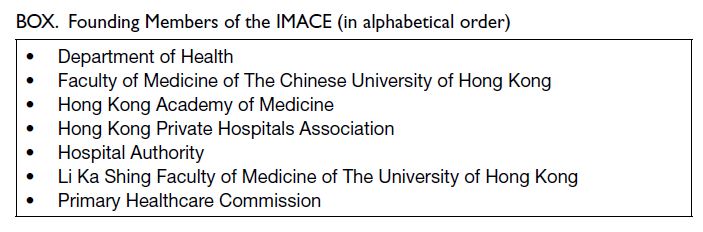
To ensure a diverse coalition that reflects the views and experiences of different sectors of our healthcare system, seven institutions were invited to serve as Founding Members (Box). Together with a Convenor nominated by the Hong Kong Academy of Medicine, they form the Governing Board that oversees the institute’s functioning and determines its strategic directions. A Secretariat housed under the Hong Kong Academy of Medicine provides administrative support.
 

Box. Founding Members of the IMACE (in alphabetical order)
 
The primary mission of IMACE centres on developing and disseminating evidence-based recommendations to guide clinical practice and healthcare policy. These recommendations, collectively termed IMACE Recommendations, may encompass clinical practice guidelines (CPG), clinical protocols, evaluation of the efficacy and cost-effectiveness of medical options, and standards for service quality and efficiency. During the initial phase we are prioritising the development of CPG which may cover, but are not limited to, the use of medicines, diagnostic technologies, medical devices, digital technologies, and interventional procedures in primary, secondary, and community care. Guideline development will adhere to IMACE’s Core Principles of being “evidence-based, impartial, patient-centred, collaborative, and innovative”2 and follow internationally recognised methodologies where appropriate, while remaining responsive to Hong Kong's specific healthcare context.3
 
A number of factors will be considered by the Governing Board when identifying clinical topics for guideline development. These include: whether there is significant and unwarranted variation in clinical practice; whether the guideline is likely to reduce avoidable illness, care burden, significant morbidity and/or premature mortality; whether the guideline is likely to enhance service quality and efficiency; whether there is a sufficient volume of reliable evidence proportionate to the context of the topic area, and so on.4 To expedite the guideline development process, reference may be made to CPG already published by local or overseas professional organisations. An operational framework for prioritisation, implementation, and quality assurance is under development.
 
The IMACE CPGs, defined as “systematically developed statements to assist practitioner and patient decisions about appropriate health care for specific clinical circumstances”,5 are applicable to healthcare professionals and providers across the public and private sectors in Hong Kong. They are advisory in nature and intended to support clinical decision-making, not to replace professional expertise and individual clinical judgement. The IMACE CPG are also intended to facilitate the safe, responsible, and cost-effective application of new technologies, not to restrict their adoption. Healthcare professionals and providers are encouraged to follow IMACE CPG where appropriate; any departure from these guidelines should be supported by good clinical reasons.2
 
Another focus of our work is public education. The IMACE recognises that high-quality healthcare requires informed patients who can actively participate in their care decisions. However, as medical practices become increasingly sophisticated, patients may find it difficult to handle the large amount of complex information presented by their doctors or available online. To address this, we plan to develop patient education materials that explain the principles of clinical research and medical evidence in clear, accessible language. These resources aim to improve health literacy without oversimplifying information, facilitate constructive doctor-patient communication, and empower patients to make informed and personalised decisions.
 
The IMACE is an unprecedented collaboration, bringing together institutions that have traditionally operated independently. Through alignment of shared standards of care while respecting the diversity of our healthcare landscape, this cooperative model enables us to address systemic challenges that individual organisations could not tackle alone. The IMACE is well-positioned to serve as a catalyst for meaningful and lasting improvements in Hong Kong’s healthcare system and, in time, to play an important role in shaping the future of medicine in the region. The journey ahead will require the ongoing engagement of and support from all stakeholders, from frontline clinicians to hospital administrators, policymakers, and patients themselves. It is a daunting task, but also a worthwhile and exciting one.
 
Author contributions
All authors contributed equally to the conception, preparation, and editing of the manuscript. All authors approved the final version for publication and take responsibility for its accuracy and integrity.
 
Conflicts of interest
All authors have disclosed no conflicts of interest.
 
References
1. The Hong Kong SAR Government. Government welcomes formal establishment of Institute for Medical Advancement and Clinical Excellence today. 8 May 2025. Available from: https://www.info.gov.hk/gia/general/202505/08/P2025050800676.htm?fontSize=1. Accessed 8 May 2025.
2. Constitution of the Institute for Medical Advancement and Clinical Excellence (IMACE). Hong Kong: Institute for Medical Advancement and Clinical Excellence; 2025.
3. National Institute for Health and Care Excellence. Developing NICE guidelines: the manual. NICE process and methods. 31 October 2014 (last updated 29 May 2024). Available from: https://www.nice.org.uk/process/pmg20/chapter/introduction. Accessed 1 May 2025.
4. National Institute for Health and Care Excellence. NICE-wide topic prioritisation: the manual. NICE process and methods. 29 May 2024 (last updated 31 March 2025). Available from: https://www.nice.org.uk/process/pmg46. Accessed 1 May 2025.
5. Institute of Medicine, Committee to Advise the Public Health Service on Clinical Practice Guidelines. Clinical Practice Guidelines: Directions for a New Program. US: Washington DC, National Academies Press; 1990.

The vital role of doctors in shaping health and community in Hong Kong: a call for nomination of interviewees

© Hong Kong Academy of Medicine. CC BY-NC-ND 4.0
 
EDITORIAL
The vital role of doctors in shaping health and community in Hong Kong: a call for nomination of interviewees
Claire Chenwen Zhong, PhD, MPhil1,2,3; Harry HX Wang, PhD3,4; Junjie Huang, PhD, MSc1,2,3; Martin CS Wong, MD, MPH1,2,5
1 The Jockey Club School of Public Health and Primary Care, Faculty of Medicine, The Chinese University of Hong Kong, Hong Kong SAR, China
2 Centre for Health Education and Health Promotion, Faculty of Medicine, The Chinese University of Hong Kong, Hong Kong SAR, China
3 Editor, Hong Kong Medical Journal
4 School of Public Health, Sun Yat-Sen University, Guangzhou, China
5 Editor-in-Chief, Hong Kong Medical Journal
 
Corresponding author: Prof Martin CS Wong (wong_martin@cuhk.edu.hk)
 
 Full paper in PDF
 
The medical profession in Hong Kong serves as the cornerstone of the local healthcare system, playing a pivotal role in establishing the city as one of the healthiest places in the world.1 Through its commitment to delivering high standards of care, maintaining advanced medical infrastructure, and cultivating highly skilled professionals, the Hong Kong medical profession has substantially contributed to the overall well-being and longevity of the population.2 Hong Kong’s healthcare system operates on a dual-track model, comprising both public and private sectors, which work together to provide comprehensive medical services to its population of over 7.5 million people.3 4 Doctors in Hong Kong play an essential role in maintaining the health and well-being of the community. Specialising in various fields, they provide high-quality care across different departments and collaborate to ensure the overall health of Hong Kong’s population.1 Moreover, their responsibilities extend far beyond the confines of hospitals and clinics. Hong Kong doctors are increasingly recognised for their unique contributions to community health, health education, and policy reform.1 2 They explore innovative approaches to address emerging health challenges, advocate for equitable healthcare policies, and engage in public health initiatives to promote preventive care and wellness.5 They serve to bridge the gap between clinical practice and community needs, fostering the creation of a healthier society.
 
There is a wide range of specialists in hospitals and clinics, each addressing specific health needs and providing expert care.6 Doctors manage a variety of tasks in these settings, from diagnosing illness and prescribing medication to performing surgeries and providing emergency treatment.7 They work closely with multidisciplinary teams to ensure comprehensive and well-coordinated care for all patients. Doctors must navigate the complexities of clinical environments, managing not only their own responsibilities but also undertaking tasks that others cannot. This includes making critical medical decisions, interpreting complex diagnostic data, and collaborating with the entire team to ensure successful patient outcomes. Moreover, they follow evidence-based treatment protocols to deliver safe and effective care, while remaining responsive to patient progress and adjusting treatment accordingly. Beyond addressing physical health and pain management, doctors also play a crucial role in supporting the emotional and psychological well-being of their patients.
 
Various public health education initiatives have been developed by doctors in Hong Kong. Dr Victor Yeung, a highly respected urologist, launched a community service initiative named ‘寸草心’ in 2008 to support community health.8 By organising gatherings for single older adults during major festivals, Dr Yeung not only provides emotional support and social engagement but also creates opportunities to promote health awareness among this vulnerable population.8 These events, which attract around 200 attendees each, serve as a platform to address critical health issues faced by older adults, such as mental health, preventive care, and healthy ageing.8 Dr Jason Cheuk-sing Yam, another community leader, has also developed impactful public health education initiatives, particularly in the field of paediatric eye care.9 Through the CUHK Jockey Club Myopia Prevention Programme, he has organised over 400 health talks targeting parents, teachers, and social workers. The Programme has successfully raised public awareness about children’s eye disorders and the importance of early screening.9
 
Collaborating with local organisations and community centres is a common approach for doctors to maximise their medical influence. Dr Wing-yan Kwong, an emergency medicine specialist, has made substantial contributions to community health through her close collaboration with various organisations in Hong Kong and abroad.10 Her work with the Hong Kong Red Cross enabled her to serve in regions with urgent health needs.10 In Africa, she focused on health education and promotion, teaching secondary school students about HIV/AIDS prevention and spearheading sponsorship programmes to fund education for underprivileged children.10 Dr Michael Kai-tsun To, a paediatric orthopaedic surgeon, has worked with HKU-Shenzhen Hospital to treat children with rare bone diseases across the border.11 His collaboration with the hospital allowed him to provide complex surgical treatment for patients in mainland China, which has brought relief to numerous families caring for children with osteogenesis imperfecta.11
 
Doctors have also played a vital role in reforming health policy in Hong Kong. For example, Dr Fei-chau Pang, the Commissioner for Primary Healthcare at the Health Bureau, has been dedicated to planning and promoting the accessibility and sustainability of the Hong Kong healthcare system.12 Prior to 2004, he was actively involved in the development of Hong Kong’s first batch of public Chinese Medicine clinics, helping to establish quality assurance mechanisms and information systems.12 Key primary care initiatives, such as the Reference Frameworks and the Chronic Disease Co-Care Programme, have served as exemplary models of an evidence-based, community-oriented, collaborative approach to improving population health. Professor George Woo, regarded as the ‘father of optometry’ in Hong Kong, not only established the first optometry programme in the city but also made substantial contributions to healthcare policy.13 During his 10-year tenure on the Supplementary Medical Professions Council, he advocated for 17 legislative items and championed reforms such as compulsory continuing medical education.13
 
Furthermore, doctors in Hong Kong have actively engaged in advocacy for public health issues, drawing on their expertise to address critical health challenges in the community. Dr Gary Ng, a cancer patient himself, focuses on breaking down barriers to healthcare access for underprivileged populations, particularly individuals with disabilities.14 As Chairperson of the Hong Kong Federation of Handicapped Youth, he has been dedicated to creating a barrier-free society.14 Dr Wing-cheong Leung, the first accredited subspecialist in maternal-fetal medicine in Hong Kong, has been instrumental in advocating for universal prenatal screening programmes.15 His efforts to promote the importance of prenatal screening have ensured that all pregnant women, regardless of socioeconomic status, have access to essential prenatal care, thereby helping to reduce maternal and infant mortality rates.15 These outstanding achievements would not have been possible without his passion for serving the broader community.
 
In this issue of the Hong Kong Medical Journal, our reporters had the privilege of interviewing Dr Cecilia Fan, an exceptional family physician known for her strong commitment to humanitarian work. Her leadership, alongside her team, in supporting the health of frontline rescue workers during the 2023 Türkiye–Syria earthquake has been truly inspiring. We invite you to read her sharing in the Healthcare for Society section.16
 
Doctors are essential to Hong Kong’s healthcare system, serving as diagnosticians, treatment providers, educators, and patient advocates. In hospitals, they deliver emergency care, manage inpatient treatment, perform surgeries, and oversee critical care. In clinics, they focus on primary care, chronic disease management, and preventive health measures. Beyond clinical settings, doctors contribute to public health initiatives, research, and policy development, enhancing the healthcare system from multiple perspectives. Looking ahead, the involvement of doctors in community health is both promising and challenging. As healthcare systems evolve, doctors must address emerging issues such as ageing populations,17 mental health crises,18 and chronic diseases.19 The growing emphasis on preventive care requires doctors to expand their roles beyond traditional clinical practice.20 Advances in technology will transform how doctors engage with patients and communities.21 By fostering collaboration between the public and private sectors and prioritising continuous education, doctors can lead the way in building a healthier Hong Kong. This collaboration encourages innovative solutions and equips medical professionals to meet the community’s evolving health needs effectively.
 
We believe these healthcare professionals deserve further recognition, particularly to inspire our trainees who aspire to serve the community across various domains. With gratitude and appreciation, this editorial invites our fellows to nominate interviewees for future publication in our Healthcare for Society section by contacting the editorial office.
 
Author contributions
All authors contributed to the editorial, approved the final version for publication, and take responsibility for its accuracy and integrity.
 
Conflicts of interest
The authors have disclosed no conflicts of interest.
 
Acknowledgement
The authors thank the literature search and review assistance of Mr Zehuan Yang, Research Assistant at the Jockey Club School of Public Health and Primary Care, Faculty of Medicine, The Chinese University of Hong Kong.
 
References
1. Kong X, Yang Y, Gao J, et al. Overview of the health care system in Hong Kong and its referential significance to mainland China. J Chin Med Assoc 2015;78:569-73. Crossref
2. Zhang W, Wang X. The difference of health management system model between Hong Kong and Mainland China. Hosp Manage Forum 2007;4:13-5.
3. Centre for Health Protection, Hong Kong. Towards 2025, Strategy and Action Plan to Prevent and Control NCD in Hong Kong. Available from: https://www.chp.gov.hk/files/pdf/saptowards2025_fullreport_target9_en.pdf. Accessed 21 Mar 2025.
4. Hong Kong SAR Government. LCQ19: measures to promote population growth (press release). 15 January 2025. Available from: https://www.info.gov.hk/gia/general/202501/15/P2025011500238.htm. Accessed 21 Mar 2025.
5. Zuo Q. The difference of service ideology between Hong Kong and Mainland China. China Soc Secur 2007;2:69.
6. Hospital Authority, Hong Kong. List of all specialist out-patient clinics. Available from: https://www.ha.org.hk/visitor/ha_visitor_index.asp?Content_ID=200252. Accessed 21 Mar 2025.
7. The Medical Council of Hong Kong. Code of Professional Conduct. 2022. Available from: https://www.mchk.org.hk/english/code/files/Code_of_Professional_Conduct_(English_Version)_(Revised_in_October_2022).pdf. Accessed 21 Mar 2025.
8. Lim AY, Lam MS. Melodies and healing: an interview with Dr Victor Yeung. Hong Kong Med J 2024;30:340-2. Crossref
9. Chin G, Leung J, Xue W. To see is to have a future: an interview with Dr Jason Cheuk-sing Yam. Hong Kong Med J 2023;29:275-7. Crossref
10. So S, Lau A. Healing and humanitarianism: an interview with Dr Wing-yan Kwong. Hong Kong Med J 2024;30:188-90. Crossref
11. Tsui M, Cheuk N. Cross-border treatment for rare bone diseases: an interview with Dr Michael Kai-tsun To. Hong Kong Med J 2023;29:566-7. Crossref
12. Choi B, Ng H. Redesigning healthcare: an interview with Dr Fei-chau Pang. Hong Kong Med J 2024;30:514-6. Crossref
13. Cheng HE, Lo M, So N. Trailblazing primary care for a healthier city: an interview with Professor George Woo. Hong Kong Med J 2023;29:184-6. Crossref
14. Law YT, Lee C. Breaking barriers and inspiring hope: an interview with Dr Gary Ng. Hong Kong Med J 2024;30:256-8. Crossref
15. Lee A, Chung N. Achieving universal and comprehensive publicly funded prenatal screening and diagnostic algorithms in Hong Kong: an interview with Dr Wingcheong Leung. Hong Kong Med J 2024;30:517-9. Crossref
16. Choy E, Chung VS. Bringing light to the dark: an interview with Dr Cecilia Fan and her medical team. Hong Kong Med J 2025;31:175-7. Crossref
17. Rowe JW, Fulmer T, Fried L. Preparing for better health and health care for an aging population. JAMA 2016;316:1643-4. Crossref
18. Vizheh M, Qorbani M, Arzaghi SM, Muhidin S, Javanmard Z, Esmaeili M. The mental health of healthcare workers in the COVID-19 pandemic: a systematic review. J Diabetes Metab Disord 2020;19:1967-78. Crossref
19. Holman HR. Chronic disease and the healthcare crisis. Chronic Illn 2005;1:265-74. Crossref
20. AbdulRaheem Y. Unveiling the significance and challenges of integrating prevention levels in healthcare practice. J Prim Care Community Health 2023;14:21501319231186500. Crossref
21. Shaheen MY. Applications of artificial intelligence (AI) in healthcare: a review. ScienceOpen Preprints [pre-print]. 2021. Available from: https://dx.doi.org/10.14293/S2199-1006.1.SOR-.PPVRY8K.v1. Accessed 21 Mar 2025.

Are your kidneys OK? Detect early to protect kidney health

© Hong Kong Academy of Medicine. CC BY-NC-ND 4.0
 
EDITORIAL
Are your kidneys OK? Detect early to protect kidney health
Joseph A Vassalotti, MD, PhD1,2 #; Anna Francis, MD, PhD3 #; Augusto Cesar Soares Dos Santos Jr, MD, PhD4,5; Ricardo Correa-Rotter, MD, PhD6; Dina Abdellatif, MD, PhD7; Li-Li Hsiao, MD, PhD8; Stefanos Roumeliotis, MD, PhD9; Agnes Haris, MD, PhD10; Latha A Kumaraswami, MD, PhD11; Siu-Fai Lui, MD, PhD12 Alessandro Balducci, MD, PhD13; Vassilios Liakopoulos, MD, PhD8; for the World Kidney Day Joint Steering Committee
1 Mount Sinai Hospital, Department of Medicine-Renal Medicine, New York, New York, United States
2 National Kidney Foundation, Inc, New York, New York, United States
3 Queensland Children’s Hospital, Department of Nephrology, South Brisbane, Queensland, Australia
4 Faculdade Ciencias Medicas de Minas Gerais, Brazil
5 Hospital das Clinicas, Ebserh, Universidade Federal de Minas Gerais, Brazil
6 Instituto Nacional de Ciencias Médicas y Nutrición Salvador Zubirán, Mexico City, Mexico
7 Department of Nephrology, Cairo University Hospital, Cairo, Egypt
8 Renal Division, Department of Medicine, Brigham and Women’s Hospital, Harvard Medical School, Boston, Massachusetts, United States
9 Second Department of Nephrology, American Hellenic Educational Progressive Association (AHEPA) University Hospital Medical School, Aristotle University of Thessaloniki, Thessaloniki, Greece
10 Nephrology Department, Péterfy Hospital, Budapest, Hungary
11 Tamilnad Kidney Research (TANKER) Foundation, Chennai, India
12 Division of Health System, Policy and Management, The Jockey Club School of Public Health and Primary Care, The Chinese University of Hong Kong, Hong Kong SAR, China
13 Italian Kidney Foundation, Rome, Italy
# Equal contribution
 
Corresponding author: Dr Stefanos Roumeliotis (st_roumeliotis@hotmail.com)
 
 Full paper in PDF
 
Abstract
Early identification of kidney disease can protect kidney health, prevent disease progression and related complications, reduce cardiovascular risk, and decrease mortality. We must ask, “Are your kidneys OK?” by using serum creatinine to estimate kidney function and urine albumin to assess for kidney and endothelial damage. Evaluation of the causes and risk factors for chronic kidney disease includes testing for diabetes and measuring blood pressure and body mass index. This World Kidney Day, we assert that case-finding in high-risk populations—or even population-level screening—can decrease the global burden of kidney disease. Early-stage chronic kidney disease is asymptomatic, simple to test for, and recent paradigm-shifting treatments (eg, sodium-glucose co-transporter-2 inhibitors) dramatically improve outcomes and strengthen the cost–benefit case for screening or case-finding programmes. Despite these factors, numerous barriers exist, including resource allocation, healthcare funding, infrastructure, and healthcare professional and public awareness of kidney disease. Coordinated efforts by major kidney non-governmental organisations to prioritise the kidney health agenda for governments—and to align early detection efforts with existing programmes—will maximise efficiencies.
 
 
Introduction
Timely treatment is the primary strategy to protect kidney health, prevent disease progression and related complications, reduce cardiovascular risk, and prevent premature kidney-related and cardiovascular mortality.1 2 3 International population assessments show low awareness and detection of kidney disease, along with substantial gaps in treatment.2 People with kidney failure universally express a preference for having been diagnosed earlier in their disease trajectory, which would allow more time for educational, lifestyle, and pharmacological interventions.4 Therefore, increasing knowledge and implementing sustainable solutions for the early detection of kidney disease to protect kidney health are public health priorities.2 3
 
Epidemiology and complications of kidney disease
Chronic kidney disease (CKD) is prevalent, affecting 10% of the global population—over 700 million people.5 Nearly 80% of people with CKD live in low-income countries (LICs) and lower-middle-income countries (LMICs), and approximately one-third of the known affected population resides in China and India alone.5 6 The prevalence of CKD increased by 33% between 1990 and 2017.5 This rising trend is driven by population growth, ageing, and the obesity epidemic, which contribute to higher rates of two major CKD risk factors: type 2 diabetes mellitus (T2DM) and hypertension. Additionally, risk factors beyond cardiometabolic conditions add to the growing burden of kidney disease. These include social deprivation, pregnancy-related acute kidney injury, preterm birth, and escalating environmental threats such as infections, toxins, climate change, and air pollution.5 7 These threats disproportionately affect people in LICs and LMICs.8
 
Undetected and untreated CKD is more likely to progress to kidney failure and cause premature morbidity and mortality. Globally, more people died in 2019 of cardiovascular disease attributed to reduced kidney function (1.7 million people) than the number who died of kidney disease alone (1.4 million).5 Chronic kidney disease is expected to become the fifth most common cause of years of life lost by 2040, surpassing T2DM, Alzheimer’s disease, and road injuries.9 The rising mortality associated with kidney disease is particularly remarkable compared with other non-communicable diseases—such as cardiovascular disease, stroke, and respiratory illness—which are projected to exhibit declining mortality rates.8 Even in its early stages, CKD is associated with multi-system morbidity that diminishes quality of life. Notably, mild cognitive impairment is linked to early-stage CKD; early detection and treatment could slow cognitive decline and reduce the risk of dementia.10 Chronic kidney disease in children has profound additional consequences, threatening growth and cognitive development, with lifelong health and quality of life implications.11 12 The number of people requiring kidney failure replacement therapy—dialysis or transplantation—is anticipated to more than double from 2010 to 2030, reaching 5.4 million.13 14 Kidney failure replacement therapy, particularly haemodialysis, remains unavailable or unaffordable for many in LICs and LMICs, contributing to millions of deaths annually. Although LICs and LMICs comprise 48% of the global population, they represent only 7% of the treated kidney failure population.15
 
Who is at risk of kidney disease?
Testing individuals at high risk for kidney disease (case-finding) minimises potential harms and false-positive results compared with general population screening, which should only be considered in high-income countries (HICs). Testing limited to those at increased risk of CKD would still encompass a large proportion of the global population. Moreover, targeted case-finding in patients at high risk of CKD is not optimally performed, even within HICs. Approximately one in three people globally have diabetes and/or hypertension. There is a bidirectional relationship between cardiovascular disease and CKD—each increases the risk of the other. Both the American Heart Association and the European Society of Cardiology recommend testing individuals with cardiovascular disease for CKD as part of routine cardiovascular assessments.1 16
 
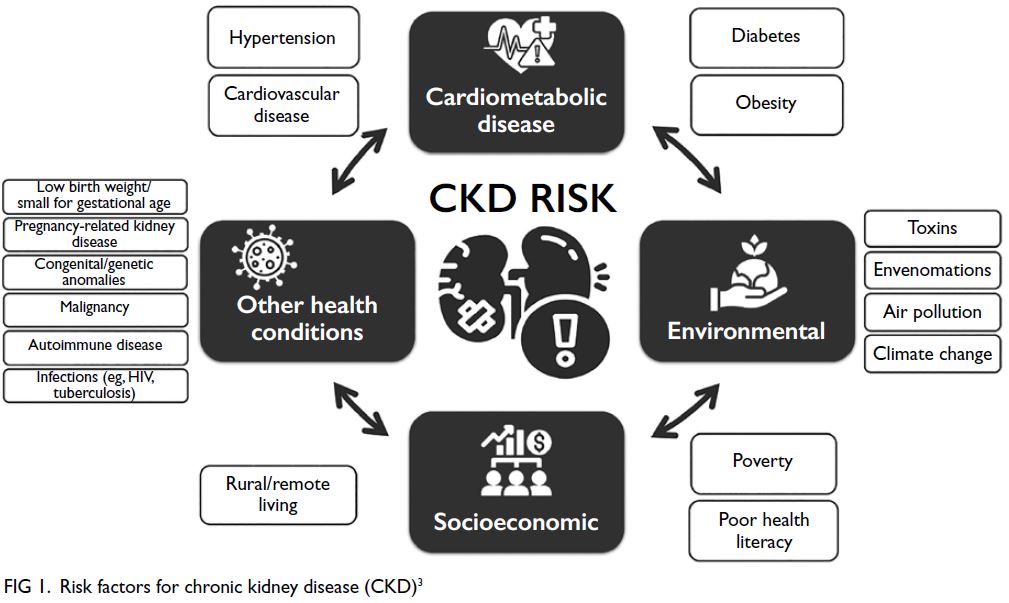
Other CKD risk factors include a family history of kidney disease (eg, APOL1-mediated kidney disease, which is common among individuals of West African ancestry), prior acute kidney injury, pregnancy-related kidney conditions (eg, pre-eclampsia), malignancy, autoimmune disorders (such as systemic lupus erythematosus and vasculitis), low birth weight or preterm birth, obstructive uropathy, recurrent kidney stones, and congenital anomalies of the kidney and urinary tract (Fig 1).3 Social determinants of health strongly influence CKD risk, both at individual and national levels. In LICs and LMICs, heat stress among agricultural workers is thought to contribute to CKD of unknown aetiology—an increasingly recognised and major global cause of kidney disease.17 Additionally, envenomations, environmental toxins, traditional medicines, and infections (such as hepatitis B or C, HIV, and parasitic diseases) warrant attention as risk factors, particularly in endemic regions.18 19
 

Figure 1. Risk factors for chronic kidney disease (CKD)3
 
How can we check kidney health?
Conceptually, there are three levels of CKD prevention. Primary prevention aims to reduce the incidence of CKD by treating risk factors; secondary prevention focuses on slowing disease progression and reducing complications in those with diagnosed CKD; and tertiary prevention seeks to improve outcomes in people with kidney failure by enhancing management, such as through improved vaccination coverage and optimised dialysis delivery.20 Primary and secondary prevention strategies can incorporate the eight golden rules for promoting kidney health: maintaining a healthy diet, ensuring adequate hydration, engaging in physical activity, monitoring and controlling blood pressure, monitoring and controlling blood glucose levels, avoiding nicotine, avoiding regular use of non-steroidal anti-inflammatory drugs, and targeted testing for those with risk factors.21 Five of these rules are identical to Life’s Essential 8—guidelines for maintaining cardiovascular health—which also include achieving a healthy weight, getting adequate sleep, and managing lipid levels.22 Early detection efforts are a form of secondary prevention that involves protecting kidney health and reducing cardiovascular risk.
 
Are your kidneys OK?
Globally, early detection of CKD remains rare, inconsistent, and less likely in LICs or LMICs. Currently, only three countries have a national programme for actively testing at-risk populations for CKD, and a further 17 countries perform such testing during routine healthcare encounters.23 Even in HICs, albuminuria is not assessed in more than half of individuals with T2DM and/or hypertension.24 25 26 Startlingly, a diagnosis of CKD is often absent even among those with documented reduced kidney function. A study conducted in HICs showed that 62% to 96% of individuals with laboratory evidence of CKD stage G3 had no recorded diagnosis of CKD.27
 
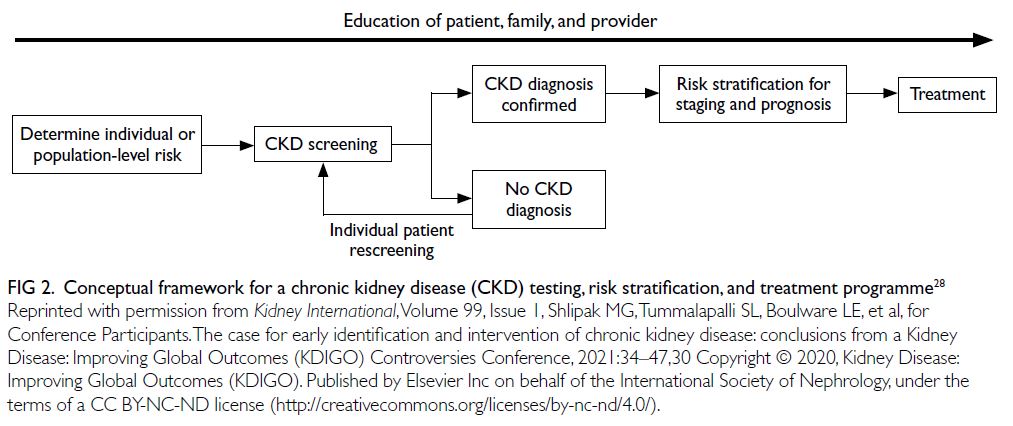
We recommend that healthcare professionals perform the following tests for all risk groups to assess kidney health (Fig 2 28):
a) Blood pressure measurement: Hypertension is the most prevalent risk factor for kidney disease worldwide.3 29 30
b) Body mass index: Obesity is epidemiologically associated with CKD risk, both indirectly (via T2DM and hypertension) and directly, as an independent risk factor. Visceral adiposity contributes to monocyte-driven microinflammation and increased cardiometabolic kidney risk.3 29 30
c) Testing for diabetes: Assessment with glycosylated haemoglobin, fasting blood glucose, or random glucose should be part of kidney health screening because T2DM is a common risk factor.3 29 30
d) Evaluation of kidney function: Serum creatinine should be used to estimated glomerular filtration rate (eGFR) in all healthcare settings.3 Glomerular filtration rate should be calculated using a validated, race-free equation appropriate for the specific country or region and age-group.3 In general, eGFR <60 mL/min/1.73 m2 is considered the threshold for CKD in adults and children; a threshold of <90 mL/min/1.73 m2 can be regarded as ‘low’ in children and adolescents over the age of 2 years.3 A limitation of creatinine-based eGFR is its sensitivity to nutritional status and muscle mass, which can lead to overestimation in states of malnutrition or frailty.3 28 Thus, the use of both serum creatinine and cystatin C provides a more accurate estimate of eGFR in most clinical contexts. However, the feasibility of cystatin C testing is mainly limited to HICs because of assay availability and cost relative to creatinine testing.3 28 31
e) Testing for kidney damage (albuminuria): In both adults and children, a first morning urine sample is preferred for assessing albuminuria.3 In adults, the quantitative urinary albumin–creatinine ratio (uACR) is the most sensitive and preferred test.3 Analytical standardisation of urinary albumin is currently underway, which should eventually support global standardisation of uACR testing.32 In children, both the protein–creatinine ratio and uACR should be tested to identify tubular proteinuria.3 Semiquantitative albuminuria testing provides flexibility for point-of-care or home-based testing.33 To be considered useful, semiquantitative or qualitative screening tests should correctly identify >85% of individuals with a quantitative uACR of ≥30 mg/g.34 In resource-limited settings, urine dipstick testing may be used, with a threshold of +2 proteinuria or greater to reduce false positives and guide repeat confirmatory testing.35
 

Figure 2. Conceptual framework for a chronic kidney disease (CKD) testing, risk stratification, and treatment programme28
 
In specific populations, the following considerations may apply:
f) Testing for haematuria: Haematuria is often overlooked in recent clinical practice guidelines, despite its importance as a risk factor (particularly for individuals at risk of glomerular disease, such as immunoglobulin A nephropathy).36
g) Baseline imaging: Imaging should be performed in individuals presenting with signs or symptoms of structural abnormalities (eg, pain and haematuria) to identify kidney masses, cysts, stones, hydronephrosis, or urinary retention. Antenatal ultrasound can detect hydronephrosis and other congenital anomalies of the kidney and urinary tract.
h) Genetic testing: With increasing access to genetic diagnostics, family cascade testing for CKD is indicated where there is a known hereditary risk of kidney disease.37
i) Occupational health screening: Individuals with occupational risk of developing kidney disease should be offered kidney function testing as part of workplace health programmes.
j) Post-donation surveillance: Kidney donors should be included in long-term follow-up programmes to monitor kidney health after donation.38
 
Potential benefits of early detection
Screening for CKD aligns well with many of the World Health Organization (WHO)’s Wilson–Jungner principles.39 Early-stage CKD is asymptomatic; effective interventions—including lifestyle modification, interdisciplinary care, and pharmacological treatments—are well established.2 3 28 35 Several WHO Essential Medicines that improve CKD outcomes should be widely available, including angiotensin-converting enzyme inhibitors, angiotensin receptor blockers, statins, and SGLT2is (sodium-glucose co-transporter-2 inhibitors).2 40 Sodium glucose co-transporter-2 inhibitors alone are estimated to decrease the risk of CKD progression by 37% in individuals with and without diabetes.41 For a 50-year-old individual with albuminuria and non-diabetic CKD, this treatment could extend their healthy kidney function period from 9.6 to 17 years.42 These essential medicines slow progression to more advanced CKD stages and reduce cardiovascular hospitalisations, offering near-term cost-effectiveness—especially vital for LICs. Where available and affordable, the range of paradigm-shifting medications to slow CKD progression includes glucagon-like peptide-1 receptor antagonists, non-steroidal mineralocorticoid receptor antagonists, endothelin receptor antagonists, and specific disease-modifying drugs (eg, complement-inhibitors); these treatments herald an exciting new era for nephrology.
 
Considering the substantial healthcare costs associated with CKD—particularly those related to hospitalisation and kidney failure—effective preventive measures offer clear economic benefits for both HICs and LICs. Chronic kidney disease imposes enormous financial burdens on individuals, their families, healthcare systems, and governments worldwide. In the United States, CKD costs Medicare over US$85 billion annually.13 In many HICs and middle-income countries, 2% to 4% of national health budgets are allocated to kidney failure care alone. In Europe, healthcare costs related to CKD exceed those associated with cancer or diabetes.43 Reducing the global burden of kidney care would also yield important environmental benefits, including reductions in water usage and plastic waste, especially from dialysis.44 On an individual level, CKD costs are frequently catastrophic, particularly in LICs and LMICs, where the individuals often bear the majority of healthcare expenses. Only 13% of LICs and 19% of LMICs provide kidney failure replacement therapy coverage for adults.15 Each year, CKD causes an estimated 188 million people in LICs and LMICs to incur catastrophic healthcare expenditures.45
 
The most widely cited and studied incremental cost effectiveness ratio threshold for assessing screening interventions is US$<50 000 per quality-adjusted life year.46 When CKD prevalence is high, population-wide screening strategies may be considered in HICs.33 47 For example, in the United States, a recent Markov simulation model assessed population-wide CKD screening in adults aged 35 to 75 years with albuminuria. The model included treatment with SGLT2is, in addition to standard care with ACE inhibitors or angiotensin receptor blockers. The analysis indicated that such a screening approach would be cost-effective.47 Additionally, an evaluation of home-based, semiquantitative albuminuria screening in the general population in the Netherlands showed that it was cost-effective.33 Case finding—targeting higher-risk groups for CKD detection—offers a more efficient and cost-effective approach than mass or general population screening. It reduces costs and potential harms while increasing the true positive rate of screening tests.3 35 46 An alternative incremental cost-effectiveness ratio threshold, proposed by the WHO, suggests using a benchmark of less than 1 to 3 times the gross domestic product per capita per quality-adjusted life year to evaluate cost-effectiveness in LICs and LMICs.46 The recommended tests for detecting kidney disease are low-cost and minimally invasive, making them feasible across diverse healthcare settings. Basic tests, such as eGFR and uACR, are widely available. In contexts where quantitative testing for proteinuria is unavailable or unaffordable, the use of urine dipstick testing can substantially reduce costs.31
 
When coupled with effective interventions, early identification of individuals with kidney disease would yield benefits for patients, healthcare systems, governments, and national economies.45 Health and quality-of-life gains for individuals would lead to greater productivity—especially for younger people with more working years ahead—while improving developmental and educational outcomes in children and young adults. Individuals would also be less likely to face catastrophic healthcare expenses. Governments and healthcare systems would benefit from reduced CKD-related expenditures and lower cardiovascular disease costs. Economies would benefit from increased workforce participation. These benefits are especially crucial for lower-income countries, where the burden of CKD is greatest but the capacity to fund kidney care is most limited.
 
Challenges and solutions for implementation
Structural barriers to widespread CKD identification and treatment include high costs, limited test reliability, and lack of health information systems to monitor CKD burden. These challenges are compounded by a lack of relevant government and healthcare policy, low levels of CKD-related knowledge and implementation among healthcare professionals, and limited public awareness of CKD and low perceived risk among the general population. Solutions for implementing effective interventions include integrating CKD identification into existing screening programmes, educating both the public and primary care professionals, and leveraging joint advocacy efforts from non-governmental organisations to focus health policy agendas on kidney disease. Any proposed solution must carefully balance the potential benefits and harms of screening and case-finding initiatives. Ethical considerations encompass resource availability (such as trained healthcare workers and access to medicines), affordability of testing and treatment, and the psychological impact of false positives or negatives, including potential anxiety for patients and their families.48
 
Successful screening and case-finding programmes require adequate workforce capacity, robust health information systems, reliable testing equipment, and equitable access to medical care, essential medicines, vaccines, and medical technologies. Primary care plays a pivotal role in protecting kidney health, particularly in LICs and LMICs. The limited global nephrology workforce, with a median prevalence of only 11.8 nephrologists per million population, and an 80-fold disparity between LICs and HICs, is inadequate to detect and manage the vast majority of CKD.23 As with other chronic diseases, primary care clinicians and frontline health workers are essential for the early detection and management of CKD.49 Testing must be affordable, simple, and practical. In resource-limited settings, point-of-care creatinine testing and urine dipsticks are especially useful.31 Educational efforts targeting primary care clinicians are crucial to integrating CKD detection into routine clinical practice, despite time and resource constraints.50 51 52 Additionally, automated clinical decision support systems can leverage electronic health records to identify individuals with CKD or those at high risk, then prompt clinicians with appropriate actions (Fig 228).
 
Currently, few countries have CKD registries, limiting the ability to accurately quantify disease burden and advocate for resources. Knowledge of the CKD burden is essential for prioritising kidney health and developing strategies that progressively expand to encompass the full spectrum of kidney care.53 A global survey revealed only one-quarter of countries (41/162) had a national CKD strategy, and fewer than one-third (48/162) recognised CKD as a public health priority.23 Recognition by the WHO that CKD is a major contributor to non-communicable disease mortality would be a crucial step forward. It would help raise awareness, enhance local surveillance and monitoring, support the implementation of clinical practice guidelines, and improve allocation of healthcare resources.2
 
Programmes for the early detection of CKD will require extensive coordination and active engagement from a wide range of stakeholders, including governments, healthcare systems, and insurers. International and national kidney organisations—such as the International Society of Nephrology—are already advocating to the WHO and individual governments for greater prioritisation of kidney disease. We must continue this work through collaborative efforts to streamline the planning and implementation of early detection programmes. Integration with existing community interventions (eg, cardiovascular disease prevention initiatives) in both LICs and HICs can decrease costs and maximise efficiency by building on established infrastructures. Such programmes must be adapted to local contexts and can be delivered in a variety of settings, including general practice clinics, hospitals, regional or national healthcare facilities, and rural outreach initiatives. Depending on local regulations and available resources, screening and case-finding can also occur outside conventional medical environments, for example, in town halls, churches, or markets. Community volunteers can also assist with these outreach and screening efforts.
 
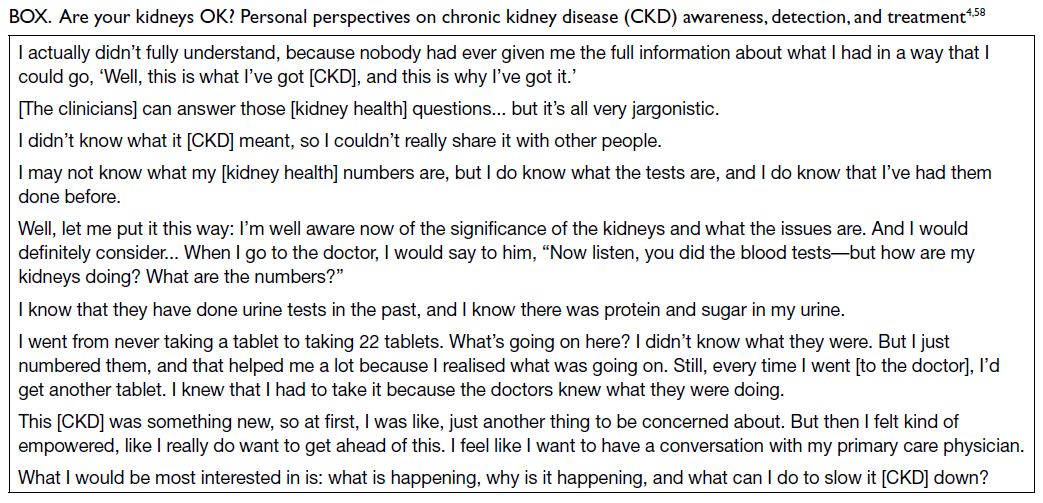
In conjunction with changes in clinical practice to promote earlier detection of CKD, we must also focus on increasing public awareness of kidney disease risk and promoting health education. Such campaigns should be aimed at both the general public and patients, with the goal of fostering greater awareness and self-empowerment. General population awareness of CKD is poor: nine of ten people with the condition are unaware that they are affected.54 Furthermore, kidney disease is missing from mainstream media. One analysis of lay press coverage showed that kidney disease was discussed 11 times less frequently than would be expected based on its actual contribution to mortality.55 A number of national and international organisations have developed public-facing quizzes to help individuals assess their risk of kidney disease. These initiatives are supported by regional studies showing that socially vulnerable patients with hypertension often do not understand their kidney health risks.21 56 57 58 Online and direct education for healthcare professionals can also help improve consumer health literacy. Awareness leads to increased patient activation, engagement, and shared decision-making. However, education around CKD must be nuanced—balancing the need for detection and risk stratification with the importance of informing and empowering, rather than frightening, individuals about the timing and extent of potential interventions (Box).4 58 Striking this balance will be critical for optimising self-efficacy and encouraging active involvement from patients, families and caregivers.
 

Box. Are your kidneys OK? Personal perspectives on chronic kidney disease (CKD) awareness, detection, and treatment4 58
 
Conclusion: a call to action
We call on all healthcare professionals to assess the kidney health of patients at risk of CKD. Concurrently, we must partner with public health organisations to raise awareness among the general population about the risk of kidney disease and empower at-risk individuals to proactively seek kidney health checks. To make meaningful progress, collaboration with healthcare systems, governments, and the WHO is essential to prioritise kidney disease and develop effective, efficient early detection programmes. Only through these efforts can we ensure that the paradigm-shifting benefits of lifestyle changes and pharmacological treatments are fully realised, leading to better kidney and overall health outcomes for people around the world.
 
Author contributions
All authors contributed equally to the conception, preparation, and editing of the manuscript. All authors approved the final version for publication and take responsibility for its accuracy and integrity.
 
Conflicts of interest
All authors have disclosed no conflicts of interest.
 
Acknowledgement
The authors thank members of the World Kidney Day Joint Steering Committee, including Valerie A Luyckx, Marcello Tonelli, Ifeoma Ulasi, Vivekanand Jha, Marina Wainstein, Siddiq Anwar, Daniel O’Hara, Elliot K Tannor, Jorge Cerda, Elena Cervantes, and María Carlota González Bedat, for their invaluable feedback on this article.
 
Declaration
This article was published in Kidney International (Vassalotti JA, Francis A, Soares Dos Santos AC Jr, et al. Are your kidneys Ok? Detect early to protect kidney health. Kidney International. 2025;107(3):370-377. https://dx.doi.org/10.1016/j.kint.2024.12.006) and reprinted concurrently in several journals. The articles cover identical concepts and wording, but vary in minor stylistic and spelling changes, detail, and length of manuscript in keeping with each journal’s style. Any of these versions may be used in citing this article.
 
Funding/support
This editorial received no specific grant from any funding agency in the public, commercial, or not-for-profit sectors.
 
References
1. Ndumele CE, Neeland IJ, Tuttle KR, et al. A synopsis of the evidence for the science and clinical management of cardiovascular-kidney-metabolic (CKM) syndrome: a scientific statement from the American Heart Association. Circulation 2023;148:1636-64. Crossref
2. Luyckx VA, Tuttle KR, Abdellatif D, et al. Mind the gap in kidney care: translating what we know into what we do. Kidney Int 2024;105:406-17. Crossref
3. Stevens PE, Ahmed SB, Carrero JJ, et al. KDIGO 2024 Clinical Practice Guideline for the evaluation and management of chronic kidney disease. Kidney Int 2024;105:S117-314. Crossref
4. Guha C, Lopez-Vargas P, Ju A, et al. Patient needs and priorities for patient navigator programmes in chronic kidney disease: a workshop report. BMJ Open 2020;10:e040617. Crossref
5. GBD Chronic Kidney Disease Collaboration. Global, regional, and national burden of chronic kidney disease, 1990-2017: a systematic analysis for the Global Burden of Disease Study 2017. Lancet 2020;395:709-33. Crossref
6. Cojuc-Konigsberg G, Guijosa A, Moscona-Nissan A, et al. Representation of low- and middle-income countries in CKD drug trials: a systematic review. Am J Kidney Dis 2025;85:55-66.e1. Crossref
7. Hsiao LL, Shah KM, Liew A, et al. Kidney health for all: preparedness for the unexpected in supporting the vulnerable. Kidney Int 2023;103:436-43. Crossref
8. Francis A, Harhay MN, Ong AC, et al. Chronic kidney disease and the global public health agenda: an international consensus. Nat Rev Nephrol 2024;20:473-85. Crossref
9. Foreman KJ, Marquez N, Dolgert A, et al. Forecasting life expectancy, years of life lost, and all-cause and cause-specific mortality for 250 causes of death: reference and alternative scenarios for 2016-40 for 195 countries and territories. Lancet 2018;392:2052-90. Crossref
10. Viggiano D, Wagner CA, Martino G, et al. Mechanisms of cognitive dysfunction in CKD. Nat Rev Nephrol 2020;16:452-69. Crossref
11. Chen K, Didsbury M, van Zwieten A, et al. Neurocognitive and educational outcomes in children and adolescents with CKD: a systematic review and meta-analysis. Clin J Am Soc Nephrol 2018;13:387-97. Crossref
12. Francis A, Didsbury MS, van Zwieten A, et al. Quality of life of children and adolescents with chronic kidney disease: a cross-sectional study. Arch Dis Child 2019;104:134-40. Crossref
13. United States Renal Data System. 2023 USRDS Annual Data Report: epidemiology of kidney disease in the United States. National Institutes of Health, National Institute of Diabetes and Digestive and Kidney Diseases; 2023.
14. Liyanage T, Ninomiya T, Jha V, et al. Worldwide access to treatment for end-stage kidney disease: a systematic review. Lancet 2015;385:1975-82. Crossref
15. Bello AK, Levin A, Tonelli M, et al. Assessment of global kidney health care status. JAMA 2017;317:1864-81. Crossref
16. Ortiz A, Wanner C, Gansevoort R; ERA Council. Chronic kidney disease as cardiovascular risk factor in routine clinical practice: a position statement by the Council of the European Renal Association. Nephrol Dial Transplant 2023;38:527-31. Crossref
17. Johnson RJ, Wesseling C, Newman LS. Chronic kidney disease of unknown cause in agricultural communities. N Engl J Med 2019;380:1843-52. Crossref
18. McCulloch M, Luyckx VA, Cullis B, et al. Challenges of access to kidney care for children in low-resource settings. Nat Rev Nephrol 2021;17:33-45. Crossref
19. Stanifer JW, Muiru A, Jafar TH, Patel UD. Chronic kidney disease in low- and middle-income countries. Nephrol Dial Transplant 2016;31:868-74. Crossref
20. Levey AS, Schoolwerth AC, Burrows NR, et al. Comprehensive public health strategies for preventing the development, progression, and complications of CKD: report of an expert panel convened by the Centers for Disease Control and Prevention. Am J Kidney Dis 2009;53:522-35. Crossref
21. Internation Society of Nephrology. World Kidney Day 2025. Available from: https://www.worldkidneyday.org/about-kidney-health/. Accessed 11 Jan 2025.
22. Lloyd-Jones DM, Allen NB, Anderson CA, et al. Life's Essential 8: updating and enhancing the American Heart Association's Construct of Cardiovascular Health: a presidential advisory from the American Heart Association. Circulation. 2022;146:e18-43. Crossref
23. Bello AK, Okpechi IG, Levin A, et al. An update on the global disparities in kidney disease burden and care across world countries and regions. Lancet Glob Health 2024;12:e382-95. Crossref
24. Ferrè S, Storfer-Isser A, Kinderknecht K, et al. Fulfillment and validity of the kidney health evaluation measure for people with diabetes. Mayo Clin Proc Innov Qual Outcomes 2023;7:382-91. Crossref
25. Alfego D, Ennis J, Gillespie B, et al. Chronic kidney disease testing among at-risk adults in the U.S. remains low: real-world evidence from a national laboratory database. Diabetes Care 2021;44:2025-32. Crossref
26. Stempniewicz N, Vassalotti JA, Cuddeback JK, et al. Chronic kidney disease testing among primary care patients with type 2 diabetes across 24 U.S. health care organizations. Diabetes Care 2021;44:2000-9. Crossref
27. Kushner PR, DeMeis J, Stevens P, Gjurovic AM, Malvolti E, Tangri N. Patient and clinician perspectives: to create a better future for chronic kidney disease, we need to talk about our kidneys. Adv Ther 2024;41:1318-24. Crossref
28. Shlipak MG, Tummalapalli SL, Boulware LE, et al. The case for early identification and intervention of chronic kidney disease: conclusions from a Kidney Disease: Improving Global Outcomes (KDIGO) Controversies Conference. Kidney Int 2021;99:34-47. Crossref
29. Farrell DR, Vassalotti JA. Screening, identifying, and treating chronic kidney disease: why, who, when, how, and what? BMC Nephrol 2024;25:34. Crossref
30. Tuttle KR. CKD screening for better kidney health: why? who? how? when? Nephrol Dial Transplant 2024;39:1537-9. Crossref
31. Tummalapalli SL, Shlipak MG, Damster S, et al. Availability and affordability of kidney health laboratory tests around the globe. Am J Nephrol 2020;51:959-65. Crossref
32. Seegmiller JC, Bachmann LM. Urine albumin measurements in clinical diagnostics. Clin Chem 2024;70:382-91. Crossref
33. van Mil D, Kieneker LM, Heerspink HJ, Gansevoort RT. Screening for chronic kidney disease: change of perspective and novel developments. Curr Opin Nephrol Hypertens 2024;33:583-92. Crossref
34. Sacks DB, Arnold M, Bakris GL, et al. Guidelines and recommendations for laboratory analysis in the diagnosis and management of diabetes mellitus. Clin Chem 2023;69:808-68. Crossref
35. Tonelli M, Dickinson JA. Early detection of CKD: implications for low-income, middle-income, and high-income countries. J Am Soc Nephrol 2020;31:1931-40. Crossref
36. Moreno JA, Martín-Cleary C, Gutiérrez E, et al. Haematuria: the forgotten CKD factor? Nephrol Dial Transplant 2012;27:28-34. Crossref
37. Franceschini N, Feldman DL, Berg JS, et al. Advancing genetic testing in kidney diseases: report from a National Kidney Foundation Working Group. Am J Kidney Dis 2024;84:751-66. Crossref
38. Mjøen G, Hallan S, Hartmann A, et al. Long-term risks for kidney donors. Kidney Int 2014;86:162-7. Crossref
39. Wilson JM, Jungner G, World Health Organization. Public Health Papers. Principles and practice of screening for disease. World Health Organization, 1968. Available from: https://apps.who.int/iris/handle/10665/37650. Accessed 11 Apr 2025.
40. Francis A, Abdul Hafidz MI, Ekrikpo UE, et al. Barriers to accessing essential medicines for kidney disease in low- and lower middle-income countries. Kidney Int 2022;102:969-73. Crossref
41. Baigent C, Emberson J, Haynes R, et al. Impact of diabetes on the effects of sodium glucose co-transporter-2 inhibitors on kidney outcomes: collaborative meta-analysis of large placebo-controlled trials. Lancet 2022;400:1788-801. Crossref
42. Vart P, Vaduganathan M, Jongs N, et al. Estimated lifetime benefit of combined RAAS and SGLT2 inhibitor therapy in patients with albuminuric CKD without diabetes. Clin J Am Soc Nephrol 2022;17:1754-62. Crossref
43. Vanholder R, Annemans L, Brown E, et al. Reducing the costs of chronic kidney disease while delivering quality health care: a call to action. Nat Rev Nephrol 2017;13:393-409. Crossref
44. Berman-Parks N, Berman-Parks I, Gómez-Ruíz IA, Ardavin-Ituarte JM, Piccoli GB. Combining patient care and environmental protection: a pilot program recycling polyvinyl chloride from automated peritoneal dialysis waste. Kidney Int Rep 2024;9:1908-11. Crossref
45. Essue BM, Laba M, Knaul F, et al. Economic burden of chronic ill health and injuries for households in low- and middle-income countries. In: Jamison DT, Gelband H, Horton S, editors. Disease Control Priorities: Improving Health and Reducing Poverty. Washington (DC): The International Bank for Reconstruction and Development/The World Bank; 2017. Crossref
46. Yeo SC, Wang H, Ang YG, Lim CK, Ooi XY. Cost-effectiveness of screening for chronic kidney disease in the general adult population: a systematic review. Clin Kidney J 2024;17:sfad137. Crossref
47. Cusick MM, Tisdale RL, Chertow GM, Owens DK, Goldhaber-Fiebert JD. Population-wide screening for chronic kidney disease: a cost-effectiveness analysis. Ann Intern Med 2023;176:788-97. Crossref
48. Yadla M, John P, Fong VK, Anandh U. Ethical issues related to early screening programs in low resource settings. Kidney Int Rep 2024;9:2315-9. Crossref
49. Szczech LA, Stewart RC, Su HL, et al. Primary care detection of chronic kidney disease in adults with type-2 diabetes: the ADD-CKD Study (awareness, detection and drug therapy in type 2 diabetes and chronic kidney disease). PLoS One 2014;9:e110535. Crossref
50. Vassalotti JA, Centor R, Turner BJ, et al. Practical approach to detection and management of chronic kidney disease for the primary care clinician. Am J Med 2016;129:153-62.e7. Crossref
51. Thavarajah S, Knicely DH, Choi MJ. CKD for primary care practitioners: can we cut to the chase without too many shortcuts? Am J Kidney Dis 2016;67:826-9. Crossref
52. Vassalotti JA, Boucree SC. Integrating CKD into US primary care: bridging the knowledge and implementation gaps. Kidney Int Rep 2022;7:389-96. Crossref
53. Luyckx VA, Moosa MR. Priority setting as an ethical imperative in managing global dialysis access and improving kidney care. Semin Nephrol 2021;41:230-41. Crossref
54. US Centers for Disease Control and Prevention. Chronic kidney disease in the United States, 2023. Available from: https://www.cdc.gov/kidney-disease/php/data-research/index.html. Accessed 11 Jan 2025.
55. Dattani S, Spooner F, Ritchie H, Roser M. Causes of death. 2023. Available from: https://ourworldindata.org/causes-of-death. Accessed 11 Jan 2025.
56. Boulware LE, Carson KA, Troll MU, Powe NR, Cooper LA. Perceived susceptibility to chronic kidney disease among high-risk patients seen in primary care practices. J Gen Intern Med 2009;24:1123-9. Crossref
57. National Kidney Foundation. Kidney Quiz 2024. Available from: https://www.kidney.org/kidney-quiz/. Accessed 11 Jan 2025. Crossref
58. Tuot DS, Crowley ST, Katz LA, et al. Usability testing of the kidney score platform to enhance communication about kidney disease in primary care settings: qualitative think-aloud study. JMIR Form Res 2022;6:e40001. Crossref

Strengthening lung cancer screening in Hong Kong: policy, innovation, and collaborative approaches for early detection and improved outcomes

© Hong Kong Academy of Medicine. CC BY-NC-ND 4.0
 
EDITORIAL
Strengthening lung cancer screening in Hong Kong: policy, innovation, and collaborative approaches for early detection and improved outcomes
Herbert HF Loong, MB, BS, FHKAM (Medicine)1,2; Alan DL Sihoe, MB, BChir, FHKAM (Surgery)3; Derek YT Cheung, MPhil, PhD4; YT Cheung, BSc, PhD5; David CL Lam, MD, PhD6; Joseph SK Au, MB, BS, FHKAM (Radiology)7; Molly SC Li, MB, BS, FHKAM (Medicine)1; Ariel JY Lim, BSc8; Judy YT Li, BSc, MPH8; William Thomas Brown, MEng8; Martin CS Wong, MD, MPH9,10
1 Department of Clinical Oncology, The Chinese University of Hong Kong, Hong Kong SAR, China
2 Editor, Hong Kong Medical Journal
3 CUHK Medical Centre, Hong Kong SAR, China
4 School of Nursing, The University of Hong Kong, Hong Kong SAR, China
5 School of Pharmacy, Faculty of Medicine, The Chinese University of Hong Kong, Hong Kong SAR, China
6 Department of Medicine, The University of Hong Kong, Hong Kong SAR, China
7 Hong Kong Adventist Hospital Oncology Centre, Hong Kong SAR, China
8 Asia Pacific Policy Review and Engagement for Lung Cancer
9 The Jockey Club School of Public Health and Primary Care, Faculty of Medicine, The Chinese University of Hong Kong, Hong Kong SAR, China
10 Editor-in-Chief, Hong Kong Medical Journal
 
Corresponding author: Prof Martin CS Wong (wong_martin@cuhk.edu.hk)
 
 Full paper in PDF
 
On 24 September 2024, the Lung Cancer Care Continuum Policy Forum Series convened in Hong Kong, bringing together leading experts from the health system to assess the current state of lung cancer management, enhance collaboration across specialities, and formulate policy recommendations specific to Hong Kong.1 This inaugural event was the first in a series aimed at evaluating existing research and advancing local lung cancer care practices, with a particular emphasis on improving screening initiatives.
 
Despite the diversity of specialisations represented, the experts unanimously emphasised a shared goal of reducing lung cancer mortality and alleviating the overall burden of the disease. They highlighted the importance of collaboration, data sharing, and open dialogue for aligning efforts towards this common objective. Reflecting the group’s collective perspective, insights and contributions from the presentations and discussions have been consolidated into this editorial.
 
Lung cancer burden in Hong Kong
Lung cancer remains one of the most common and fatal cancers in Hong Kong; the 5978 new cases reported in 2021 constituted 15.5% of all cancer diagnoses.2 The age-standardised mortality rates for lung cancer were 29.7 and 14.0 per 100 000 standard population among men and women, respectively.2 Hong Kong’s current strategy mainly targets tobacco use as the primary cause of lung cancer but lacks a comprehensive framework for screening and treatment.
 
Tobacco control progress is evident in Hong Kong, where the smoking rate was substantially lower than the global average of 22.3%.3 Through sustained efforts, Hong Kong has achieved a steady decline in smoking rates, from 12.4% in 2000 to 9.1% in 2023.4 This progress is attributed to the enforcement of comprehensive smoking control measures, including taxation, implementation of pictorial health warnings, expansion of non-smoking areas, and prohibition of alternative smoking products. However, the unique epidemiology of lung cancer in the region, where the majority of cases occur in non-smokers, underscores the need for broader focus beyond smoking cessation.5
 
The experts identified several key challenges, including the absence of centralised guidelines, limited access to screening and precision diagnostics, and gaps in public awareness and healthcare integration. Currently, the Cancer Expert Working Group on Cancer Prevention and Screening of the Centre for Health Protection does not recommend routine screening for lung cancer among asymptomatic individuals with moderate risk.6 An important barrier remains the lack of a comprehensive lung cancer control plan, resulting in late-stage diagnoses and worse patient outcomes. Additionally, care is primarily managed by specialists, with minimal involvement from primary care physicians. The experts called for the establishment of a dedicated control plan focusing on prevention, screening, treatment, and enhanced care coordination to improve accessibility and outcomes.
 
Importance of screening for early detection
Lung cancer screening is recognised as a critical intervention for early detection, particularly in high-risk populations. Authorities in the United Kingdom, Australia, Taiwan, the United States, China, Singapore, Canada, Korea, and Japan have recommended lung cancer screening for individuals aged 50 to 55 years, with cessation at 70 to 74 years.6 However, Hong Kong has yet to establish a government-funded, population-based screening programme targeting high-risk groups. The Chief Executive’s 2024 Policy Address highlighted the need to explore an artificial intelligence (AI)–assisted lung cancer screening programme.7 The experts strongly supported this initiative, citing the success of the colorectal cancer screening programme for high-risk individuals,8 which demonstrated the feasibility of translating clinical evidence into real-world practice through a multidisciplinary approach. This model could serve as a framework for developing an effective lung cancer screening programme in Hong Kong.
 
Economic implications
The economic implications of lung cancer care were also discussed. The experts emphasised the cost-effectiveness of low-dose computed tomography (LDCT) screening for high-risk smokers and non-smokers. Evidence was presented indicating that, over a lifetime, the incremental cost-effectiveness ratios of LDCT screening are well within the affordability range for Hong Kong’s healthcare expenditures, based on prior experiences with willingness-to-pay thresholds.9 10 Consequently, there is robust justification for the initiation of LDCT-based lung cancer screening among all high-risk individuals.11 This approach has the potential to greatly reduce the lung cancer burden and improve population-level outcomes. A report from regions that have adopted lung cancer screening, including Taiwan12—where the lung cancer epidemiology closely resembles that of Hong Kong—demonstrated a substantial shift towards earlier-stage diagnoses. The ability to detect lung cancer at an earlier stage, combined with timely and appropriate management, can lead to reduced mortality and improved treatment outcomes.
 
Artificial intelligence and innovation
Innovative approaches to lung cancer screening were also presented. The ongoing LC-SHIELD study (Lung Cancer Screening in High-risk Non-smokers by Artificial Intelligence Device) utilises AI to screen high-risk non-smokers, a critical subpopulation considering that >50% of lung cancer cases in East Asia occur in non-smokers.13 The application of AI may enhance the sensitivity and specificity of screening, particularly for individuals with unique risk profiles, such as those with a family history of lung cancer or genetic predisposition. The experts noted the limitations of conventional tools (eg, chest X-rays), which lack the sensitivity of LDCT for detecting early-stage lung cancer.14 There was support for the adoption of innovative methods, including liquid biopsy and AI-enhanced LDCT interpretation, which improve early detection rates but reduce costs by minimising false positives and optimising the screening process. Such innovations offer promising opportunities to enhance lung cancer care in Hong Kong, making screening more efficient and accessible.
 
Expansion and integration of screening into routine care
Lung cancer care in Hong Kong is primarily managed by tertiary care specialists, with limited integration across different levels of the healthcare system. The experts highlighted the success of a community-based charity programme designed to increase public awareness of lung cancer screening. This programme provided a single round of LDCT screening of the thorax to 99 asymptomatic adults with a family history of lung cancer and/or a history of smoking. Positive LDCT results were observed in 47 participants (47%), and lung cancer (all adenocarcinomas) was ultimately diagnosed in six participants (6%).12 This detection rate in Hong Kong appears higher than those reported in recent international trials of LDCT for lung cancer screening,15 16 17 indicating a need to revise eligibility criteria for greater emphasis on family history and to leverage local clinical expertise for lesion assessment. The findings from the programme were subsequently published in an international peer-reviewed medical journal and presented at the 2024 World Conference on Lung Cancer.18
 
The published results underscore the potential for adoption of similar programmes and highlight the benefits of incorporating LDCT screening into routine health checks for high-risk individuals. These findings strengthen the case for enhancing access to screening, supporting early detection efforts, and improving lung cancer outcomes in Hong Kong.
 
Management of incidental findings during low-dose computed tomography screening
Although LDCT is a promising tool, its effectiveness depends on collaboration among multidisciplinary healthcare teams.19 The experts noted the challenge posed by incidental pulmonary nodules, which are frequently detected during LDCT screening but are often benign. These findings can increase patient anxiety and place additional strain on healthcare systems due to unnecessary invasive procedures.20 The experts also emphasised adherence to updated guidelines, such as those from the Fleischner Society, for appropriate management of incidental pulmonary nodules.21 Shared decision-making between patients and healthcare providers was considered essential to ensure that individuals understand the risks and benefits of screening.
 
Resolution of psychosocial barriers
The implementation of lung cancer screening presents challenges related to the psychosocial impact, particularly ‘scanxiety’—the anticipatory anxiety associated with screening preparation, procedures, and results.22 23 The experts highlighted the importance of incorporating psychological support into screening programmes to enhance patient participation and adherence, especially among younger individuals who may avoid screening due to fear.
 
Key recommendations for lung cancer screening in Hong Kong
Based on insights shared during the session, the experts formulated five key recommendations to address critical challenges in lung cancer screening and care in Hong Kong. These recommendations reflect collective expertise and propose a holistic approach to advancing early detection, improving healthcare integration, and enhancing accessibility and outcomes for patients.
  1. Develop a comprehensive lung cancer control plan: Establish a detailed, government-funded plan covering the entire patient care continuum to standardise clinical practices throughout the health system.
  2. Implement system-wide screening programmes: Introduce lung cancer screening initiatives targeting high-risk populations, such as smokers and individuals with genetic predisposition, ensuring that these programmes are accessible and tailored to local needs.
  3. Improve healthcare integration: Strengthen collaboration between primary care providers and specialists to streamline the patient care continuum, particularly in the management of follow-up care for individuals with incidental findings.
  4. Address psychosocial barriers: Incorporate psychological support and patient education into lung cancer screening and management programmes to reduce anxiety and improve participation.
  5. Expand screening programmes using AI technology: Promote research and application of AI-enhanced LDCT screening programmes to enhance early detection and cost-effectiveness.
 
The first session of the Lung Cancer Care Continuum Policy Forum Series concluded with an emphasis on adopting a multipronged approach that involves research, policy advocacy, and patient education. During future sessions that more fully explore the patient care continuum for lung cancer care, the aim will be to achieve consensus regarding a unified strategy that aligns local clinical and policy efforts for lung cancer management. The outcomes of these discussions will play a central role in shaping the future of lung cancer care in Hong Kong, ensuring timely detection, equitable access to care, and improved survival outcomes for future generations.
 
Author contributions
All authors contributed to the concept or design, acquisition of data, analysis or interpretation of data, drafting of the manuscript, and critical revision of the manuscript for important intellectual content. All authors had full access to the data, contributed to the study, approved the final version for publication, and take responsibility for its accuracy and integrity.
 
Conflicts of interest
ADL Sihoe has acted as a consultant for AstraZeneca, Medela, and Roche, while receiving support from Medtronic and Nestlé. MSC Li has received grants or contracts from AstraZeneca, Gilead, MSD, Takeda, and Johnson & Johnson. He has received honoraria for lectures, presentations, speakers bureaus, manuscript writing, or educational events from entities including AstraZeneca, Novartis, Amgen, Pfizer, Takeda, ACE Oncology, Gilead, Guardant Health, Janssen, Merck, MSD, and BMS. He has also received support for attending meetings and/or travel from AstraZeneca, Pfizer, Daiichi Sankyo, MSD, Roche, Janssen, and Amgen. Additionally, he has served on advisory boards for AstraZeneca, Pfizer, Takeda, Amgen, AnHeart Therapeutics, Yuhan, BlossomHill Therapeutics, and Janssen. MCS Wong is an honorary medical advisor of GenieBiome Ltd. He is an advisory committee member of Pfizer; an external expert of GlaxoSmithKline; a member of the advisory board of AstraZeneca and has been paid consultancy fees for providing advice on research. Other authors declared no conflicts of interest.
 
Funding/support
This editorial was funded by Roche Diagnostics and MSD. The funders had no involvement in the design of the Forum Series, data collection, analysis, interpretation, or manuscript preparation.
 
References
1. Asia Pacific Policy Review and Engagement for Lung Cancer. First edition of the Lung Cancer Care Continuum Policy Forum Series: Early Detection in Hong Kong. Available from: https://aspirelungcancer.com/news/lung-cancer-care-continuum-policy-forum. Accessed 7 Feb 2025.
2. Centre for Health Protection, Department of Health, Hong Kong SAR Government. Lung cancer. 2024 Jan 12. Available from: https://www.chp.gov.hk/en/healthtopics/content/25/49.html. Accessed 11 Oct 2024.
3. World Health Organization. Tobacco. 2023 Jul 31. Available from: https://www.who.int/news-room/fact-sheets/detail/tobacco. Accessed 14 Oct 2024.
4. Census and Statistics Department, Hong Kong SAR Government. Thematic Household Survey Report–Report No. 79–Pattern of Smoking. 2nd Issue 2024. Available from: https://www.censtatd.gov.hk/en/wbr.html?ecode=B11302012024XX01&scode=380. Accessed 14 Oct 2024.
5. Noronha V, Budukh A, Chaturvedi P, et al. Uniqueness of lung cancer in Southeast Asia. Lancet Reg Health Southeast Asia 2024;27:100430. Crossref
6. Non-communicable Disease Branch, Centre for Health Protection, Department of Health, Hong Kong SAR Government. Lung cancer prevention and screening. June 2023. Available from: https://www.chp.gov.hk/files/pdf/6_lung_cancer_prevention_and_screening_eng.pdf. Accessed 11 Feb 2025.
7. Hong Kong SAR Government. The Chief Executive’s 2024 Policy Address. Oct 2024. Available from: https://www.policyaddress.gov.hk/2024/en/. Accessed 1 Nov 2024.
8. Department of Health, Hong Kong SAR Government. Colorectal Cancer Screening Programme. Available from: https://www.colonscreen.gov.hk/en/public/index.html. Accessed 11 Feb 2025.
9. Loong H, Pan X, Chiu CH, et al. P1.17-03 Cost-effectiveness of low-dose computerized tomography lung cancer screening in high-risk non-smokers and smokers in Hong Kong. J Thorac Oncol 2023;18 Suppl:S223. Crossref
10. Census and Statistics Department, Hong Kong SAR Government. Table 310-31001: Gross Domestic Product (GDP), implicit price deflator of GDP and per capita GDP. 2024 Nov 15. Available from: https://www.censtatd.gov.hk/en/web_table.html?id=310-31001. Accessed 12 Feb 2025.
11. Loong HH, Pan X, Chiu CH, et al. 486P–Fiscal feasibility and implications of integrating lung cancer screening into Hong Kong’s healthcare system [poster]. 2023 Dec 2. Available from: https://oncologypro.esmo.org/meeting-resources/esmo-asia-congress-2023/fiscal-feasibility-and-implications-of-integrating-lung-cancer-screening-into-hong-kong-s-healthcare-system. Accessed 1 Nov 2024.
12. Yang PC, Chen TH, Huang KP, Lin LJ, Wu CC. Taiwan national lung cancer early detection program for heavy smokers and non-smokers with family history of lung cancer [abstract]. J Clin Oncol 2024;42;16_suppl:8009. Crossref
13. Zhou F, Zhou C. Lung cancer in never smokers—the East Asian experience. Transl Lung Cancer Res 2018;7:450-63. Crossref
14. Amicizia D, Piazza MF, Marchini F, et al. Systematic review of lung cancer screening: advancements and strategies for implementation. Healthcare (Basel) 2023;11:2085. Crossref
15. National Lung Screening Trial Research Team; Aberle DR, Adams AM, et al. Reduced lung-cancer mortality with low-dose computed tomographic screening. N Engl J Med 2011;365:395-409. Crossref
16. Yang P. PS01.02 National lung cancer screening program in Taiwan: the TALENT Study. J Thorac Oncol 2021;16:S58. Crossref
17. de Koning HJ, van der Aalst CM, de Jong PA, et al. Reduced lung-cancer mortality with volume CT screening in a randomized trial. N Engl J Med 2020;382:503-13. Crossref
18. Sihoe AD, Fong NK, Yam AS, Cheng MM, Yau DL, Ng AW. Real-world first round results from a charity lung cancer screening program in East Asia. J Thorac Dis 2024;16:5890-8. Crossref
19. Ramaswamy A. Lung cancer screening: review and 2021 update. Curr Pulmonol Rep 2022;11:15-28. Crossref
20. Lin Y, Khurelsukh K, Li IG, et al. Incidental findings in lung cancer screening. Cancers 2024;16:2600. Crossref
21. Lam DC, Liam CK, Andarini S, et al. Lung cancer screening in Asia: an expert consensus report. J Thorac Oncol 2023;18:1303-22. Crossref
22. Feiler B. Scanxiety. Fear of a postcancer ritual. Time 2011;177:56.
23. Goodwin B, Anderson L, Collins K, et al. Anticipatory anxiety and participation in cancer screening. A systematic review. Psychooncology 2023;32:1773-86. Crossref

Screening for upper gastrointestinal cancer in Hong Kong

© Hong Kong Academy of Medicine. CC BY-NC-ND 4.0
 
EDITORIAL
Screening for upper gastrointestinal cancer in Hong Kong
Chloe WK Hui1; Justin NF Lam1; KH Man1; Claire Chenwen Zhong, MPhil, PhD2,3; Junjie Huang, MSc, PhD2,3,4; Martin CS Wong, MD, MPH2,3,5; Hon Chi Yip, MB, ChB, FHKAM (Surgery)1
1 Department of Surgery, Faculty of Medicine, The Chinese University of Hong Kong, Hong Kong SAR, China
2 The Jockey Club School of Public Health and Primary Care, Faculty of Medicine, The Chinese University of Hong Kong, Hong Kong SAR, China
3 Centre for Health Education and Health Promotion, Faculty of Medicine, The Chinese University of Hong Kong, Hong Kong SAR, China
4 Editor, Hong Kong Medical Journal
5 Editor-in-Chief, Hong Kong Medical Journal
 
Corresponding author: Prof Martin CS Wong (wong_martin@cuhk.edu.hk); Dr Hon Chi Yip (hcyip@surgery.cuhk.edu.hk)
 
 Full paper in PDF
 
Introduction
Gastric and oesophageal cancers are both highly lethal but often overlooked diseases in Hong Kong. During the early stages of these cancers, patients are typically asymptomatic or exhibit only mild symptoms, leading to late diagnoses, delayed treatment, and poor prognoses. Although the prevalences of both cancers have declined in recent decades, coinciding with a reduction in the number of smokers,1 the likelihood of advanced metastasis at diagnosis and the associated mortality rates remain substantially higher relative to cancers such as prostate cancer.2 In 2021, 1306 cases of gastric cancer were newly diagnosed1; 631 patients succumbed to the disease in the same year, making it the sixth leading cause of cancer-related deaths in Hong Kong.1 From 2017 to 2021, the mortality-to-incidence ratios were 0.48 for men and 0.44 for women, reflecting a low 5-year survival rate.3 Although the prevalence of oesophageal cancer has declined in recent years, its mortality rate remains high.4 In 2021, 397 new cases of oesophageal cancer were diagnosed, and 299 deaths were reported in the same year.5 By 2021, it was the tenth leading cause of cancer-related deaths in Hong Kong.6
 
Oesophagogastroduodenoscopy indications in Hong Kong
Among all gastrointestinal (GI) cancers, population screening in Hong Kong is only available for colorectal cancer (via the faecal immunochemical test). Due to the comparatively lower incidences of upper GI cancers, no formal screening programme currently exists. Diagnosis of these cancers mainly relies on opportunistic endoscopic screening in patients who present with non-localising symptoms. Non-invasive screening tools for upper GI cancers are currently lacking, despite some promising modalities under investigation. A recent study validated a scoring system that incorporates weighted risk factors based on their contribution to gastric cancer development.7 However, in Hong Kong’s public hospitals, oesophagogastroduodenoscopy (OGD) is primarily indicated for suspected or confirmed cases of peptic ulcer disease, GI bleeding, oesophageal or gastric cancer; it is also indicated for symptoms such as indigestion, acid reflux, or dysphagia.8 By the time diagnostic symptoms appear, most patients display advanced cancer beyond curative treatment, resulting in poor survival outcomes. Thus, a comprehensive screening model for upper GI cancers is urgently needed.
 
Global screening strategies
Screening approaches for gastric and oesophageal cancers considerably vary worldwide, shaped by regional factors such as cancer prevalence, healthcare infrastructure, and medical policies. The local incidences of these cancers serve as the main determinants of screening strategies.
 
In regions with higher incidence rates, broader population-based screening is often utilised. In Japan, population-based screening is conducted using endoscopic and radiographic examinations, as outlined in the Japanese Guidelines for Gastric Cancer Screening.9 Endoscopic screening was added in 2014, despite challenges related to accessibility.9 Similarly, in Korea, biennial screening for gastric cancer is conducted among individuals aged >40 years10 via barium swallow, computed tomography, or endoscopy.11 In China where gastric cancer is also prevalent, screening strategies focus on highrisk populations through endoscopic examinations and serum pepsinogen testing12; high-risk groups are identified based on geographical prevalence.12 Regarding oesophageal cancer, similar targeted approaches are implemented. In regions with high rates of oesophageal squamous cell carcinoma, such as the Taihang Mountain range in China, population-based screening includes endoscopic examinations and cytology testing.13
 
Hong Kong, exhibiting comparatively lower incidences of both gastric and oesophageal cancers, highlights the limitations of a one-size-fits-all approach to cancer screening. A microsimulation model projecting population-wide gastric cancer screening in low-prevalence regions, such as the US, indicated a cost per quality-adjusted life year exceeding US$100 000, suggesting that such an approach is economically inefficient.14 Therefore, opportunistic screening focused on high-risk individuals is considered a more cost-effective strategy in these settings.
 
Countries where the incidence of gastric cancer is lower (eg, the US, the UK, and Singapore) do not implement routine population-wide screening programmes. Screening in these regions is more selective, targeting high-risk individuals, such as those with a family history of gastric cancer or carriers of Helicobacter pylori. In the US, targeted oesophageal cancer screening is recommended for individuals with Barrett’s oesophagus, given their increased risk of oesophageal adenocarcinoma.15 The frequency of endoscopic surveillance is determined by the severity of dysplasia identified in Barrett’s oesophagus.15 Medium-incidence countries have demonstrated potential benefits from targeting specific high-risk populations, often based on age.16
 
This variability in screening protocols underscores the need for region-specific strategies that consider local disease prevalence, healthcare infrastructure, and socio-economic factors.
 
Currently available prediction models
Rather than assessing the risk of each cancer individually, a combined gastroesophageal risk prediction model offers a comprehensive assessment of the overall risk for developing upper GI cancers. This approach directly informs the need for OGD, providing clinicians with an objective framework to identify and prioritise patients who would benefit most from endoscopic evaluation. Only one combined gastroesophageal cancer risk prediction model has been developed for the general population.17 Although this model demonstrates relatively high discriminatory capability, as validated by two separate large-cohort studies,17 18 it may not be directly applicable to clinical practice in Hong Kong for the following reasons.
 
First, the model was developed and validated in the UK, primarily using data from a Western population.17 18 Variations in cancer risk factors among ethnic groups are well documented; for example, the incidence of gastric cancer is higher in Asian populations due to gene-environment interactions.19 Therefore, the hazard ratios for risk factors derived from the UK population may not be suitable for the Southern Chinese population in Hong Kong. A model tailored to risk factors directly relevant to the Hong Kong population would likely provide greater discriminatory capability and clinical utility.
 
Second, the existing model heavily relies on the presence of ‘alarm symptoms’ for gastroesophageal cancer reported by patients to their general practitioners, such as dysphagia, abdominal pain, and appetite loss. Although these symptoms are sensitive indicators of cancer, their use as primary predictors limits the model’s effectiveness in identifying patients at elevated risk during the early stages of cancer progression. Early-stage cancers are often asymptomatic or associated with subtle symptoms that may not be clinically apparent. The incorporation of readily available and objectively measurable factors, such as demographic data and medical history, into the model could facilitate more effective stratification of patients requiring OGD screening, enabling earlier medical intervention before substantial disease progression.
 
Conclusion
The high mortality-to-incidence ratios associated with gastric and oesophageal cancers represent considerable public health challenges in Hong Kong. However, the current methods for cancer risk stratification and patient selection for further investigation remain inadequate. The use of de-identified clinical data from patients previously diagnosed with oesophageal and gastric cancers, accessible through the Clinical Data Analysis and Reporting System of the Hospital Authority, would enable the development of a prediction model tailored to the Hong Kong population. The incorporation of such a prediction model into routine clinical practice could enhance the early detection of upper GI cancers, facilitate timely medical intervention, and improve treatment outcomes. This approach offers a promising strategy for reducing the mortality associated with upper GI cancers in Hong Kong.
 
Author contributions
Concept or design: All authors.
Acquisition of data: CWK Hui, JNF Lam, KH Man.
Analysis or interpretation of data: CWK Hui, JNF Lam, KH Man.
Drafting of the manuscript: All authors.
Critical revision of the manuscript for important intellectual content: All authors.
 
All authors had full access to the data, contributed to the study, approved the final version for publication, and take responsibility for its accuracy and integrity.
 
Conflicts of interest
All authors have disclosed no conflicts of interest.
 
Funding/support
This editorial received no specific grant from any funding agency in the public, commercial, or not-for-profit sectors.
 
References
1. Centre for Health Protection, Department of Health, Hong Kong SAR Government. Stomach cancer. 2024 Jan 12. Available from: https://www.chp.gov.hk/en/healthtopics/content/25/55.html. Accessed 11 Nov 2024.
2. Cancer Online Resource Hub, Hong Kong SAR Government. Prostate cancer. Available from: https://www.cancer.gov.hk/en/hong_kong_cancer/common_cancers_in_hong_kong/prostate_cancer.html. Accessed 7 Nov 2024.
3. Hospital Authority. Stomach cancer in 2021. 2023. Available from: https://www3.ha.org.hk/cancereg/pdf/factsheet/2021/stomach_2021.pdf. Accessed 10 Nov 2024.
4. Wang L, Du J, Sun H. Evolution of esophageal cancer incidence patterns in Hong Kong, 1992-2021: an age-period- cohort and decomposition analysis. Int J Public Health 2024;69:1607315. Crossref
5. Centre for Health Protection, Department of Health, Hong Kong SAR Government. Oesophageal cancer. 2024 Jan 12. Available from: https://www.chp.gov.hk/en/healthtopics/content/25/50.html. Accessed 20 Nov 2024.
6. Hong Kong Anti-Cancer Society. Latest cancer statistics. Available from: https://www.hkacs.org.hk/en/medicalnews.php?id=213. Accessed 7 Nov 2024.
7. Wong MC, Leung EY, Yau ST, et al. Prediction algorithm for gastric cancer in a general population: a validation study. Cancer Med 2023;12:20544-53. Crossref
8. Coordinating Committee in Internal Medicine, Hospital Authority. Patient information on oesophagogastroduodenoscopy (OGD). 2023 Nov 30. Available from: https://www.ekg.org.hk/pilic/public/IM_PILIC/IM_OGD_0049_eng.pdf. Accessed 9 Nov 2024.
9. Yashima K, Shabana M, Kurumi H, Kawaguchi K, Isomoto H. Gastric cancer screening in Japan: a narrative review. J Clin Med 2022;11:4337. Crossref
10. Ryu JE, Choi E, Lee K, et al. Trends in the performance of the Korean National Cancer Screening Program for Gastric Cancer from 2007 to 2016. Cancer Res Treat 2022;54:842-9. Crossref
11. Kim TH, Kim IH, Kang SJ, et al. Korean Practice Guidelines for Gastric Cancer 2022: an evidence-based, multidisciplinary approach. J Gastric Cancer 2023;23:3-106. Crossref
12. Fan X, Qin X, Zhang Y, et al. Screening for gastric cancer in China: advances, challenges and visions. Chin J Cancer Res 2021;33:168-80. Crossref
13. Zheng Y, Niu X, Wei Q, Li Y, Li L, Zhao J. Familial esophageal cancer in Taihang Mountain, China: an era of personalized medicine based on family and population perspective. Cell Transplant 2022;31:9636897221129174. Crossref
14. Lee YT. Gastric cancer screening. J Soc Physicians Hong Kong 2023;15:13-5.
15. Fitzgerald RC, di Pietro M, Ragunath K, et al. British Society of Gastroenterology guidelines on the diagnosis and management of Barrett’s oesophagus. Gut 2014;63:7-42. Crossref
16. Dan YY, So JB, Yeoh KG. Endoscopic screening for gastric cancer. Clin Gastroenterol Hepatol 2006;4:709-16. Crossref
17. Hippisley-Cox J, Coupland C. Identifying patients with suspected gastro-oesophageal cancer in primary care: derivation and validation of an algorithm. Br J Gen Pract 2011;61:e707-14. Crossref
18. Collins GS, Altman DG. Identifying patients with undetected gastro-oesophageal cancer in primary care: external validation of QCancer® (Gastro-Oesophageal). Eur J Cancer 2013;49:1040-8. Crossref
19. Ashktorab H, Kupfer SS, Brim H, Carethers JM. Racial disparity in gastrointestinal cancer risk. Gastroenterol 2017;153:910-23. Crossref

Clinical errors and mistakes: civil or criminal liability?

Hong Kong Med J 2025 Feb;31(1):9–11 | Epub 7 Feb 2025
© Hong Kong Academy of Medicine. CC BY-NC-ND 4.0
 
EDITORIAL
Clinical errors and mistakes: civil or criminal liability?
Albert Lee, MD, LLM1,2,3,4; Monique A Anawis, MD5; JD, Roy G Beran, MD, FRACP6,7,8; Tracy Cheung, LLB, PCLL9,10; Calvin Ho, LLM, JSD2,11; Hwan Kim, LLM, CPCU12
1 Emeritus Professor, The Jockey Club School of Public Health and Primary Care, Faculty of Medicine, The Chinese University of Hong Kong, Hong Kong SAR, China
2 Centre for Medical Ethics and Law, Faculties of Law and Medicine, The University of Hong Kong, Hong Kong SAR, China
3 Adjunct Professor, International Centre for Future Health System, University of New South Wales, Sydney, Australia
4 Vice President (Asia), World Association for Medical Law, United States
5 Clinical Assistant Professor of Ophthalmology, Northwestern University Feinberg School of Medicine, Chicago, United States
6 Conjoint Professor, South Western Sydney Clinical School, University of New South Wales, Sydney, Australia
7 Conjoint Professor, Western Sydney University, Sydney, Australia
8 Professor, Griffith University, Gold Coast, Australia
9 Consultant, Wanda Tong & Co, Hong Kong SAR, China
10 Lecturer, School of Law, City University of Hong Kong, Hong Kong SAR, China
11 Associate Professor, Faculty of Law, Monash University, Melbourne, Australia
12 Senior Vice President, Healthcare Division (Asia Pacific), Allied World Assurance Company
 
Corresponding author: Dr Albert Lee (alee@cuhk.edu.hk); Ms Tracy Cheung (tracycheung@bosc.com.hk)
 
 Full paper in PDF
 
 
Civil liability of doctors arises when there is a clinically negligent act or omission resulting in harm as a consequence of a doctor not meeting the standard of care as expected from reasonable medical practice or failure to warn.1 Do clinical errors and mistakes necessarily equate to negligence? The essential elements required to establish negligence, are: (1) the existence of a duty of care owed to the patient; (2) a breach of duty as determined by standard of care; (3) the patient has experienced harm; and (4) a causal connection, between the defendant’s careless act and the resulting damage incurred with the damage considered foreseeable and not too remote.2 In Hatcher v Black,3 Lord Denning explained a case that a woman P, who suffered side-effects from an operation on her throat and sued the surgeon concerned. Denning J stated that:
“…on the road or in a factory there ought not to be any accidents if everyone used proper care, but in a hospital there was always a risk. It would be disastrous to the community if a doctor examining a patient or operating at the table, instead of getting on with his work, were forever looking over his shoulder to see if someone was coming up with a dagger. The jury should not find the defendant negligent simply because one of the risks inherent in an operation actually took place, or because in a matter of opinion he made an error of judgement. They should find him liable only if he had fallen short of the standard of medical care, so that he was deserving of censure…”
(The jury found in favour of the defendant).
 
According to the Bolam test,4a doctor will not be found negligent if he/she has acted in accordance with a practice accepted as proper by a reasonable body of medical opinion”. It appears unreasonable or of limited social value to impose a criminal sanction on a medical practitioner for genuine clinical errors and mistakes.
 
The majority of litigation, following alleged medical malpractice, is brought under the tort of negligence (civil claims) and the remedy sought is monetary compensation. Criminalisation of medical malpractice falls into the realm of retributive justice which is a system of criminal justice focusing solely on punishment, rather than deterrence or the rehabilitation of offenders. The punishment should be in proportion to the seriousness of the crime committed.5 The negligent act should be culpable to constitute a criminal act, such as gross negligence manslaughter (GNM).6 This raises pertinent issues and questions in health care, such as: Is criminal prosecution really promoting patient safety and safeguarding public interest? Should the focus be on conduct rather than outcome? Should the use of restorative justice, emphasising retribution, surpass deterrence and rehabilitation?7
 
An expert panel conducted a pre-recorded seminar, followed by an interactive panel, to analyse GNM, in the healthcare setting, across different common law jurisdictions (including Australia, England, Hong Kong, Singapore and the United States) in November 2021.8 A paper is under preparation which reports the critical points of those presentations, together with further analyses of cases and literature in jurisdictions adopting common law, to provide a better understanding of how clinical negligence might lead to criminal proceedings. This editorial aims to recap the English case of Bawa-Garba,9 to discuss the factors to be taken into consideration for medical crime. There were a number of high-profile criminal investigations and prosecutions of healthcare professionals (HCPs) in England, with no offence recorded in Scotland and only 14 HCPs being charged with offences of criminal negligence in Canada and just over 30 GNM prosecutions since 1830 in England.7
 
In the Garba case,9 the jury found the defendant paediatrician’s conduct to be “truly exceptionally bad” (meaning it was far below the standard of care expected by a competent paediatrician and that it amounted to the criminal offence of GNM). The literature has raised criticisms of the findings for failing to give due consideration to organisational factors, such as system failure or lack of permanent supporting staff.6 10 The Box summarises the negligence of the defendant doctor and factors contributing to her negligence.
 

Box. R v Hadiza Bawa-Garba9
 
The investigations and prosecutions regarding Garba were perceived as arbitrary and inconsistent.11 This resulted in a rapid policy review, as described in Gross Negligence Manslaughter in Healthcare in 2018.12 The panel was clear that HCPs could not be, or be seen to be, above the law and should be held to account where necessary. It was equally evident that HCPs are working in the complexity of a modern healthcare system, under a stressful environment and this should also be taken into consideration when deciding whether to pursue a GNM investigation. Doctors who have made an erroneous or suboptimal decision, without the intent to harm, acted in a manner that arguably does not rise to the level of criminal blameworthiness.13
 
A negligent doctor should not be held criminally liable for a brief lapse of concentration or an inadvertent error of judgement and it has been argued that three factors: (1) awareness; (2) choice (choose to run the risk); and (3) control (has the opportunity to act differently) should be present for the establishment of the negligent conduct to be considered culpable within the criminal context.13 An error is trying to do the right thing but performing same wrongly which does not reflect an intentional deviation from accepted practices.14
 
Would Garba9 be ruled differently, with consideration of culpability and violation of the three factors of awareness, choice and control? Dr Bawa-Garba’s fitness to practise had been found to be impaired causing her suspension from practising for 1 year by the tribunal. The General Medical Council appealed, on the ground that the tribunal should have ordered her to be erased from the register and substituted the sanction of erasure for that of suspension.15 The ruling led to a backlash from doctors who believed that she should not have been singled out for punishment because of the multiple system failures which led to the boy’s death. Dr Bawa-Garba finally won an appeal against being struck off, restoring the 1-year suspension.16 The judgement states that the task of the tribunal was to decide what sanction would “most appropriately meet the overriding objective of protecting the public.”16 Taking into account the particular circumstances of this case and the aggravating and mitigating factors, the Court of Appeal felt that erasure was not necessary to meet the objectives of: protecting the public; maintaining public confidence; and promoting and upholding proper professional standards. The Court considered that the expert tribunal was entitled to form the view that a suspension order could meet these statutory objectives.
 
Dr Bawa-Garba is now back at work and has finished her specialist training.17 The main lessons learned are: to analyse all circumstances; to assess whether the negligent act is truly exceptionally bad; and whether there were extenuating circumstances that need to be taken into account.
 
Author contributions
Concept or design: All authors.
Acquisition of data: All authors.
Analysis or interpretation of data: All authors.
Drafting of the manuscript: A Lee, T Cheung.
Critical revision of the manuscript for important intellectual content: All authors.
 
All authors had full access to the data, contributed to the study, approved the final version for publication, and take responsibility for its accuracy and integrity.
 
Conflicts of interest
All authors have disclosed no conflicts of interest.
 
Declaration
This editorial has been presented in the Gross Negligence Manslaughter Seminar and Panel Discussion: Reflection from different Jurisdictions adopting Common Law organised by the Centre for Health Education and Health Promotion of The Chinese University of Hong Kong and co-organised by the Centre for Medical Ethics and Law of The University of Hong Kong, New Medico-Legal Society of Hong Kong, American College of Legal Medicine, the Australasian College of Legal Medicine, and the Healthcare Division of Allied World Assurance Company held in November 2021.
 
Funding/support
This editorial received no specific grant from any funding agency in the public, commercial, or not-for-profit sectors.
 
Disclaimer
The opinions expressed reflect the views of the authors not the institutions to which they are affiliated.
 
References
1. Lee A. Clinical liability in Hong Kong: revisiting duty and standard of care. In: Raposo VL, Beran RG, editors. Medical Liability in Asia and Australasia. Ius Gentium: Comparative Perspectives on Law and Justice, vol 94. Singapore: Springer; 2022. Crossref
2. Jones M, Dugdale AM, Simpson M. Clerk & Lindsell on Torts. 23rd Edition, London: Sweet & Maxwell; 2020.
3. Bolam v Friern Hospital Management Committee. 1 WLR 582; 1957.
4. Hatcher v Black. The Times. 2 July 1954.
5. Meyer JF. Retributive Justice. Encyclopedia Britannica, 12 Sep 2014. Available from: https://www.britannica.com/topic/retributive-justice. Accessed 6 Jan 2024.
6. Lee A. Key elements of gross negligence manslaughter in the clinical setting. Hong Kong Med J 2023;29:99-101. Crossref
7. Farrell AM, Alghrani A, Kazarian M. Gross negligence manslaughter in healthcare: time for a restorative justice approach? Med Law Rev 2020;28:526-48. Crossref
8. Anawis M, Beran RG, Cheung T, Ho C, Kim H, Lee A. Gross Negligence Manslaughter Seminar and Panel Discussion: Reflection from different Jurisdictions adopting Common Law. November 2021. Available from: https://www.chep.cuhk.edu.hk/GNM/. Accessed 15 Jan 2024.
9. R v Hadiza Bawa-Garba. EWCA Crim 1841; 2016.
10. Cohen D. Back to blame: the Bawa-Garba case and the patient safety agenda. BMJ 2017;359:j5534. Crossref
11. Lee DW, Tong KW. What constitutes negligence and gross negligence manslaughter? In Chiu JS, Lee A, Tong KW, editors. Healthcare Law and Ethics: Principles and Practices. Hong Kong: City University of Hong Kong Press; 2023.
12. Department of Health and Social Care of the United Kingdom. Gross Negligence Manslaughter in Healthcare. The Report of a Rapid Policy Review. June 2018. Available from: https://assets.publishing.service.gov.uk/government/uploads/system/uploads/attachment_data/file/717946/Williams_Report.pdf. Accessed 25 Jan 2025.
13. Robson M, Maskill J, Brookbanks W. Doctors are aggrieved—should they be? Gross negligence manslaughter and the culpable doctor. J Crim Law 2020;84:312-40. Crossref
14. Merry A, Brookbanks W. Violations. In: Merry and McCall Smith’s Errors, Medicine and the Law. 2nd Edition. Cambridge: Cambridge University Press; 2017: 141-82. Crossref
15. GMC v Dr Bawa-Garba. EWHC 76 (Admin); 2018.
16. Hadiza Bawa-Garba v GMC. EWCA Civ 18979; 2018.
17. Dyer C. Hadiza Bawa-Garba can return to practice under close supervision. BMJ 2019;365:l1702. Crossref

Disabilities and professional training: a tripartite consensus statement by the Hong Kong Academy of Medicine and the two medical schools in Hong Kong

Hong Kong Med J 2025 Feb;31(1):4–5 | Epub 20 Dec 2024
© Hong Kong Academy of Medicine. CC BY-NC-ND 4.0
 
EDITORIAL
Disabilities and professional training: a tripartite consensus statement by the Hong Kong Academy of Medicine and the two medical schools in Hong Kong
Gilberto KK Leung
Department of Surgery, School of Clinical Medicine, LKS Faculty of Medicine, The University of Hong Kong, Queen Mary Hospital, Hong Kong SAR, China
 
Corresponding author: Prof Gilberto KK Leung (gilberto@hku.hk)
 
 Full paper in PDF
 
 
In a fair and equitable society, individuals with disabilities should have access to the same educational opportunities as those who are not so affected. In Hong Kong, the principle of equal opportunities in education is given legal effect requiring training institutions to provide ‘reasonable accommodations’ to address the educational needs of disabled individuals.1
 
Tension may arise, however, when a disabled medical student or trainee doctor undertakes educational activities or assessments that exceed their physical and/or mental capabilities due to their disability, unless substantial accommodations are implemented. The prioritisation of patient welfare in medical ethics, placing it ‘above and beyond considerations of personal interests and private gains’ may give rise to a perceived conflict between the ideal of equal opportunities and the responsibility of training institution to ensure that professional standards and patient safety are not compromised.2
 
Should a medical student with impaired hearing be permitted to use hearing aids during lectures? Should a trainee with colour vision deficiency be provided specially annotated histological micrographs during examinations? What about a student with an anxiety disorder who requests extra time for a clinical competency test?
 
Uncommon in the past, these questions have been raised with increasing frequency in recent years. The traditional view that professional training requirements should be undaunted and taking precedence over all other considerations no longer holds, as it is now widely recognised that a diverse healthcare workforce, inclusive of disabled individuals, contributes to better overall patient care.3 Even long-standing and expressly stipulated regulations could be challenged if not justifiable on the grounds of non-discrimination. In the United Kingdom August this year, legal action was successfully brought against the Royal College of General Practitioners for failing to provide a disabled trainee with ‘reasonable adjustments,’ including additional time for examinations.4 A more nuanced and balanced approach is clearly needed.
 
In response, the Hong Kong Academy of Medicine and the medical faculties of The University of Hong Kong and The Chinese University of Hong Kong recently issued a consensus statement on supporting students and trainees with disabilities.5 This joint statement is the product of discussions held under the auspices of a quadripartite platform established in 2023, under a memorandum of understanding involving the aforementioned three institutions and the Hospital Authority.6 (The latter is not a party to the joint statement because it primarily functions as an employer, rather than an educational institution.)
 
The result is a principles-based, high-level policy instrument setting out the parties’ commitment to equal opportunities and their legal obligations to provide disabled individuals in training with ‘reasonable accommodations.’ To uphold professional standards of practice and comply with relevant legal provisions, such accommodations should not impose an ‘unjustifiable hardship’ on the institution, such as when the accommodation compromises the standard or level of professional education and training.1 An emphasis is placed on procedural fairness, transparency, and accountability; every request for special accommodation must be assessed on a case-by-case basis, considering the unique circumstances presented. ‘Blanket policies’ regarding accommodation are discouraged, and an appeal mechanism must be in place. The two medical schools and the 15 constituent colleges of the Hong Kong Academy of Medicine are required to establish their own internal procedures for assessing requests, given the wide range of learning objectives, curriculum designs, and assessment methodologies involved. A common template serves as a reference to promote intra- and inter-institutional consistency.
 
The real-world implementation of this policy will depend largely on the nature and scope of the ‘reasonable accommodations’ identified in each case, subject to the broad legal definition of ‘disability’ which educational establishments must carefully consider. The Code of Practice on Education issued by the Equal Opportunities Commission provides helpful guidance on this matter, including guidance for determining what constitutes ‘unjustifiable hardship’, which, if present, may exempt educational establishments from liability for not providing an accommodation.1 The overarching principle is that requests for special accommodations must be considered, but training institutions are obligated only to provide accommodations which are reasonable and do not constitute ‘unjustifiable hardship’ for the institution, as determined on a case-by-case basis.
 
Going forward, several outstanding issues require examination by the quadripartite platform. First, disabled individuals often face barriers when applying for admission to training programmes. Institutions must ensure that their admission procedures do not discriminate against such individuals. Second, rather than relying on a reactive approach to addressing requests for accommodation, proactive mechanisms could be developed to identify and support disabled individuals at an early stage. Third, it remains unclear whether and under what circumstances a disabled individual who fails to meet the required professional standards due to disabilities, despite the best available accommodations, should be referred to the ‘fitness to practise’ procedures of the two medical schools or the Health Committee of the Medical Council of Hong Kong for further assessment. Finally, it is common knowledge that a disabled individual may achieve and maintain clinical competency in specific areas of practice, regardless of incompetency in others.3 Whether qualifying examinations should continue to be based on the premise that all medical students must achieve the same catalogue of clinical competencies, regardless of their intended career paths, and whether a regulatory mechanism should be introduced for granting conditional registrations limited to a specified and restricted scope of practice are questions deserving of our attention.
 
Author contributions
The author contributed to the editorial, approved the final version for publication, and takes responsibility for its accuracy and integrity.
 
Conflicts of interest
The author has disclosed no conflicts of interest.
 
Funding/support
This editorial received no specific grant from any funding agency in the public, commercial, or not-for-profit sectors.
 
References
1. Equal Opportunities Commission. Disability Discrimination Ordinance, Code of Practice on Education. Available from: https://www.eoc.org.hk/eoc/Upload/cop/ddo/cop_edu_e.htm. Accessed 19 Nov 2024.
2. The Medical Council of Hong Kong. Hong Kong Doctors (2017). Available from: https://www.mchk.org.hk/english/publications/files/HKDoctors.pdf. Accessed 19 Nov 2024.
3. Snashall D. Doctors with disabilities: licensed to practice? Clin Med (Lond) 2009;9:315-9. Crossref
4. Limb M. RCGP’s exam policy was unlawful, says landmark ruling in favour of doctors with disabilities. BMJ 2024;386:q1892. Crossref
5. Consensus Statement issued by the Hong Kong Academy of Medicine (“HKAM”), the Faculty of Medicine of The Chinese University of Hong Kong (“CUMed”) and the LKS Faculty of Medicine of The University of Hong Kong (“HKUMed”) with respect to the education and training of medical students and specialist trainees requiring special accommodation due to disability or special educational needs (“SENs”). Available from: https://www.hkam.org.hk/sites/default/files/2024-12/2024 Consensus Statement re SEN with HKU and CUHK.pdf. Accessed 18 Dec 2024.
6. Hong Kong Academy of Medicine, CU Medicine, HKUMed, and Hospital Authority forge quadripartite collaboration on healthcare education with memorandum of Understanding. Press release. Available from: https:// www.hkam.org.hk/sites/default/files/PDFs/2023/Press%20Release%20-%20HKAM%20Quadripartite%20MEC%20-%20MOU%20Signing%2020231127%20(clean)_ENG.pdf?v=1729296000078. Accessed 17 Nov 2024.

Faculty development for postgraduate medical education in Hong Kong

© Hong Kong Academy of Medicine. CC BY-NC-ND 4.0
 
EDITORIAL
Faculty development for postgraduate medical education in Hong Kong
HY So, FHKAM (Anaesthesiology)1; Philip KT Li, FHKAM (Medicine)2; Benny CP Cheng, FHKAM (Anaesthesiology)3; Faculty Development Workgroup, Hong Kong Jockey Club Innovative Learning Centre for Medicine#; Gilberto KK Leung, FHKAM (Surgery)4
1 Educationist, Hong Kong Academy of Medicine, Hong Kong SAR, China
2 Vice-President (Education and Examinations), Hong Kong Academy of Medicine, Hong Kong SAR, China
3 Honorary Director, Hong Kong Jockey Club Innovative Learning Centre for Medicine, Hong Kong SAR, China
4 President, Hong Kong Academy of Medicine, Hong Kong SAR, China
# Members of Faculty Development Workgroup:
Albert KM Chan (The Hong Kong College of Anaesthesiologists),
Dominic KL Ho (The College of Dental Surgeons of Hong Kong),
Franklin TT She (The College of Dental Surgeons of Hong Kong),
YF Choi (Hong Kong College of Emergency Medicine),
Peter Anthony Fok (The Hong Kong College of Family Physicians),
KK Tang (The Hong Kong College of Obstetricians and Gynaecologists),
Jason CS Yam (The College of Ophthalmologists of Hong Kong),
PT Chan (The Hong Kong College of Orthopaedic Surgeons),
KC Wong (The Hong Kong College of Otorhinolaryngologists),
SP Wu (Hong Kong College of Paediatricians),
Rock YY Leung (The Hong Kong College of Pathologists),
YM Kan (Hong Kong College of Physicians),
CW Law (The Hong Kong College of Psychiatrists),
Kevin KF Fung (Hong Kong College of Radiologists),
Skyi YC Pang (The College of Surgeons of Hong Kong)
 
Corresponding author: Dr HY So (sohingyu59@gmail.com)
 
 Full paper in PDF
 
Competency-based medical education and faculty development
By the late 20th century, traditional teaching methods in postgraduate medical education were considered inadequate for preparing doctors to navigate modern healthcare systems, thereby posing risks to patient safety. This realisation led to a global shift towards competency-based medical education.1 2 3 The Hong Kong Academy of Medicine (HKAM) identifies seven key competencies essential for contemporary medical practitioners, namely, professional expertise, interpersonal communication, teamwork, leadership, professionalism, academia, and health promotion. The achievement of proficiency in these areas requires novel approaches to teaching and learning.
 
Traditional postgraduate medical education is often centred around two main principles: the transmission of knowledge and the ‘see one, do one, teach one’ model. Although knowledge acquisition is essential, mere memorisation of facts and information does not lead to excellence in medical practice. Effective education requires more than the delivery of information. It involves selecting content aligned with learning objectives, organising and presenting material in ways that reflect how people learn, and fostering motivation to engage with the material.4 It had been demonstrated that knowledge acquisition alone does not result in expertise.5 Individuals may successfully recall information and perform well on examinations, but they often encounter difficulties when addressing real-life clinical problems. The application of knowledge is critical, and hands-on clinical experience is invaluable. However, the tasks encountered in postgraduate medicine are more complex and challenging than those in traditional apprenticeships, rendering the ‘see one, do one, teach one’ method insufficient. Teaching methods that provide support and promote a deeper understanding of material are necessary to develop true expertise in medicine.6 The importance of such teaching methods underscores the critical need for faculty development—commonly referred to as training for trainers—which involves acquiring new skills and knowledge while undergoing a shift in mindset.
 
The Faculty Development Workgroup
Faculty development is central to the successful implementation of competency-based medical education. It includes activities undertaken by healthcare professionals to enhance teaching, leadership, research, and scholarly abilities in both individual and group contexts.7 This emphasis on faculty development was highlighted in the Position Paper on Postgraduate Medical Education, published in 2023.8 The Hong Kong Jockey Club Innovative Learning Centre for Medicine (ILCM), established by HKAM, was created to modernise postgraduate medical education in Hong Kong. Initially focused on simulation-based medical education, the ILCM has since broadened its scope to address all aspects of postgraduate medical education.9 Recognising the importance of faculty development, the ILCM has assumed a leading role in advocating for this concept within the medical community. To advance these efforts, the ILCM formed the Faculty Development Workgroup (the ‘Workgroup’), which includes representatives from all 15 Colleges under HKAM, to collaborate on faculty development initiatives.
 
To ensure that faculty development in postgraduate medical education is competency-based, the Workgroup conducted a literature review to identify existing frameworks and identified seven relevant models.10 11 12 13 14 15 16 After careful deliberation, the frameworks proposed by Hesketh et al12 and the Academy of Medical Educators16 were deemed the most comprehensive and appropriate for adaptation to the local context in Hong Kong.
 
The Faculty Development Framework of the Academy
Steinert7 defines faculty as all individuals involved in teaching and educating learners across the educational continuum (eg, undergraduate, graduate, postgraduate, and continuing professional development), leadership and management within universities, hospitals, and the community, as well as research and scholarship in the health professions (eg, communication sciences, dentistry, nursing, and rehabilitation sciences). Based on this definition, the Workgroup delineated four categories of faculty within the framework: trainers, examiners, supervisors of training, and collegial leads in medical education within each College of HKAM. The initial phase of development focused on creating the Framework for Faculty Development of Trainers, which outlines the key competencies required for trainers. This framework facilitates the identification of individual learning needs, supports effective delivery of course content, and guides the evaluation of outcomes of the faculty development programme.17
 
The Workgroup adopted the three-circle model to classify learning outcomes proposed by Simpson et al.18 This model categorises competencies into core tasks, approaches to tasks, and professional identity, ensuring that trainers perform their roles effectively while approaching these roles with appropriate attitudes and professionalism (Fig).18
 

Figure. Faculty Development Framework for Trainers based on the three-circle model18
 
Workshops and beyond for faculty development
The Framework for Faculty Development of Trainers17 was approved earlier this year by the Education Committee and the Council of HKAM (Fig). In the future, the ILCM will design and implement training workshops guided by the following principles19:
  • Evidence-informed educational design
  • Relevant content
  • Experiential learning with opportunities for practice and application
  • Opportunities for feedback and reflection
  • Intentional community building
  •  
    Moreover, a recent systematic review has highlighted key principles for effective faculty development that extend beyond workshops and individual teaching effectiveness. These principles include strengthening participants’ identities as educators, promoting recognition of educational excellence and leadership development, and fostering communities of practice to support ongoing learning and skill refinement.20 This comprehensive approach reflects the learning process for clinical skills, which requires practice, feedback, and continuous development in the workplace. Therefore, effective faculty development will require sustained support from HKAM and collaboration with stakeholders across all Colleges to ensure that faculty continue to advance their skills after completing workshops.
     
    Conclusion
    Faculty development is essential for the advancement of postgraduate medical education in Hong Kong. By equipping trainers with the appropriate competencies and skills, the framework ensures that doctors in training receive high-quality education and mentorship, ultimately enhancing patient care and outcomes within the healthcare system.6
     
    Author contributions
    All authors have contributed equally to the concept, development and critical revision of the manuscript. All authors had full access to the data, contributed to the study, approved the final version for publication, and take responsibility for its accuracy and integrity.
     
    Conflicts of interest
    All authors have declared no conflicts of interest.
     
    Funding/support
    This editorial received no specific grant from any funding agency in the public, commercial, or not-for-profit sectors.
     
    References
    1. Kohn LT, Corrigan JM, Donaldson MS, editors. To Err Is Human: Building a Safer Health System. Washington (DC): National Academies Press; 2000.
    2. Institute of Medicine (US) Committee on Quality of Health Care in America. Crossing the quality chasm: a new health system for the 21st century. Washington (DC): National Academies Press (US); 2001.
    3. Whitehead CR, Austin Z, Hodges BD. Flower power: the armoured expert in the CanMEDS competency framework? Adv Health Sci Educ Theory Pract 2011;16:681-94. Crossref
    4. Swanwick T, Forrest K, O’Brien BC, editors. Understanding Medical Education: Evidence, Theory, and Practice. The Association for the Study of Medical Education (ASME); 2019. Crossref
    5. Dreyfus SE, Dreyfus HL. A five-stage model of the mental activities involved in direct skill acquisition. Operations Research Center, University of California, Berkeley; 1980.
    6. So HY. Postgraduate medical education: see one, do one, teach one…and what else? Hong Kong Med J 2023;29:104. Crossref
    7. Steinert Y. Faculty development: core concepts and principles. In: Steinert Y, editor. Faculty Development in the Health Professions: A Focus on Research and Practice. Innovation and Change in Professional Education, 11. Dordrecht [NY]: Springer; 2014: 3-25. Crossref
    8. So HY, Li PK, Lai PB, et al. Hong Kong Academy of Medicine position paper on postgraduate medical education 2023. Hong Kong Med J 2023;29:448-52. Crossref
    9. Chen PP, So HY, Lo JS, Cheng BC. Modernising postgraduate medical education: evolving roles of the Hong Kong Jockey Club Innovative Learning Centre for Medicine in the Hong Kong Academy of Medicine. Hong Kong Med J 2023;29:480-3. Crossref
    10. Skeff KM, Stratos GA, Bergen MR, Regula DP Jr. A pilot study of faculty development for basic science teachers. Acad Med 1998;73:701-4. Crossref
    11. Harden RM, Crosby J. AMEE Guide No. 20: The good teacher is more than a lecturer—the twelve roles of the teacher. Med Teach 2000;22:334-47. Crossref
    12. Hesketh EA, Bagnall G, Buckley EG, et al. A framework for developing excellence as a clinical educator. Med Educ 2001;35:555-64. Crossref
    13. Molenaar WM, Zanting A, van Beukelen P, et al. A framework of teaching competencies across the medical education continuum. Med Teach 2009;31:390-6. Crossref
    14. Milner RJ, Gusic ME, Thorndyke LE. Perspective: toward a competency framework for faculty. Acad Med 2011;86:1204-10. Crossref
    15. Srinivasan M, Li ST, Meyers FJ, et al. “Teaching as a Competency”: competencies for medical educators. Acad Med 2011;86:1211-20. Crossref
    16. Academy of Medical Educators. Professional standards for medical, dental and veterinary educators (fourth edition). 2022. Available from: https://www.medicaleducators.org/write/MediaManager/Documents/AoME_Professional_Standards_4th_edition_1.0_(web_full_single_page_spreads).pdf. Accessed 1 Nov 2024.
    17. Hong Kong Academy of Medicine. Framework for Faculty Development Part 1: Trainers. September 2024. Available from: https://www.hkam.org.hk/sites/default/files/PDFs/2024/HKAM_Faculty%20Development%20Framework_Part%201.pdf?v=1729586789500. Accessed 20 Sep 2024.
    18. Simpson JG, Furnace J, Crosby J, et al. The Scottish doctor—learning outcomes for the medical undergraduate in Scotland: a foundation for competent and reflective practitioners. Med Teach 2002;24:136-43. Crossref
    19. Steinert Y, Mann K, Centeno A, et al. A systematic review of faculty development initiatives designed to improve teaching effectiveness in medical education: BEME Guide No. 8. Med Teach 2006;28:497-526. Crossref
    20. Steinert Y, Mann K, Anderson B, et al. A systematic review of faculty development initiatives designed to enhance teaching effectiveness: a 10-year update: BEME Guide No. 40. Med Teach 2016;38:769-86. Crossref

    Medical-social collaboration at Siu Lam Integrated Rehabilitation Services Complex

    © Hong Kong Academy of Medicine. CC BY-NC-ND 4.0
     
    EDITORIAL
    Medical-social collaboration at Siu Lam Integrated Rehabilitation Services Complex
    Karen KY Ho, MB, BS, FHKAM (Psychiatry)1; Winson CT Chan, MB, BS, MRCPsych1; Eric SK Lai, MSocSc2; Bonnie WM Siu, MB, ChB, FHKAM (Psychiatry)3; YS Ng, MB, ChB, FHKAM (Family Medicine)4; CL Lau, MB, BS, FHKAM (Emergency Medicine)5; Queenie Leung, MNurs (Clinical Leadership)1; YC Wong, MB, BS, FHKAM (Radiology)6
    1 Department of Psychiatry, Castle Peak Hospital, Hong Kong SAR, China
    2 Occupational Therapy Department, Castle Peak Hospital, Hong Kong SAR, China
    3 Castle Peak Hospital and Siu Lam Hospital, Hong Kong SAR, China
    4 Department of Family Medicine and Primary Health Care, Tuen Mun Hospital, Hong Kong SAR, China
    5 Department of Accident and Emergency, Pok Oi Hospital, Hong Kong SAR, China
    6 New Territories West Cluster, Hospital Authority, Hong Kong SAR, China
     
    Corresponding author: Dr Winson CT Chan (cct762@ha.org.hk)
     
     Full paper in PDF
     
    Background
    The Siu Lam Integrated Rehabilitation Services Complex (SLIRSC) is a newly established rehabilitation facility developed by the Social Welfare Department (SWD) on the former site of Siu Lam Hospital in Tuen Mun. It was created as part of the Chief Executive’s 2013 Policy Address initiatives for increasing subvented day and residential care placements for persons with disabilities.1 As the largest purpose-built rehabilitation facility in Hong Kong, the SLIRSC provides 1150 residential placements and 560 day-training placements for individuals in mental recovery, as well as those with intellectual and/or physical disabilities. It includes five residential care homes for persons with disabilities, which are operated by three non-governmental organisations (NGOs), namely, SAHK, Tung Wah Group of Hospitals, and New Life Psychiatric Rehabilitation Association.
     
    Challenges in medical service delivery
    The SLIRSC accommodates a large population of relatively advanced-age residents with multiple co-morbidities. As of 31 August 2024, the SLIRSC houses 567 residents, approximately one-third of whom are aged ≥60 years. Many residents require follow-up by various specialties, including 329 (58%) who require medical follow-up and 421 (74%) who require psychiatric follow-up. Despite its scenic natural landscape, the relatively remote location of the SLIRSC creates challenges when transporting residents to hospitals for medical care. Moreover, a substantial proportion of residents display mobility problems—more than one-fifth (21%) are either chairbound or bedbound. Some residents experience difficulty in adjusting to unfamiliar environments while they receive medical care outside the facility, leading to a need for more intensive care and supervision. These challenges emphasise the importance of an innovative medical-social collaboration model tailored to the unique requirements of the SLIRSC.
     
    Medical-social collaboration
    The World Health Organization has suggested that an integrated health service model, based on strong primary care and public health functions, can improve the distribution of health outcomes, enhance well-being, and increase quality of life.2 3 There is growing recognition of the need to integrate various health services to provide coordinated, patient-centred care.4 This integration can improve care quality, expand patient access to services, and reduce wait times for outpatient appointments.5 Notably, medical-social collaboration is one of the core strategies outlined in the World Health Organization Framework on integrated, people-centred health services.2 Collaboration is defined in various ways throughout the literature. Generally, it represents processes intended to improve efficiency and quality via synergistic combinations of resources and expertise from different organisations.6 7 This approach reduces duplication and facilitates the sharing of expertise and resources, enabling organisations to explore solutions beyond the limitations of their own perspectives.8 Medical-social collaboration is especially beneficial for populations with needs encompassing physical, mental, and social domains.9 Partnerships between the Hospital Authority (HA) and local NGOs are not new. As early as 2012, integrated medical and social support initiatives were already targeting and serving older adults in Hong Kong.10 Additional collaborative efforts include the Integrated Discharge Support Programme for high-risk older patients and the District Health Centres led by the Health Bureau.11 12
     
    The Committee for Service Implementation of the SLIRSC was established in 2023. The Committee is led by Dr YC Wong, Cluster Chief Executive of the New Territories West Cluster (NTWC) of the HA and Ms Maggie Leung, Assistant Director (Rehabilitation and Medical Social Services) of the SWD. It consists of stakeholders from the HA, SWD, and NGOs, which provides strategic direction and guidance regarding medical-social collaboration and support for the SLIRSC. A medical-social collaboration task force for the SLIRSC was created under the Committee to serve as a working platform for key stakeholders and facilitate collaboration among parties. Our medical-social collaboration model has three primary objectives: (1) streamline delivery of care, (2) enhance quality of care and services, and (3) improve backend efficiency.
     
    Streamlining delivery of care
    Considering the relatively remote location of the SLIRSC, our medical-social collaboration strives to facilitate on-site management, minimising the need for patient transport and admissions. To provide additional medical support, Yan Oi General Out-patient Clinic (GOPC), the clinic closest to the SLIRSC, has reserved appointment times for SLIRSC residents to manage episodic and chronic illnesses. The SLIRSC can make prior arrangements with the Yan Oi GOPC. Unused appointment times are released back to the general pool. The utilisation of these reserved appointment times increased from 2% in January 2024 to 24% in July 2024.
     
    Clustering follow-up appointments for residents through telehealth can mitigate distance barriers, conserve manpower, and reduce the time required for travel and transport.13 14 Specific telehealth workflows have been established by the Yan Oi GOPC and Tuen Mun Mental Health Centre, the psychiatric specialist out-patient clinic of Castle Peak Hospital, to facilitate case selection and delivery of care via telehealth. Telehealth has been used in the treatment of minor ailments, protocol-driven management, and follow-up of stable chronic illnesses. It is also utilised for initial case triage to reduce unnecessary attendance at the accident and emergency departments.
     
    Outbreak containment is important in any large-scale residential complex.15 The NTWC has collaborated with NGO operators to develop specific management guidelines for infectious disease outbreaks. Close surveillance is performed by the SLIRSC and NTWC, enabling early detection of infectious disease clusters and triggering necessary responses. Several communication platforms have been established between the NTWC and SLIRSC. Timely infection control guidance is provided by NTWC infection control team; face-to-face or telehealth consultations are arranged based on disease severity and symptomatology. In the event of a large-scale outbreak, the NTWC coordinates necessary medical support, admissions, and bed assignments in wards. This workflow has been activated twice (July 2024 and August 2024) to manage two coronavirus disease 2019 outbreaks, both of which were contained within a small area and for a limited duration.
     
    Enhancing quality of care and services
    A substantial number of SLIRSC residents require specialised nursing care. Our medical-social collaboration enhances the quality of care through the train-the-trainer programmes for new staff. These programmes focus on specialised nursing care, including management of the unique needs of residents with mental and intellectual disabilities and stoma care. Physiotherapists and occupational therapists from the NTWC also provide services through a hybrid mode, assisting local allied health professionals in delivering specialised on-site rehabilitation programmes.
     
    Due to the extensive impact of methicillin-resistant Staphylococcus aureus (MRSA) colonisation on the daily operations of the SLIRSC and provision of rehabilitation to residents, the NTWC has arranged MRSA decolonisation therapy for the SLIRSC. Prior training was provided to SLIRSC staff to enhance compliance. The programme began in June 2024 and the first group showed a success rate of 76% (16 of 21 MRSA carriers completed decolonisation and tested negative for MRSA upon re-evaluation). Successful cases will be de-labelled in the HA system. This training allows SLIRSC staff to continue on-site MRSA decolonisation therapy for carriers.
     
    Improving backend efficiency
    Increased efficiency is another primary goal of our collaboration. The SLIRSC is equipped with a state-of-the-art in-house medication management system. The NTWC facilitates the electronic transfer of dispensing data by supporting the input of dispensed medication information into their system. This system reduces administrative and medication errors, improves dispensing efficiency and medication safety, enhances productivity, and reduces the required manpower, saving both time and costs. A dedicated telehealth workflow for the SLIRSC further increases efficiency in medication collection after telehealth consultations, shortening wait times and conserving manpower within the SLIRSC.
     
    Summary
    As the largest purpose-built rehabilitation facility in Hong Kong, the SLIRSC offers a unique opportunity to re-orient our service model for residential homes by strengthening local medical-social collaboration. Thus far, outcomes have been promising; continuous review with collaborative efforts will further refine our service model, with the aim of promoting holistic care for persons with disabilities.
     
    Author contributions
    All authors had full access to the data, contributed to the study, approved the final version for publication, and take responsibility for its accuracy and integrity.
     
    Conflicts of interest
    All authors have disclosed no conflicts of interest.
     
    Acknowledgement
    The authors thank the following individuals and parties for their contributions to this article:
    1. Mr CC Law, Dr KM Cheng, Dr Jessica Wong and Mr WM Chung from Department of Psychiatry, Castle Peak Hospital;
    2. Dr Steve Tso from Department of Psychiatry, Siu Lam Hospital;
    3. Ms Mandy Mak from Department of Physiotherapy, Tuen Mun Hospital;
    4. Ms Pauline Chu from Department of Pharmacy, Tuen Mun Hospital;
    5. Ms Maggie Leung, Assistant Director (Rehabilitation and Medical Social Services) of Social Welfare Department;
    6. SAHK;
    7. Tung Wah Group of Hospitals; and
    8. New Life Psychiatric Rehabilitation Association.
     
    Funding/support
    This editorial received no specific grant from any funding agency in the public, commercial, or not-for-profit sectors.
     
    References
    1. Panel on Welfare Services, Legislative Council. Setting up of an Integrated Rehabilitation Services Complex at the site of ex–Siu Lam Hospital, Tuen Mun. 2014 Dec 8. Available from: https://www.legco.gov.hk/yr14-15/english/panels/ws/papers/ws20141208cb2-381-7-e.pdf. Accessed 2 Dec 2024.
    2. World Health Organization. Continuity and coordination of care: a practice brief to support implementation of the WHO Framework on integrated people-centred health services. World Health Organization; 2018.
    3. World Health Organization. Integrating health services: brief. World Health Organization; 2018.
    4. He AJ, Tang VF. Integration of health services for the elderly in Asia: a scoping review of Hong Kong, Singapore, Malaysia, Indonesia. Health Policy 2021;125:351-62. Crossref
    5. Baxter S, Johnson M, Chambers D, Sutton A, Goyder E, Booth A. The effects of integrated care: a systematic review of UK and international evidence. BMC Health Serv Res 2018;18:350. Crossref
    6. Axelsson R, Axelsson SB. Integration and collaboration in public health—a conceptual framework. Int J Health Plann Manage 2006;21:75-88. Crossref
    7. Woulfe J, Oliver TR, Zahner SJ, Siemering KQ. Multisector partnerships in population health improvement. Prev Chronic Dis 2010;7:A119.
    8. Huxham C, Vangen S. Managing to Collaborate: The Theory and Practice of Collaborative Advantage. Routledge; 2013. Crossref
    9. Fisher MP, Elnitsky C. Health and social services integration: a review of concepts and models. Soc Work Public Health 2012;27:441-68. Crossref
    10. Maw KC, Lo SV, Leung PY. Integrating medical and social support for elderly in Hong Kong—system and technology enabled service innovations. World Hosp Health Serv 2017;53:7-10.
    11. Lin FO, Luk JK, Chan TC, Mok WW, Chan FH. Effectiveness of a discharge planning and community support programme in preventing readmission of high-risk older patients. Hong Kong Med J 2015;21:208-16. Crossref
    12. Lin AF, Cunliffe C, Chu VK, et al. Prevention-focused care: the potential role of chiropractors in Hong Kong’s primary healthcare transformation. Cureus 2023;15:e36950. Crossref
    13. Groom LL, McCarthy MM, Stimpfel AW, Brody AA. Telemedicine and telehealth in nursing homes: an integrative review. J Am Med Dir Assoc 2021;22:1784-801.e7. Crossref
    14. Shigekawa E, Fix M, Corbett G, Roby DH, Coffman J. The current state of telehealth evidence: a rapid review. Health Aff (Millwood) 2018;37:1975-82. Crossref
    15. Lee MH, Lee GA, Lee SH, Park YH. Effectiveness and core components of infection prevention and control programmes in long-term care facilities: a systematic review. J Hosp Infect 2019;102:377-93. Crossref

    Empowering women’s health: a rising priority

    © Hong Kong Academy of Medicine. CC BY-NC-ND 4.0
     
    EDITORIAL
    Empowering women’s health: a rising priority
    Claire Chenwen Zhong, PhD, MPhil1,2 #; Junjie Huang, PhD, MSc1,2,3 #; Mellissa Withers, PhD, MHS4; Martin CS Wong, MD, MPH1,2,5
    1 Jockey Club School of Public Health and Primary Care, Faculty of Medicine, The Chinese University of Hong Kong, Hong Kong SAR, China
    2 Centre for Health Education and Health Promotion, Faculty of Medicine, The Chinese University of Hong Kong, Hong Kong SAR, China
    3 Editor, Hong Kong Medical Journal
    4 Department of Population and Health Sciences, Institute for Global Health, University of Southern California, Los Angeles, United States
    5 Editor-in-Chief, Hong Kong Medical Journal
    # Equal contribution
     
    Corresponding author: Prof Martin CS Wong (wong_martin@cuhk.edu.hk)
     
     Full paper in PDF
     
    Introduction
    Women’s health differs from men’s health not only in biological and gender-specific aspects but also in societal and psychological dimensions, making it a crucial component of public health. The health of women and girls is particularly important because they often face disadvantages and vulnerabilities due to discrimination in many societies. In recent years, increased awareness of gender-specific health issues has underscored the need for comprehensive strategies to address women’s health concerns, including reproductive health, cancer prevention, and care for elderly women. This editorial provides an overview of the unique health challenges faced by women in Hong Kong throughout various stages of life and examines interventions designed to improve health outcomes for women.
     
    Reproductive health
    Reproductive health is fundamental to women’s overall well-being, encompassing all aspects of the reproductive system and its functions.1 Health issues may arise at any stage of life, from menarche (the onset of the first menstrual period) to menopause. Multiple pregnancies, defined as the simultaneous presence of more than one fetus (eg, twins, triplets, or higher-order multiples), involve serious health risks.2 3 The perinatal mortality risk can be up to 7 times higher in twin pregnancies than in singleton pregnancies; risks increase further in triplet and quadruplet pregnancies.2 Since the introduction of assisted reproductive technology in 1978, the prevalence of multiple pregnancies has risen worldwide.2 A retrospective study analysing medical records from a university tertiary obstetric unit in Hong Kong showed that the prevalence of multiple pregnancies increased from 1.41% in the first decade (2000-2010) to 1.91% in the second decade (2010-2019).2 Despite this increase, the total mortality rate for multiple births significantly decreased, from 25.32 per 1000 births to 13.82 per 1000 births. This improvement has been attributed to advancements in antenatal care, enhanced treatment options, and reductions in preterm births.2 These findings highlight the importance of continued research and targeted interventions in reproductive health to achieve better outcomes for women and infants.
     
    Additionally, postpartum haemorrhage (PPH), a life-threatening condition characterised by excessive bleeding, is significantly more common in women with multiple pregnancies than in those with singleton pregnancies.4 A retrospective cohort study revealed a substantially elevated risk of severe PPH among women with twin pregnancies, particularly those who were obese, had conceived via in vitro fertilisation, or presented with placenta previa.4 Special attention must be given to pregnant women with these risk factors, including proactive preparations for the management of severe PPH to mitigate the risk of mortality. Enhanced monitoring and targeted interventions are essential for efforts to improve outcomes in this vulnerable population. Psychological morbidity is also frequently observed in pregnant women, particularly those experiencing threatened miscarriage.5 In a cross-sectional study of women in their first trimester, 48.4% to 76.7% reported distress.5 Notably, women with a history of miscarriage exhibited higher stress scores relative to those without such a history.5 6 Thus, early identification of women requiring additional psychological support, facilitated through psychometric instruments, is critical for improvements to maternal psychological well-being, which is also associated with better fetal outcomes.5
     
    Moreover, pregnant women tend to be more vulnerable to communicable diseases such as coronavirus disease 2019 (COVID-19), more concerned about severe complications, and more fearful of vertical transmission to neonates; these tendencies impose additional psychological stress.7 8 According to a cross-sectional survey conducted in Hong Kong from 28 July 2020 to 13 August 2020, 83.1% of pregnant women expressed substantial concern about contracting COVID-19 during pregnancy, 70.5% feared intrauterine viral infection of their fetuses due to maternal COVID-19, and 84.3% opposed the ban on husbands accompanying their wives during labour and delivery.7 Governments and healthcare professionals should enhance public education to increase awareness of COVID-19—related complications during pregnancy, enabling women to approach the situation with informed perspectives and reducing unnecessary stress.7 The provision of universal screening for pregnant women, a widely supported approach, represents another intervention to alleviate the burden of disease.7
     
    In addition to health concerns during pregnancy, infertility remains a major reproductive health issue for women, affecting nearly one in six adult women worldwide.9 Although advancements in fertility preservation technologies have enabled many patients to conceive their own biological children, some individuals have been unable to undergo the ovarian stimulation required for oocyte or embryo freezing, including prepubertal girls who are ineligible for the procedure.10 Ovarian tissue cryopreservation serves as an ideal option for preserving fertility in these cases.11 An in vivo study of nude mice demonstrated that grafted ovarian tissues remained viable after ovarian tissue cryopreservation and subsequent transplantation, supporting the implementation of this approach in Hong Kong.11
     
    Cancer and ageing
    Cancer is a leading cause of death among women, and breast cancer is the most prevalent type in Hong Kong.12 13 Early detection through risk-based screening programmes is essential for reducing breast cancer–related morbidity and mortality.14 15 In Hong Kong, the Cancer Expert Working Group on Cancer Prevention and Screening has reviewed and updated its breast cancer screening recommendations, introducing slight changes for women at moderate risk.12 Women aged 44 to 69 years with increased breast cancer risk (eg, family history, benign breast disease, reproductive history, early menarche, high body mass index, and physical inactivity) are advised to consider biennial mammography screening after consulting their physicians.12
     
    Advanced treatment plays an equally important role in managing breast cancer.16 Neoadjuvant chemotherapy (NAC), administered before definitive breast cancer surgery, reduces tumour size and facilitates surgery for patients.17 Insights from a 12-year review of the Hong Kong Breast Cancer Registry demonstrated the effectiveness of NAC, supporting its application in patients with stage II or higher disease, as well as those with human epidermal growth factor receptor 2–positive (non-luminal) or triple-negative breast cancers.16 The use of NAC in Hong Kong nearly doubled during the 12-year period, increasing from 5.6% in 2006-2011 to 10.3% in 2012-2017.16
     
    Early prevention of cancer through human papillomavirus (HPV) vaccination plays an indispensable role in women’s health. Human papillomavirus vaccination is a safe and effective method for preventing cervical cancer, as well as other HPV-related cancers, including cancers of the anus, vulva, vagina, penis, and oropharynx.18 To improve vaccine coverage, the promotion of a gender-neutral vaccination programme within the school-based childhood immunisation framework is essential. A cross-sectional online survey in Hong Kong revealed that only 12.5% (63/503) of parents had consented to vaccination for their daughters.18 Parental misconceptions regarding vaccine safety and the ideal vaccination age represent major barriers that must be addressed to increase HPV vaccination coverage among children.18
     
    As women age, they encounter unique health challenges, including an increased risk of osteoporosis, cardiovascular disease, and cognitive decline. Pelvic organ prolapse (POP) is a common health issue, reported by nearly 10% of the Chinese population.19 Increasing evidence supports surgical treatment over vaginal pessaries as a definitive intervention for POP. A recent multicentre retrospective study showed that POP surgeries were safe and effective for women aged ≥75 years in Hong Kong.20 Additionally, there is a need to emphasise the importance of the Hong Kong Reference Frameworks in managing chronic diseases among elderly women.21 These frameworks provide evidence-based, standardised guidelines for primary healthcare professionals to assist patients in preventing and managing conditions such as diabetes mellitus, hypertension, and common musculoskeletal disorders.21
     
    In summary, the growing recognition of women’s health as a critical component of public health requires a comprehensive, evidence-based approach to implementing effective interventions that address the unique challenges faced by women at various life stages. This editorial has outlined prevalent health issues among women in Hong Kong and worldwide, emphasising the need for a multidimensional framework that integrates prevention, early detection, and effective treatment. Such an approach is essential to improve women’s health outcomes in the future.
     
    Author contributions
    All authors had full access to the data, contributed to the study, approved the final version for publication, and take responsibility for its accuracy and integrity.
     
    Conflicts of interest
    All authors have disclosed no conflicts of interest.
     
    Acknowledgement
    The authors acknowledge the literature search and review assistance of Mr Zehuan Yang, Research Assistant at the Jockey Club School of Public Health and Primary Care, Faculty of Medicine, The Chinese University of Hong Kong.
     
    References
    1. Global Perspectives on Women’s Sexual and Reproductive Health Across the Lifecourse. Cambridge International Law Journal; 2018.
    2. Lau SL, Wong ST, Tse WT, et al. Perinatal mortality rate in multiple pregnancies: a 20-year retrospective study from a tertiary obstetric unit in Hong Kong. Hong Kong Med J 2022;28:347-56. Crossref
    3. Sherer DM. Adverse perinatal outcome of twin pregnancies according to chorionicity: review of the literature. Am J Perinatol 2001;18:23-37. Crossref
    4. Kong CW, To WW. Risk factors for postpartum haemorrhage in twin pregnancies and haemorrhage severity. Hong Kong Med J 2023;29:295-300. Crossref
    5. Ip PN, Ng K, Wan OY, Kwok JW, Chung JP, Chan SS. Cross-sectional study to assess the psychological morbidity of women facing possible miscarriage. Hong Kong Med J 2023;29:498-505. Crossref
    6. Farren J, Jalmbrant M, Ameye L, et al. Post-traumatic stress, anxiety and depression following miscarriage or ectopic pregnancy: a prospective cohort study. BMJ Open 2016;6:e011864. Crossref
    7. Lok WY, Chow CY, Kong CW, To WW. Knowledge, attitudes, and behaviours of pregnant women towards COVID-19: a cross-sectional survey. Hong Kong Med J 2022;28:124-32. Crossref
    8. Dashraath P, Wong JL, Lim MX, et al. Coronavirus disease 2019 (COVID-19) pandemic and pregnancy. Am J Obstet Gynecol 2020;222:521-31. Crossref
    9. World Health Organization. 1 in 6 people globally affected by infertility: WHO. Last modified April 4, 2023. Available from: https://www.who.int/news/item/04-04-2023-1-in-6-people-globally-affected-by-infertility. Accessed 12 Dec 2024.
    10. Dolmans MM, Donnez J. Fertility preservation in women for medical and social reasons: oocytes vs ovarian tissue. Best Pract Res Clin Obstet Gynaecol 2021;70:63-80. Crossref
    11. Chung JP, Chan DY, Song Y, et al. Implementation of ovarian tissue cryopreservation in Hong Kong. Hong Kong Med J 2023;29:121-31. Crossref
    12. Tsang TH, Wong KH, Allen K, et al. Update on the Recommendations on Breast Cancer Screening by the Cancer Expert Working Group on Cancer Prevention and Screening. Hong Kong Med J 2022;28:161-8. Crossref
    13. Huang J, Chan PS, Lok V, et al. Global incidence and mortality of breast cancer: a trend analysis. Aging (Albany NY) 2021;13:5748-803. Crossref
    14. Duffy S, Vulkan D, Cuckle H, et al. Annual mammographic screening to reduce breast cancer mortality in women from age 40 years: long-term follow-up of the UK Age RCT. Health Technol Assess 2020;24:1-24. Crossref
    15. Henderson JT, Webber EM, Weyrich MS, et al. Screening for breast cancer: evidence report and systematic review for the US Preventive Services Task Force. JAMA 2024;331:1931-46. Crossref
    16. Chan YH, Kwok CC, Tse DM, Lee HM, Tam PY, Cheung PS. Preoperative considerations and benefits of neoadjuvant chemotherapy: insights from a 12-year review of the Hong Kong Breast Cancer Registry. Hong Kong Med J 2023;29:198-207. Crossref
    17. Shien T, Iwata H. Adjuvant and neoadjuvant therapy for breast cancer. Jpn J Clin Oncol 2020;50:225-9. Crossref
    18. Lam EW, Ngan HY, Kun KY, Li DF, Wan WY, Chan PK. Awareness, perceptions, and acceptance of human papillomavirus vaccination among parents in Hong Kong. Hong Kong Med J 2023;29:287-94. Crossref
    19. Pang H, Zhang L, Han S, et al. A nationwide population-based survey on the prevalence and risk factors of symptomatic pelvic organ prolapse in adult women in China—a pelvic organ prolapse quantification system-based study. BJOG 2021;128:1313-23. Crossref
    20. Wong D, Lee YT, Tang GP, Chan SS. Surgical treatment of pelvic organ prolapse in women aged ≥75 years in Hong Kong: a multicentre retrospective study. Hong Kong Med J 2022;28:107-15. Crossref
    21. Health Bureau, Primary Healthcare Commission. Reference Frameworks. Available from: https://www.healthbureau.gov.hk/phcc/main/frameworks.html?lang=2. Accessed 24 Nov 2024.

    Pages